


Are DIY Enrichment Toys for Destructive Dogs Safe?
Last Updated: October 24, 2026
Quick Summary
DIY enrichment toys for destructive dogs are safe when you match materials to your dog's chewing style and supervise every session. Use thick cotton, sturdy rope, natural rubber and plain cardboard, and remove any toy that frays, cracks or sheds pieces. Homemade toys are not set-and-forget, so inspect them before each use.
- Sort materials into safe and unsafe piles, then match them to your dog's chewing intensity.
- Remove bottle caps, rings, staples, tape and labels before your dog ever sees the toy.
- Start with the easiest version of each puzzle and increase difficulty one step at a time.
- Rotate two or three toys every 3-4 days and inspect toys before every session.
- Destruction with panting, pacing or drooling when left alone may need vet or behaviourist support.
Table of Contents
- Why Destructive Dogs Need Enrichment, Not Just Tougher Toys
- Safe Homemade Dog Toys: Materials That Survive and Materials That Don't
- 1. Muffin-Tin Treat Games and Food Puzzles
- Homemade Mental Stimulation for Dogs: Snuffle and Foraging Activities
- How to Introduce Enrichment, Rotate Toys and Keep Play Safe
- Frequently Asked Questions
Why Destructive Dogs Need Enrichment, Not Just Tougher Toys
A dog that shreds the sofa isn't usually being naughty. It's being bored, and boredom in a clever, high-energy dog is a problem that a tougher toy alone won't solve.
The core idea behind enrichment is simple: give the dog a job. Chewing, sniffing, shredding and problem-solving are natural behaviours.
That's the throughline here. A destructive dog doesn't need a stronger chew. It needs more to do. The toys below do both where possible, but the enrichment comes first.
Safe Homemade Dog Toys: Materials That Survive and Materials That Don't
Safety comes before cleverness. The RSPCA advice on safe dog toys and play is clear that play should always be supervised and damaged toys removed.
So before you build anything, sort your materials into two piles, and then go a step further by matching them to your dog's chewing intensity.
Materials that fail fast: thin plastic, foam, rubber bands, string, cooked bones, and anything with staples, glue or small detachable parts.
Durability tiers for destructive dogs
Not every destructive dog destroys the same way. Some shred fabric, some crush plastic, some dismantle knots. Use these tiers to choose materials that suit your dog's style:
| Tier | Best for | Materials | Expected lifespan |
|---|---|---|---|
| Light shredder | Dogs that tear paper and cardboard but leave hard toys alone | Plain cardboard, paper bags, scrunched paper | One session to a few days |
| Moderate chewer | Dogs that gnaw rope and fabric but don't swallow pieces | Braided cotton T-shirt strips, thick fleece, sturdy rope | Several days to a week with supervision |
| Power chewer | Dogs that puncture bottles, crush knots and strip fabric into strands | Natural rubber, untreated wood, thick food-grade plastic (inspected every session) | Often one session, treat as supervised destruction, not a lasting toy |
A common pattern is that owners overestimate how long a homemade toy will last. If your dog falls into the power-chewer tier, plan for short, supervised sessions and remove the toy as soon as it starts to fail.
Ingestion risks to watch for
The real danger with homemade toys isn't the mess, it's what gets swallowed. Watch for these specific hazards:
- Fabric strands: long strips of cotton or fleece can be swallowed and cause a blockage. Remove any toy that has been ripped into strands longer than a few centimetres.
- Plastic shards: once a bottle is punctured, it flakes into sharp pieces. Swap it out immediately, don't wait for it to crack further.
- Bottle caps and rings: these are a choking hazard and can lodge in the gut. Remove them before the dog ever sees the bottle.
Materials to avoid with a power chewer
For a dog that destroys things within days, avoid thin fabric it can rip into long strands, plastic bottles once they're punctured and flaking, and any toy stuffed with beads or foam. Watch out: a determined chewer can swallow a bottle cap or a knot of fabric in seconds, so remove the cap, the plastic ring and any loose pieces before the dog ever sees it.
If you want a fuller breakdown of materials and construction, our guide on how to choose safe dog toys covers the detail in more depth.
1. Muffin-Tin Treat Games and Food Puzzles
The muffin tin is the cheapest enrichment toy you'll ever make. Drop a small treat into each cup, cover some with tennis balls, and let your dog work out which cups still hold food.
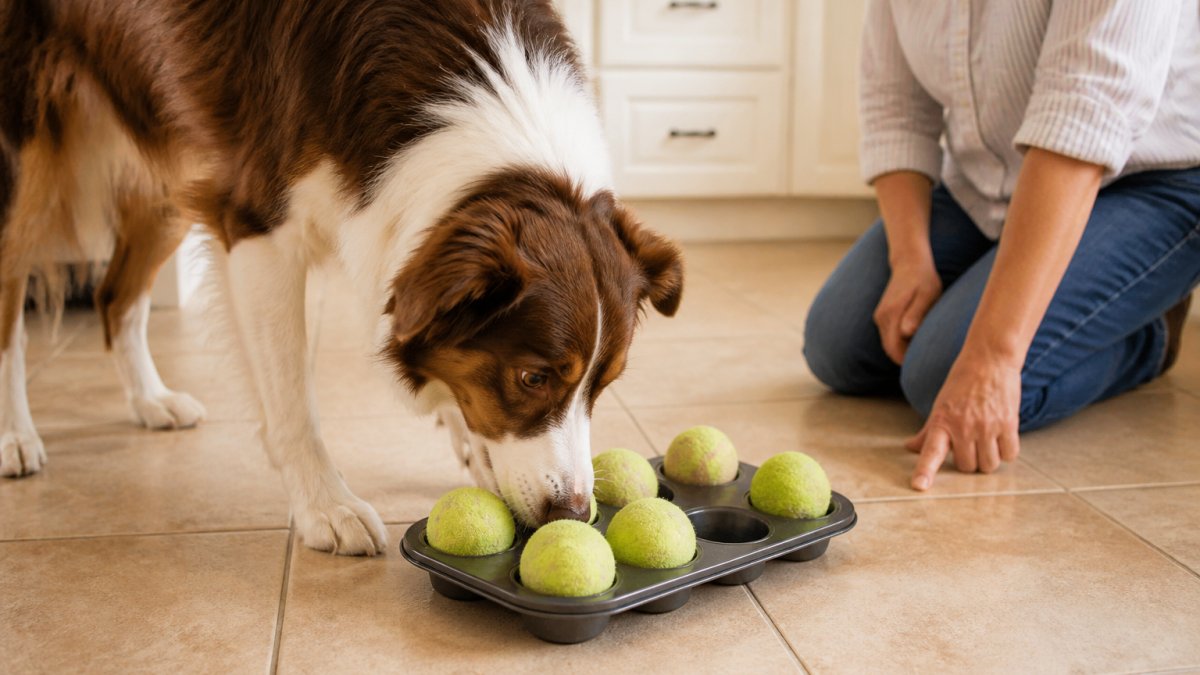
How to make it:
- Take a standard muffin tin and place a treat in a few of the cups.
- Cover each treat with a tennis ball, or a scrunched paper ball for a lighter challenge.
- Set it on the floor and let your dog sniff, paw and nudge the balls out.
- Start with every cup uncovered, then add covers as your dog gets quicker.
This is a food puzzle in its simplest form, and it suits almost any dog.
Snuffle Mat for Dogs – Interactive Sunflower Treat Puzzle →
(https://doghoshop.co/blogs/life-with-doggo/best-durable-toys-for-power-chewers) is worth a look before you buy.Homemade Mental Stimulation for Dogs: Snuffle and Foraging Activities
Sniffing is the most underrated form of homemade mental stimulation for dogs.
Snuffle activity: scatter kibble or soft treats across a towel, roll it up loosely, and let your dog unroll it with its nose.
Foraging: hide treats in the garden, under plant pots or around a room, and let your dog hunt them down.
If you'd rather not make your own, our Snuffle Mat for Dogs - Interactive Sunflower Treat Puzzle (£19.99) does the same job in a ready-made form.

How to Introduce Enrichment, Rotate Toys and Keep Play Safe
New enrichment should start easy and get harder, not the other way round. A dog that fails at a puzzle gets frustrated and may turn back to chewing. Set your dog up to succeed, especially if your dog is already destructive, because frustration can escalate the behaviour you're trying to redirect.
A stepwise introduction plan
- Start with the easiest version. For a muffin tin, leave every cup uncovered. For a snuffle towel, roll it loosely. For a shred box, leave the flaps open.
- Let your dog win quickly. The first session should end with your dog getting the treats without much effort. This builds confidence and interest.
- Increase difficulty one step at a time. Cover one cup, roll the towel tighter, fold the box flaps. Only move on when your dog solves the current level easily.
- Watch for frustration signals. If your dog walks away, barks at the toy, or starts chewing the container instead of working it, drop back a level. A destructive dog that gets stuck may redirect onto the toy itself, which defeats the purpose.
- Supervise every session. Homemade toys are not set-and-forget. Stay in the room, especially with power chewers.
- End on a win. Finish while your dog is still engaged, not after it has lost interest.
A practical rotation and cleanup plan
Rotation matters more than most owners realise. A toy that's always available becomes furniture. Put a few away and swap them in and out, and each one feels new again. For destructive dogs, rotation also limits how much damage a toy can accumulate before you inspect it.
| Step | What to do | How often |
|---|---|---|
| Rotate | Swap out two or three toys for stored ones | Every 3-4 days |
| Inspect | Check seams, knots and plastic for damage | Before every session |
| Clean | Wash fabric toys and rinse plastic ones | Weekly |
| Retire | Remove and bin any toy that's cracked or fraying | Immediately |
When destructive behaviour needs more than toys
Toys help with boredom, but not every destructive dog is simply bored. It's worth knowing the difference.
Normal boredom or chewing behaviour tends to look like this:
- Destruction happens when your dog is left alone without enrichment.
- Your dog settles quickly once given something to do.
- The behaviour is focused on objects, not on escape or self-harm.
Behaviour that may need professional support includes:
- Destruction that happens even when you're present and your dog has plenty to do.
- Panting, pacing, drooling or distress when left alone, possible signs of separation-related behaviour (Separation Anxiety in Dogs - RSPCA).
- Destruction focused on doors, windows or crates, which can indicate escape attempts.
A common pattern is that owners buy tougher and tougher toys when the real issue is anxiety. If your dog's destruction comes with signs of distress, or continues despite a good enrichment routine, speak to your vet.
Our guide on how to introduce new dog toys walks through rotation in more detail.
Frequently Asked Questions
What is the best toy for a dog that destroys everything?
There is no single indestructible toy, so the better approach is matching the toy to the destruction. For heavy chewing, natural rubber toys with a treat cavity, like the Thick Tire-inspired Durable Dog Chew Toy (£19.99), hold up better than fabric or plastic. For shredding, redirect the urge into cardboard boxes and paper bags, which are cheap to replace. Rotate three or four toys rather than leaving one out all week, and always supervise the first few sessions so you can see how your dog treats each material.
How do I make homemade toys safer for a dog that chews?
Start with materials that fail safely. Remove bottle caps, rings and labels before offering a plastic bottle, and cut cardboard tubes lengthways so a dog cannot get a snout stuck inside. Avoid cooked bones, stones, corn cobs and anything with staples or tape. Braided fabric tug toys should be made from old T-shirts with no buttons or zips, and you should inspect them after every session. Any toy that develops a hole, frayed edge or loose piece should be binned straight away.
What are some homemade mental stimulation ideas for dogs?
Scatter kibble in a snuffle mat or a folded towel, hide treats under muffin-tin cups covered with tennis balls, or place kibble in a cardboard box filled with paper for your dog to shred. A plastic bottle with the cap removed makes a simple treat dispenser, and a flirt pole made from a broom handle and a fabric strip gives chasing games in a small garden. Ten to fifteen minutes of sniffing and problem-solving tires a dog out in a way a walk alone often does not.
How often should I rotate enrichment toys for my dog?
Rotate every two to three days for most dogs, keeping three or four toys in play and storing the rest out of reach. A toy that disappears for a week feels new again when it returns, which stretches your budget and stops boredom setting in. Wash fabric and rubber toys regularly, check seams and edges for damage, and throw away anything chewed through. If your dog loses interest in a puzzle quickly, raise the difficulty rather than adding more toys.
How do I stop my dog destroying toys?
Match the toy to the behaviour. A dog that shreds fabric needs cardboard and paper outlets, while a dog that gnaws needs rubber chew toys with a treat cavity. Supervise new toys, remove them once your dog starts tearing rather than swallowing, and swap in a puzzle when energy is high. If destruction only happens when you leave, treat it as a separation issue and speak to your vet rather than buying tougher toys.
Destructive behaviour is usually a dog asking for more to do, not a dog that needs tougher toys. Start with the materials that survive, build a few simple puzzles, and rotate them so play stays interesting. At Doggo Shop, we stock durable, interactive options like our treat-dispensing chew toy and snuffle mat, and we donate 10% of every order to rescue dogs in need. Get started with Doggo Shop and give your dog enrichment that actually holds up.


Leave a comment