


How Do You Build Confidence in a Shy Dog?
Last Updated: October 29, 2026
Quick Summary
Build shy dog confidence with short, low-pressure exercises that let your dog choose to approach something new and get rewarded for it. Start with a predictable safe space, reward calm behaviour, and try games like treat scavenger hunts, hide and seek, and puzzle feeders. Keep every session below the point where your dog panics.
- Keep training sessions to two or three minutes and always end on a win.
- Repeat a game at the same difficulty for at least three sessions before making it harder.
- Most shy dogs show the first small signs of progress within two to four weeks of daily practice.
- If your dog stops taking treats, increase distance or end the session.
- Contact your vet first if fear appears suddenly in an adult dog or there is no improvement after a few months.
Table of Contents
- Why Shy Dogs Need Confidence-Building Exercises
- Recognising Fear and Stress Signals Before You Start
- Step 1: Set Up a Safe, Predictable Space
- Step 2: Use Positive Reinforcement and Reward-Based Training
- Step 3: Try Games for Fearful Dogs That Build Calm Focus
- Step 4: Shy Dog Socialisation in Small, Manageable Steps
- Step 5: Passive Training for Fearful Dogs and Everyday Calmness
- How Long Does It Take for a Shy Dog to Gain Confidence?
- Frequently Asked Questions
Why Shy Dogs Need Confidence-Building Exercises
Confidence-building exercises are short, repeatable activities that let a nervous dog choose to approach something new and get rewarded for it. They work because shyness is not a fixed personality trait.
Many owners find that their rescue dog hides behind the sofa when the doorbell rings. The good news: small, daily wins stack up faster than most people expect.
One thing most guides get wrong: they rush. A shy dog needs choice, not pressure. Push too hard and you lose weeks of trust in a single afternoon.
Recognising Fear and Stress Signals Before You Start
Before any training, learn your dog's early warning signs. Catching stress at the first flicker means you can back off before the dog shuts down.
Fear signals to watch for:
- Lip licking and yawning when nothing else explains it
- Tucked tail, flattened ears, or a lowered head
- Turning away, freezing, or trying to leave the room
- Whale eye (whites of the eyes showing)
- Sudden scratching or sniffing as a distraction
Body language tells you more than a wagging tail ever will. A wagging tail can mean worry, not joy.
The threshold rule: keep every exercise below the point where your dog panics. If your dog stops taking treats, that is your cue to increase distance or end the session.
Step 1: Set Up a Safe, Predictable Space
A shy dog needs one place that never changes and never surprises. Pick a quiet corner away from the front door and foot traffic.
Set it up like this:
- Place a bed or crate in a low-traffic spot
- Add a blanket that smells familiar
- Keep food, water, and a chew toy nearby
- Never force the dog out of this space
Feeding meals here builds positive associations fast. So does dropping a treat in whenever your dog settles there on their own.
If your dog came from a rescue, a crate can become a genuine safe zone rather than a cage. Our crate training rescue dogs guide walks through preparation and desensitization with patience and positive reinforcement.
Consistency matters more than equipment. Same spot, same routine, every day.
Step 2: Use Positive Reinforcement and Reward-Based Training
Reward-based training means marking and rewarding calm behaviour, never correcting fear. If a dog is scolded for growling or shrinking away, the fear does not disappear. It just goes quiet, which is worse.
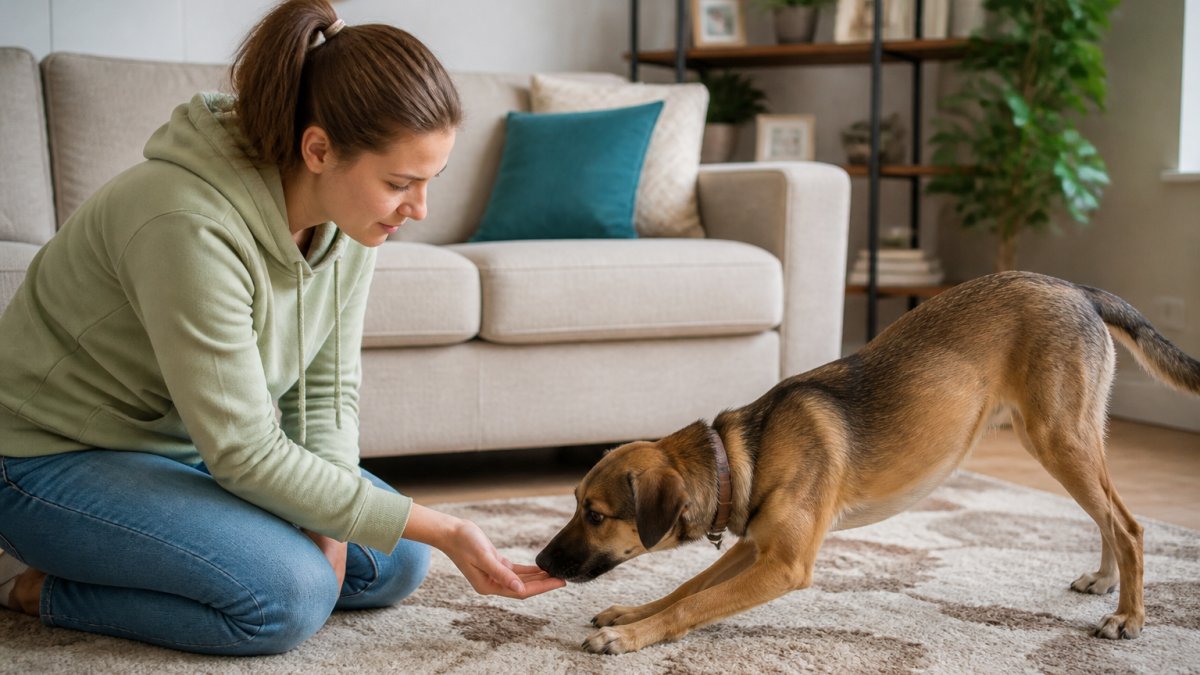
The basics:
- Reward the behaviour you want to see again
- Use small, soft treats for frequent rewards
- Reward calmness, not just tricks
- Ignore fearful behaviour, and never punish it
Timing is everything. The treat must land within a second or two of the good behaviour, or your dog will not connect the two.
Keep sessions to two or three minutes. Short and sweet beats long and tiring. End on a win, every time.
Step 3: Try Games for Fearful Dogs That Build Calm Focus
Games for fearful dogs do double duty: they burn nervous energy and teach focus. Nose work is the star here, because sniffing naturally lowers arousal.
Safety and setup first:
- Use a well-fitted harness and a lightweight house line indoors so you can guide without grabbing the dog
- Check the room for escape routes and close doors before scattering treats
- Keep other pets and children out of the space for the first few sessions
- Choose a non-slip surface and avoid scatter-feeding on rugs that slide
Three games worth trying:
- Treat scavenger hunt - scatter treats around one room and let your dog sniff them out. Start with five to ten treats in plain sight on a familiar floor, then gradually hide them under the edge of a chair or behind a door frame. Progress when your dog finds the visible treats within about a minute without help.
- Hide and seek - hide a treat or toy under a cup and let your dog find it. Begin with the cup in front of the dog and lift it slightly so the treat is obvious, then move to two cups and let the dog choose. Increase difficulty only when your dog nudges or sniffs the correct cup within a few seconds.
- Puzzle feeders - a snuffle mat or treat dispenser gives a low-pressure win. Learn more about the benefits of treat dispensing toys for dogs so you can choose the right confidence-building game. Start with a snuffle mat and loose treats on top, then work towards treats pushed deeper into the fabric. Move to a puzzle feeder only when your dog is confidently foraging on the mat.
A snuffle mat for dogs lets your dog forage between soft fabric petals, which builds calm focus through sniffing.

Progression criteria: repeat a game at the same difficulty for at least three sessions before making it harder. Move up only when your dog:
Snuffle Mat for Dogs – Interactive Sunflower Treat Puzzle →
- Approaches the game area voluntarily
- Keeps their tail at a relaxed height and ears soft
- Takes treats at a normal pace
- Returns to the game after a brief pause
When to stop or reset: if your dog freezes, stops taking treats, turns away, or tries to leave the room, end the session calmly and remove the game.
Start with one game, in one room, for a few minutes. Add variety only once your dog looks eager for more.
Each game has a clear starting point and a rule for when to make it harder.
| Game | How to start | When to progress |
|---|---|---|
| Treat scavenger hunt | Scatter five to ten treats in plain sight on a familiar floor | Dog finds visible treats within about a minute without help |
| Hide and seek | Hide a treat under a cup, lift it slightly so the treat is obvious | Dog nudges or sniffs the correct cup within a few seconds |
| Puzzle feeders | Start with a snuffle mat and loose treats on top | Dog is confidently foraging on the mat |
Step 4: Shy Dog Socialisation in Small, Manageable Steps
Shy dog socialisation is not about meeting everyone. It is about controlled, positive exposure at a distance your dog can handle.
Build it gradually:
- Start at a distance where your dog notices a person but stays relaxed
- Reward calm behaviour, then move slightly closer
- Keep greetings short and let the dog approach first
- Never let strangers loom over or reach for your dog
The same small-step approach works for time alone. These dog separation anxiety training exercises for beginners use the same gradual, small-step approach.
Watch out: one bad greeting can undo a fortnight of work. Advocate for your dog and say no to over-friendly strangers.
Step 5: Passive Training for Fearful Dogs and Everyday Calmness
Passive training for fearful dogs means letting calm aids and daily routines do some of the work for you. Not every gain needs a formal session.
Low-effort daily wins:
- Keep a predictable routine for walks, meals, and rest
- A calm, quiet safe space can help
- Reward calm behaviour whenever you spot it
- Speak softly and move slowly around a nervous dog
Pheromone diffusers are a passive calming aid, not a cure.
Small moments count. A dog that settles on their bed while you cook is practising calm, and that is real progress.
How Long Does It Take for a Shy Dog to Gain Confidence?
Most shy dogs show the first small signs of progress within two to four weeks of daily, low-pressure practice. Full confidence usually takes several months, and some dogs will always be cautious by nature. The useful question is not how long it takes in general but whether your dog is moving in the right direction, which is why a simple confidence log beats guesswork.
Build a confidence log: Keep a notebook or phone note with one line per session covering four things:
- Trigger or exercise - what you practised and where
- Observable signals - tail height, ear position, whether the dog approached or avoided
- Recovery time - how many seconds or minutes it took to settle after a startle
- Willingness to engage - whether the dog took treats, sniffed, or returned to the activity
A common pattern is that recovery time shortens first, often before the dog looks visibly braver. Track it weekly rather than daily so normal ups and downs do not distort the picture.
Progress markers to track:
- Takes treats more readily in new situations
- Recovers faster after a fright
- Approaches new things voluntarily
- Chooses to be near you more often
Setback signals: hiding more, refusing food, or avoiding places they used to enjoy. When that happens, drop back a step and slow down.
Adaptations by dog:
- Puppies: shorter sessions, more repetition, and expect fear periods during development
- Senior dogs: gentler paces, more rest, and a vet check first to rule out pain or sensory loss
- Dogs with mobility or sensory limits: nose work over physical games, and keep surfaces non-slip
Build shy dog confidence through patience, rewards, and small steps. That is the whole method.
Frequently Asked Questions
What games help a fearful dog feel more confident?
Treat-finding games work well because they let the dog control the pace. Scatter treats across a snuffle mat or hide kibble under puzzle compartments so your dog sniffs and paws at their own speed. A treat scavenger hunt around one room, hand targeting, and simple hide-and-seek with a familiar person all build focus and problem-solving without pressure. Keep sessions to five or ten minutes, reward calm behaviour, and stop while your dog is still enjoying it rather than waiting for them to lose interest.
How long does it take for a shy dog to gain confidence?
There is no fixed timeline. Some dogs show clear improvement in a few weeks of daily short sessions, while others need several months of gradual exposure. Progress depends on the dog's history, age, and how often you practise. Track small wins, such as taking a treat from your hand or stepping onto a new surface, rather than waiting for a big transformation. If you see no change after a couple of months of consistent reward-based work, or if your dog's fear worsens, speak to your vet or a qualified behaviourist.
How do I socialise a shy dog without overwhelming them?
Keep your dog under threshold, meaning close enough to notice a trigger but calm enough to eat and respond. Start with distance, such as watching people pass from across a park, and reward calm behaviour. Add one new person, sound, or surface at a time, and give your dog recovery time afterwards. Always let your dog choose whether to approach, and never force an introduction. If your dog freezes, stops taking treats, or tries to leave, you have moved too fast, so increase the distance and try again another day.
What should I do if my dog is too scared to try an exercise?
Stop and make the exercise easier. Break it into a smaller step, such as rewarding your dog for simply looking at a puzzle toy rather than touching it. Move further from whatever is worrying them, use higher-value treats, and shorten the session. If your dog still refuses, freezes, or hides, end on a calm note and try a different exercise the next day. Repeated pressure erodes trust, so let comfort guide the pace. Persistent fear around everyday situations is worth discussing with your vet or a qualified behaviourist.
A nervous dog will not transform overnight, and that is okay. What matters is giving your dog the tools to feel safe, one calm win at a time. At Doggo Shop, we stock interactive toys and enrichment puzzles that make daily confidence-building easier, and we donate 10% of every order to rescue dogs in need worldwide. Explore our enrichment toys, find the right puzzle for your dog, and start building confidence today.


Leave a comment