


Crate Training Rescue Dogs: A Step-by-Step Guide
Table of Contents
- Why Crate Training Matters for Rescue Dogs
- Preparing the Crate as a Safe Haven
- How Long to Leave a Dog in a Crate: Duration Guidelines
- Introducing the Crate for the First Time
- Crate Training an Older Rescue Dog: A Gradual Approach
- Positive Reinforcement Techniques That Work
- Signs of Separation Anxiety in Rescue Dogs
- Common Mistakes to Avoid
Last Updated: August 9, 2026
Why Crate Training Matters for Rescue Dogs
Crate training rescue dogs is transformative for their wellbeing and your peace of mind. Unlike puppies, rescue dogs arrive with unknown histories, possible trauma, and disrupted nervous systems. Dogs that learn to see their crate as a genuine safe space settle faster, bond more deeply, and experience less anxiety. A crate-trained rescue dog can handle being alone without panic, has a place to decompress during chaos, and stays safer during vet visits, car rides, and emergencies.
The challenge is that crate training rescue dogs requires patience and a completely different approach than puppies. You're not just teaching behaviour; you're rebuilding trust and rewiring fear responses. This guide walks you through exactly how to do that, step by step, with strategies that acknowledge what rescue dogs have actually been through.
Preparing the Crate as a Safe Haven
Before your rescue dog ever steps inside, the crate itself needs to feel inviting, not intimidating.
Choosing the Right Crate Size
The right crate size is where your dog can stand, turn around, and lie down comfortably, but not so large they can use one corner as a toilet and sleep in another. A space that's too big feels exposed and unsafe; the right size feels like a den.
Measure your dog from the tip of their nose to the base of their tail when standing, then add a few centimetres. Measure their height at the shoulder and add a few centimetres. That's your target crate dimension. If your rescue dog is still settling and you're unsure of their full adult size, consider a crate with a divider panel so you can adjust the space as they grow.
Material matters too. Wire crates offer visibility and airflow. Plastic crates feel more den-like and are often better for anxious rescues. Fabric crates are portable but can be destroyed by power chewers.
Adding Comfort with Bedding and Toys
Make the crate genuinely comfortable. A thin mat isn't enough; your rescue dog needs proper bedding that cushions their joints and provides warmth. The Cozy Winter Washable Pet Kennel Bed from Doggo Shop is designed specifically for crate spaces, with washable covers and deep padding that helps dogs settle into a genuine sense of comfort. Quality bedding signals safety and allows dogs to burrow and nest when they feel secure.

For toys, choose items that won't cause anxiety. A chew toy that keeps them occupied is excellent. The Interactive Sunflower Snuffle Mat from Doggo Shop is ideal for crate time because it engages their nose and brain, turning the crate into a place where good things happen. Avoid toys with squeakers or rattles if your rescue dog is already anxious.
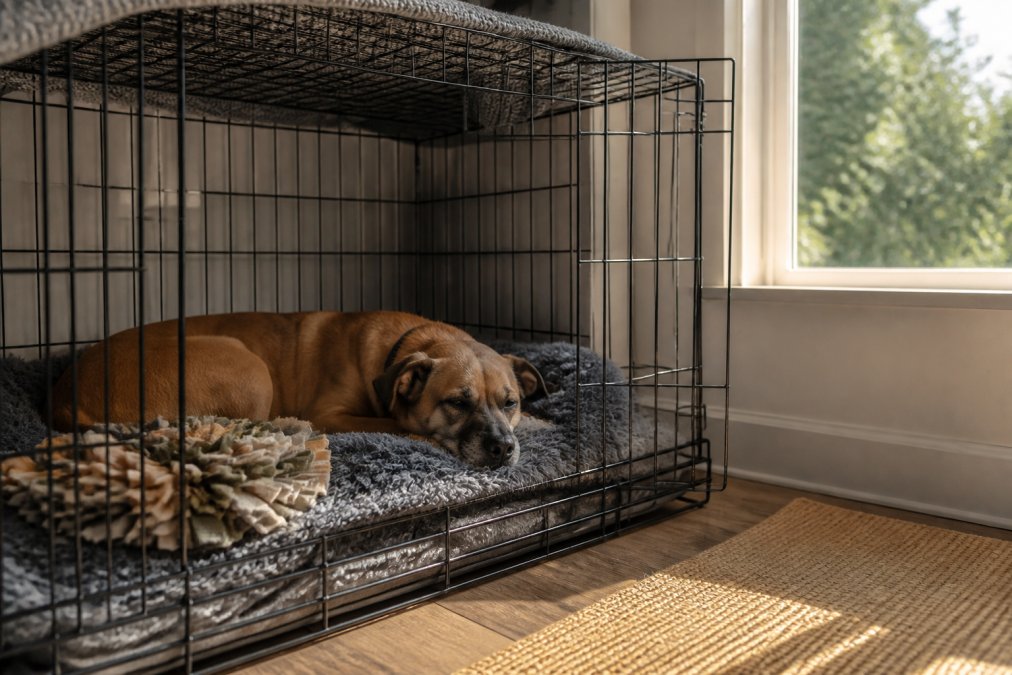
A crate cover draped over three sides creates a den-like environment and reduces visual stimulation, which calms nervous dogs. Leave the front open so they can see out and don't feel trapped.
How Long to Leave a Dog in a Crate: Duration Guidelines
Your rescue dog's emotional readiness matters more than age or bladder capacity.
Start with short intervals: 5-10 minutes with you present in the room, door open, no pressure. Gradually extend to 15-20 minutes. Once your dog settles calmly for 30 minutes, you can extend to 1-2 hours. This timeline varies wildly depending on the dog's background.
A practical rule: rescue dogs can typically hold their bladder for one hour per year of age, plus one. A 3-year-old rescue can usually manage 4 hours. But emotional comfort, not just physical capacity, determines success. Never leave a rescue dog crated for more than 4-5 hours initially, even if they seem ready.
Watch for signs of distress: panting, whining, pacing, or destructive behaviour when you return. These signal you've extended the duration too fast. Back up to shorter intervals and progress more slowly.
Introducing the Crate for the First Time
The first introduction sets the tone for everything that follows.
Leave the crate door open. Don't mention it or coax. Just let it exist as a neutral object. Toss treats randomly inside as happy surprises. If your dog walks in on their own, that's ideal.
Once your dog has voluntarily entered a few times, start closing the door for 2-3 seconds while they're eating a treat inside. Open it immediately. Repeat this 5-10 times over several days. Gradually extend the time the door stays closed: 5 seconds, then 10, then 30. Your dog should be calm and focused on the treat, not aware the door is closing. If they panic, you've moved too fast.
The Decompression Period for Rescue Dogs
Rescue dogs need a decompression period before structured training begins. For the first 2-4 weeks in your home, your rescue dog's nervous system is in overdrive. They're processing a completely new environment, people, sounds, and routines. Their stress hormones are elevated and their ability to learn is compromised.
During this period, your job isn't to teach crate training but to help them settle. Establish a quiet space where the crate will eventually live and let them decompress. Minimal visitors, minimal noise, minimal pressure.
How do you know they're ready? They'll show relaxed body language around the home, play with toys, approach you for interaction, and eat without anxiety. Only then should you introduce structured crate training. Pushing crate training before decompression is complete asks a traumatised nervous system to learn, which is why many rescue dog owners report failure.
Crate Training an Older Rescue Dog: A Gradual Approach
Older rescue dogs often have ingrained fears or learned behaviours that make crate training feel impossible. But age doesn't determine success; patience and the right approach do.
Start with exactly the same process as a younger dog: open door, treats inside, no pressure. An older dog may take longer to trust. Some older rescues need 4-6 weeks just to voluntarily enter the crate without hesitation.
Older dogs benefit from shorter, more frequent training sessions. Five 2-minute sessions spread throughout the day work better than one 10-minute session. Frequent, positive interactions build confidence faster than longer, more intense ones.
Working with Dogs That Have Unknown Trauma
A rescue dog with an unknown history might have been confined in a car, a shelter, or worse. The crate might trigger genuine fear or trauma responses.
Signs of trauma-related fear include freezing in place, excessive panting, trembling, or attempting to escape through the crate itself. These aren't disobedience; they're fear responses. Forcing a dog through fear doesn't build trust; it reinforces that the crate is dangerous.
With trauma-affected dogs, the decompression period needs to be longer, sometimes 8-12 weeks. Work with a behaviourist trained in trauma-informed approaches. They can help you identify what specifically triggers your dog and develop a tailored plan.
Create positive associations without the crate. Feed meals near it. Play with toys nearby. Let your dog choose to interact on their own terms. Consider whether a crate is actually necessary. Some rescues do better with a puppy pen, a gated room, or a bed in a quiet corner. The goal is a safe space where your dog feels secure, not necessarily a crate.
Positive Reinforcement Techniques That Work
Positive reinforcement is the only method that works for rescue dogs. Punishment, scolding, or forced confinement will damage trust and reinforce fear.
Reward calm behaviour inside the crate, not just the act of entering it. Use high-value treats your dog genuinely loves and doesn't get elsewhere. Timing matters enormously: reward the moment your dog shows calm behaviour, lying down, closing their eyes, or releasing tension. Reward within 1-2 seconds so they connect the behaviour with the reward.
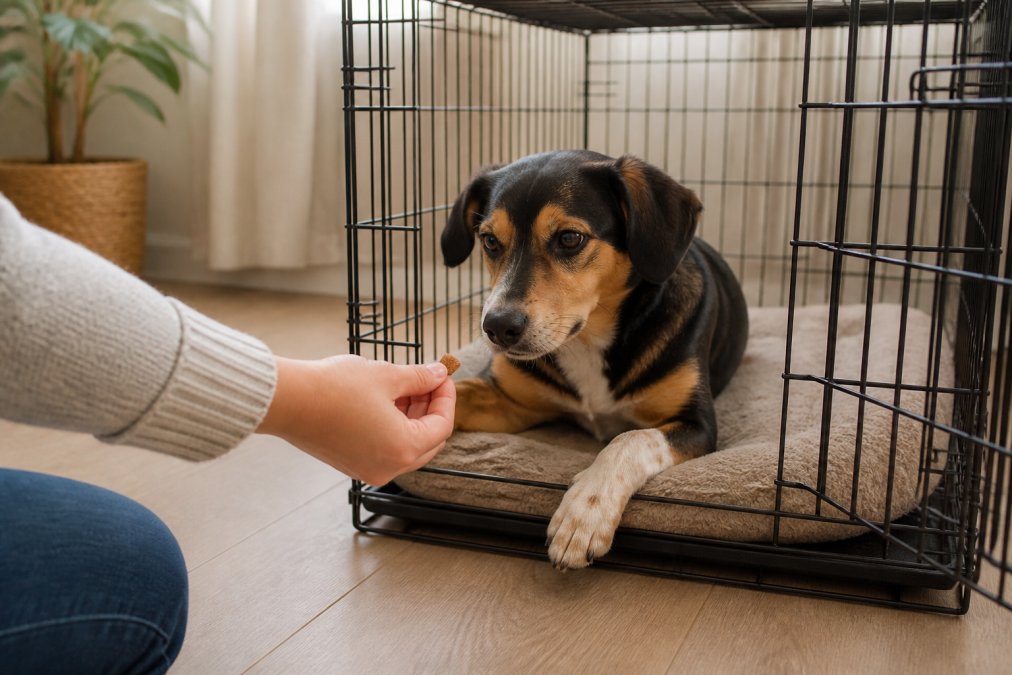
Practice the treat-and-reward cycle 10-15 times daily in short bursts. Consistency matters far more than intensity. Never lure a dog into the crate with a treat and then close the door while they're frantically searching for more. Instead, reward them once they're calm inside, with the door open or only briefly closed.
Signs of Separation Anxiety in Rescue Dogs
Rescue dogs are prone to separation anxiety because abandonment, shelter life, and repeated rehoming have taught them that people leave and don't return.
Separation anxiety isn't the same as normal crate anxiety. A dog with separation anxiety panics when separated from their owner, regardless of whether they're in a crate. Common signs include destructive behaviour when you leave (scratching, chewing, digging at the crate), excessive vocalization (howling, barking, whining), or elimination inside the crate despite being housetrained. These behaviours happen within minutes of you leaving, not after hours of confinement.
Reading Body Language: Whining, Panting, and Pacing
Not all whining means distress, and not all calmness means comfort. Learn to read what your dog's body is actually telling you.
Whining can signal excitement, anticipation, or anxiety. Excited whining comes with a wagging tail, forward-leaning posture, and focused attention on you. Anxious whining comes with tucked ears, lowered body posture, and darting eyes.
Excessive panting at rest, especially with a tense mouth and tight jaw, signals stress or anxiety. A calm dog has a relaxed mouth and normal breathing. Pacing in the crate indicates the dog hasn't reached genuine calm. Watch for genuine signs of calm: soft eyes, relaxed ears, a slightly open mouth with tongue visible, and stillness. A truly calm dog often yawns or blinks slowly. These are the moments to reward.
Common Mistakes to Avoid
The biggest mistake is moving too fast. Rescue dog owners often rush because they're eager to see progress. But speed creates setbacks. A dog that panics in a crate takes months to rebuild trust.
Never use the crate as punishment. Never send your dog to the crate when they've done something wrong or close the door as a consequence. The crate must remain a positive space.
Ignoring the decompression period is another critical mistake. Jumping straight into crate training before your rescue dog has settled into your home is almost guaranteed to fail. Patience in the first weeks saves months of struggle later.
Don't force interaction with the crate. Don't drag your dog toward it, hold them inside, or close the door while they're panicking. These create trauma associations that take years to undo.
Finally, don't confuse a dog that tolerates the crate with a dog that genuinely loves it. Tolerance is acceptance. Love is when they choose to rest there even when the door is open. That's the real goal, and it takes time.
Crate training a rescue dog requires patience, consistency, and genuine empathy for what they've been through. The process isn't fast, but it's worth every effort. A rescue dog that feels safe in their crate is a dog that can relax, trust, and become the companion you brought them home to be.
At Doggo Shop, we support rescue dog owners with products that make this journey easier. From the Cozy Winter Washable Pet Kennel Bed that transforms a crate into a genuine sanctuary, to the Interactive Sunflower Snuffle Mat that builds positive associations with crate time, we've designed every product with rescue dogs specifically in mind. Plus, every purchase supports rescue dogs in need worldwide. Start with quality bedding and toys, commit to the gradual approach, and watch your rescue dog discover that their crate is the safest place in the world.
Frequently Asked Questions
How long does it take to crate train a rescue dog?
Crate training a rescue dog typically takes 4-8 weeks with consistent daily practice, though older dogs or those with trauma may need 8-12 weeks. Progress depends on the individual dog's background, confidence level, and how much time you dedicate to training. Some rescue dogs show comfort in the crate within days, while others need gradual desensitization over months. Patience and consistency matter more than speed, rushing the process often leads to setbacks.
What should I do during the decompression period for a rescue dog?
The decompression period (typically 2-3 weeks after bringing a rescue home) is when your dog adjusts to their new environment. Keep routines simple, allow them quiet time away from stimulation, and avoid forcing interaction. During this phase, introduce the crate slowly without pressure, let them explore it at their own pace. Use treats and positive reinforcement, but don't insist they enter. This period builds trust and makes crate training easier later. Rushing past decompression often causes behavioural issues and fear-based reactions to the crate.
How can I tell if my rescue dog has separation anxiety?
Signs of separation anxiety in rescue dogs include whining or barking when you leave, panting excessively, pacing in the crate, destructive behaviour, or attempting to escape. Some dogs may have accidents in the crate despite being housetrained. Body language signals include pinned-back ears, tucked tail, and visible stress. If your dog shows these signs, slow down the crate training process, keep absences short, and consider calming aids like the Noise Reduction Dog Hoodie to help them feel secure while you build their confidence.
Is crate training humane for rescue dogs in the UK?
Yes, when done correctly with positive reinforcement, crate training is considered humane and is widely recommended by UK dog trainers and veterinarians. The crate becomes a safe haven, not a punishment tool. The key is never forcing your dog inside, always using rewards, and ensuring the crate is appropriately sized and comfortable. The Dogs Trust and other UK animal welfare organisations support crate training as part of responsible pet ownership when it respects the dog's emotional needs and provides proper rest space.
This article was written using GrandRanker


Leave a comment