


How Do You Stop Dog Anxiety During Thunderstorms?
Last Updated: October 28, 2026
Quick Summary
To stop dog anxiety thunderstorms, set up a quiet interior safe space before the storm, mask noise with soothing music or white noise, and let your dog hide without forcing contact. Never punish a frightened dog, and ask your vet about medication or behaviour plans if panic is severe or worsening.
- Start preparing two to three hours before the storm by closing windows, drawing curtains and setting up the quiet room.
- Mask thunder with soothing music, white noise or a sound machine at a steady level.
- Let your dog choose their hiding spot and never force cuddles on a frightened dog.
- Desensitise by playing thunder sounds at very low volume paired with treats, raising volume in tiny steps over weeks.
- Consult your vet if your dog injures themselves during storms or stays unsettled long after.
Table of Contents
- Why Thunderstorms Trigger Dog Anxiety
- Signs of Thunderstorm Phobia in Dogs
- Your Timed Storm Plan: Before, During and After
- Creating a Safe Space and Reducing Noise and Flashes
- Best Calming Products for Dogs
- How to Desensitise a Dog to Loud Noises
- What Not to Do When Your Dog Is Panicking
- When to Ask Your Vet About Medication and Behaviour Plans
- Frequently Asked Questions
Why Thunderstorms Trigger Dog Anxiety
A dog's hearing is far sharper than ours, so thunder arrives as a wall of sound we can barely imagine. Add flashing light and a drop in air pressure, and many dogs hit panic within seconds. Learning how to manage dog anxiety thunderstorms starts with understanding that this is not naughtiness. It is a genuine fear response.
The good news: a calm plan works.
Dog anxiety thunderstorms trigger because dogs link the noise, flashes and static to danger. Their stress signals fire fast.
Common triggers include:
- Sudden loud thunder claps
- Bright lightning flashes
- Changes in air pressure
- Static electricity building in their coat
Each dog reacts differently. Some shake. Others bolt. Knowing the trigger helps you plan.
Signs of Thunderstorm Phobia in Dogs
The signs of thunderstorm phobia in dogs range from mild to severe. Spotting them early lets you act before panic takes hold.
Watch for these stress signals:
- Panting when it is not hot
- Pacing and restlessness
- Trembling or shaking
- Hiding under furniture or in corners
- Drooling
- Clinging to you
- Destructive behaviour, like chewing doors
- Escape attempts at windows or gates
A dog with true storm phobia may show all of these at once. Mild noise sensitivity shows just one or two. Either way, take it seriously.
Your Timed Storm Plan: Before, During and After
Use the forecast as your cue to start.
| Stage | Timing | Key Actions |
|---|---|---|
| Watch | 24-48 hours ahead | Check the forecast, top up chews and bedding, confirm microchip and tag details, book a vet call if fear is worsening |
| Prepare | 2-3 hours ahead | Set up the safe space, close windows, draw curtains, secure garden and gates, charge trackers |
| Settle | 60-90 minutes ahead | Start sound masking, offer a long-lasting chew, keep your own routine calm and low-key |
| During | Throughout the storm | Stay present if possible, let your dog choose their spot, mask noise and flashes, never punish |
| After | First 60 minutes after | Keep doors closed, leash the first toilet trip, check fences and gates, reward calm behaviour |
Before the Storm: Setting Up and Securing the House
Start with the forecast rather than the first thunderclap. Two to three hours out, close all windows and doors, draw the curtains and set up the quiet room so it is ready before your dog needs it. If your dog is already pacing, that is your signal to move faster.
Then secure the house:
- Shut garden gates and walk the fence line for gaps or loose panels
- Clear rooms of anything a panicking dog could knock over or chew
- Put identification tag and microchip details up to date, and check that the microchip record shows your current phone number
- Charge any tracker and check the battery
- Move bins, plant pots and garden furniture away from fences a dog might use to climb
If you know your dog's weak spot, block it before the weather turns.
During the Storm: Comfort, Noise Masking and Distraction
Stay home if you can. Keep your voice low and your movements slow. Let your dog come to you, and never force cuddles on a frightened dog. If your dog wants to hide, let them hide in the safe space you prepared.
Mask the noise with soothing music, white noise or a sound machine, and keep it running at a steady level rather than turning it up and down with each clap. Offer a distraction: a stuffed toy or a long-lasting chew. A calming duck plush dog toy gives a nervous dog something safe to hold and nuzzle. If your dog needs to burn off nervous energy, try these calming indoor games for high energy dogs.
After the Storm: Recovery and Escape Prevention
Keep doors and gates closed, and leash your dog for the first toilet trip even if the garden is secure. Walk the fence line and check gates before letting them off lead.
Reward calm behaviour with praise and a treat, and note what worked so the next storm is easier. If your dog tends to bolt, an AirTag holder for your dog's collar lets you track them.
Creating a Safe Space and Reducing Noise and Flashes
A safe space is a quiet, dim spot where your dog feels secure.
Noise Reduction Dog Hoodie – Calming Ear Wrap for Dogs →
Set up a quiet room or crate in an interior room, away from windows. Drape a blanket over the crate to block light. Add a familiar bed and a worn t-shirt that smells of you.
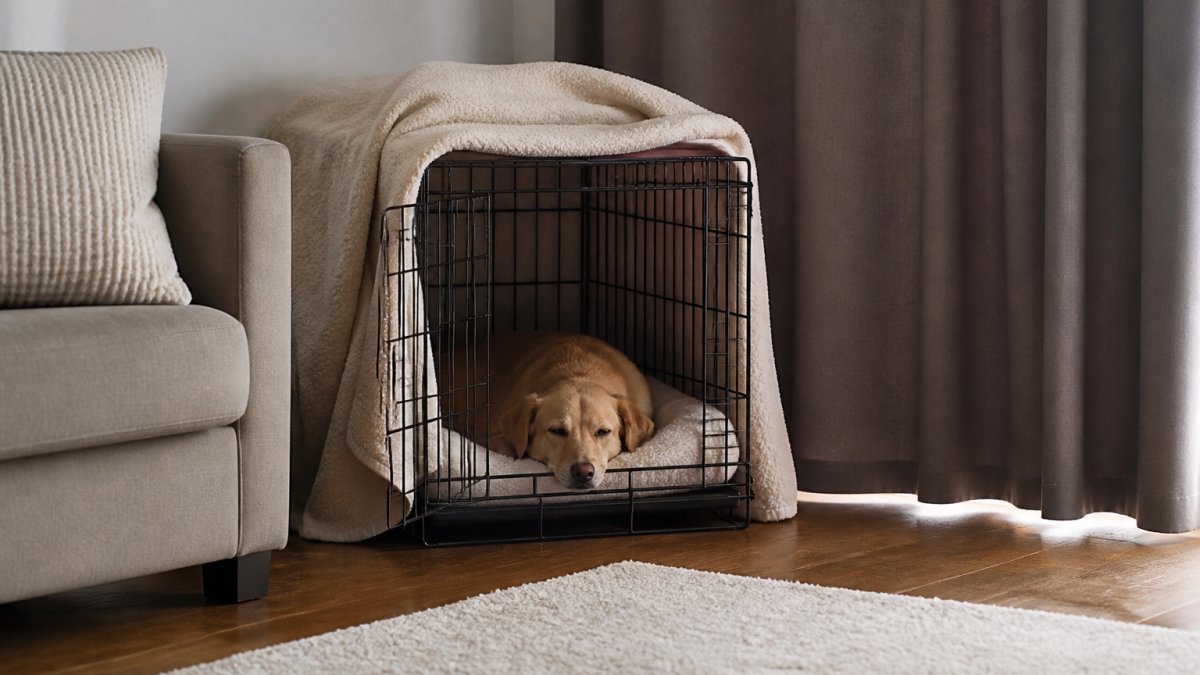
Reduce the flashes with blackout blinds or thick curtains. For sound, a noise-reduction hoodie gently wraps the head and ears. Our noise reduction dog hoodie is made from soft, stretchable nylon.

Best Calming Products for Dogs
Our picks:
- Noise Reduction Dog Hoodie (£19.99): soft, stretchable nylon ear wrap
- Cozy Winter Washable Pet Kennel Bed (£19.99): a washable bed with plush cushioning
- Interactive Suction Cup Tug Toy (£19.99): a chew toy with a treat-dispensing design
Never force a garment or wrap on a panicking dog. Introduce it during calm times first.
How to Desensitise a Dog to Loud Noises
Desensitisation involves pairing thunder sounds with good things, slowly.
Follow these steps:
- Play thunder sounds at a very low sound volume
- Pair the sound with treats and play
- Repeat until your dog stays relaxed
- Raise the volume in tiny steps over weeks
- Stop and go back a step if your dog shows stress
Keep sessions short.
What Not to Do When Your Dog Is Panicking
Some common instincts make things worse. Avoid these during a panic episode:
- Do not scold or punish a frightened dog
- Do not force your dog out of hiding
- Do not pick up a dog that is snapping in fear
- Do not leave doors or gates open
- Do not crowd your dog with loud reassurance
Stay calm and let your dog choose their safe spot.
When to Ask Your Vet About Medication and Behaviour Plans
Storm phobia that is severe, worsening or causing injury needs professional input. Consult a veterinary professional about your dog's situation.
Ask for help when:
- Your dog injures themselves during storms, for example by chewing through a door or breaking a claw
- Panic starts hours before the thunder, or your dog stays unsettled long after the storm passes
- Nothing at home makes a difference after several storms
- Your dog stops eating, drinking or toileting normally around storms
- The fear is affecting your dog's quality of life between storms
What a Veterinary Assessment Involves
Expect your vet to take a full history: when the fear started, how it has changed, what you have tried, and how your dog behaves between storms. They may examine your dog and, where relevant, run blood tests to check for underlying medical causes. Bring a short written log of recent storms so the conversation is specific rather than general.
Medication and Behaviour Plans
Discuss medication or behaviour support with your vet.
You can track three things each storm: the earliest sign of anxiety you saw, how long it took your dog to settle, and whether they returned to their usual behaviour afterwards. That record gives your vet or behaviourist something concrete to work from.
If your dog's storm panic overlaps with other anxiety, read our guide on how to prevent dog separation anxiety.
Frequently Asked Questions
Should I comfort my dog during a thunderstorm?
Stay calm yourself, speak in a low, steady voice, and offer gentle physical contact if your dog seeks it out. If your dog prefers to hide, let them hide in their safe space and check in quietly.
What are the signs of thunderstorm phobia in dogs?
Watch for panting, pacing, trembling, drooling, hiding, and clingy behaviour as a storm approaches. More severe signs include destructive behaviour such as chewing door frames, escape attempts, and vocalising. If your dog shows these signs repeatedly, keep a simple log of dates and reactions so you can share a clear pattern with your vet.
How do I desensitise my dog to loud noises?
Play recorded thunder or firework sounds at a low volume, then pair it with treats or play. Repeat short sessions and raise the volume only when your dog stays relaxed at the current level. If your dog shows stress signals, drop the volume back down.
When should I consult a vet about my dog's storm anxiety?
Consider contacting a vet if your dog injures themselves during storms, attempts to escape, or cannot settle afterwards.
Storm season can feel endless when your dog is terrified, but a calm plan, the right tools and vet support change everything. At Doggo Shop, we stock premium calming products, from noise-reduction hoodies to cosy kennel beds, and we donate 10% of every order to rescue dogs in need. Get started with Doggo Shop and help your dog ride out the next storm in comfort.


Leave a comment