


Why Is My Dog Not Using Their New Bed? Fixes That Work
Table of Contents
- Why Your Dog Is Not Using Their New Bed: The Real Reasons
- Choosing the Right Size Dog Bed for Your Breed
- The Best Place to Put a Dog Bed in Your Home
- How to Train a Dog to Use a Bed: Step-by-Step Acclimation
- Age-Specific Challenges and Multi-Pet Dynamics
- Common Mistakes to Avoid and When to Seek Help
- Conclusion
- Frequently Asked Questions
Last Updated: September 9, 2026
Why Your Dog Is Not Using Their New Bed: The Real Reasons
You bought a plush, premium bed, placed it in the corner, and your dog has decided the cold hard floor is the better option. If you are asking yourself why is my dog not using their new bed, the answer usually comes down to a few fixable issues rather than ingratitude.

Most dogs are creatures of habit and sensory preference. A new bed introduces unfamiliar scents, textures, and a location that may conflict with their instincts. This is a normal acclimation period, not a rejection of your gift.
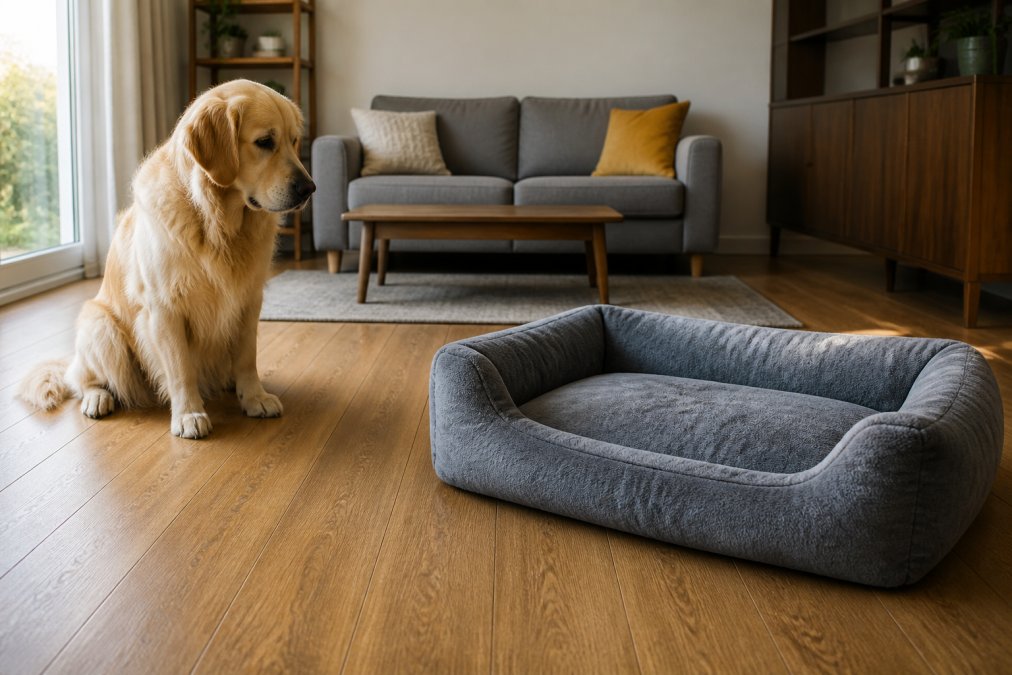
The Smell Factor: Familiarity vs Chemical Odour
Dogs experience the world primarily through their nose. A brand-new bed straight from packaging carries the smell of the factory, plastic, and warehouse, which can be off-putting.
The most effective solution is scent transfer. Rub a blanket your dog already sleeps on across the new surface, or place one of your worn t-shirts inside the bed for a few days. Your scent is a powerful signal of security.
Location, Temperature, and the Denning Instinct
Dogs have a strong denning instinct, which drives them toward enclosed, quiet spaces where they feel protected. If you have placed the bed in a high-traffic hallway or directly in front of a draughty door, your dog may avoid it because they feel exposed or are bothered by drafts and cold floor temperature.
Consider the room's temperature and airflow. Dogs often avoid beds that trap excessive heat, so a plush bed near a radiator might be too warm. Alternatively, a bed in a cold spot will be ignored in winter. Watch where your dog currently sleeps and move the new bed close to that spot. If they favour the corner behind the sofa, that is where the bed should go. For a bed that offers warmth without overheating, the guidance on canine comfort from the RSPCA suggests observing your dog's preferred resting spots to match their environment.
Choosing the Right Size Dog Bed for Your Breed
A bed that is too small will be rejected because your dog cannot stretch out, while a bed that is too large fails to provide the security of a snug fit. Choosing the right size dog bed requires measuring your dog from the nose to the base of the tail, then adding roughly 20 to 30 centimetres.
Breed matters more than you might think. A Greyhound wants to sprawl flat, so they need a long, rectangular mattress. A Terrier or a Dachshund prefers to curl up, which means they will appreciate a bed with raised bolsters they can tuck against. If you have a puppy, account for their adult size to avoid buying twice. A bed that supports their sleeping position encourages use, and the Kennel Club's guide to dog behaviour notes that matching the bed to the dog's natural posture is key to acceptance.
| Dog Breed Type | Sleeping Style | Recommended Bed Shape | Key Feature |
|---|---|---|---|
| Sighthounds (Greyhound, Whippet) | Stretched out | Flat rectangular mattress | Ample length, no raised edges |
| Terriers & Small Breeds | Curled up | Donut or bolster bed | High sides for head support |
| Senior or Arthritic Dogs | Sprawled or lying flat | Orthopedic memory foam bed | Joint support and pressure relief |
| Working Breeds (Labrador) | Sprawled on side | Large sofa-style bed | Deep cushioning and space |
The Best Place to Put a Dog Bed in Your Home
The best place to put a dog bed is somewhere your dog already chooses to relax, away from noisy appliances and cold draughts. If the bed is in a spot your dog avoids, they will ignore it regardless of comfort.
Start by identifying your dog's current favourite napping location, usually a quiet corner of the living room or a spot near the family. Avoid placing the bed near washing machines, radiators, or exterior doors where temperature fluctuates and noise is unpredictable.
For anxious dogs, positioning the bed against a wall provides a sense of security. If your dog has resource guarding tendencies, do not place the bed near their food bowl; they may see the bed as another resource to protect. Give them a clear, low-stakes space where they can retreat without feeling cornered.
How to Train a Dog to Use a Bed: Step-by-Step Acclimation
Training a dog to use a bed is a gradual process built on positive reinforcement, not force. The goal is to make the bed their idea. This process is often called 'bed training' or 'place training' and relies on breaking the behaviour down into tiny, achievable steps.
The Core Protocol: Shaping the Behaviour
- Start with scent: Place a familiar blanket or your worn clothing on the bed to make it smell safe. This reduces the novelty of the surface.
- Use high-value treats: Toss a treat onto the bed so your dog steps on it to retrieve the reward. Use treats your dog rarely gets, like small pieces of cooked chicken or cheese, to increase motivation.
- Reward calm behaviour: The moment your dog stands or sits on the bed, say "yes" and give them a treat. The timing of the reward is critical; it must happen within a second of the desired behaviour.
- Introduce a command: Once they are consistently stepping on, add a cue like "bed" or "place" just before they move. Say the word once, then lure them with the treat.
- Increase duration: Ask for a "down" on the bed and reward them for staying for a few seconds, gradually extending the time. Start with a duration of 2-3 seconds, then 5, then 10, building up slowly.
- Practice during calm moments: Train when your dog is tired, not overexcited, so settling feels natural. A post-walk training session is often ideal.
Troubleshooting Common Training Roadblocks
If your dog gets on the bed but immediately jumps off, you are likely moving too fast. Go back to rewarding a simple 'paw on the bed' or 'sit on the bed' before asking for a down. If your dog seems nervous, reward them for looking at the bed, then for taking a step towards it, then for sniffing it. This is called 'approximation' and builds confidence without pressure.
Another common issue is the dog who lies on the bed for treats but leaves the moment they stop. To fix this, use a 'jackpot' reward system: give a single treat for lying down, then after a few seconds, give a small handful while they are still lying down. This teaches them that staying is more rewarding than leaving.
The 'Capturing' Method for Naturally Settling Dogs
Some dogs will never respond well to luring. If your dog is independent or easily frustrated by training, try the 'capturing' method. Keep the new bed in your living room with a pot of treats nearby. Every time your dog voluntarily lies on the bed, quietly walk over and drop a treat beside them without saying a word. Do not call them to the bed or point at it. Over a few days, your dog will learn that the bed is a 'treat dispenser' and will start choosing it on their own. This method is particularly effective for nervous dogs because it removes all pressure.
Scent Transfer and Positive Reinforcement
Scent transfer is the single most effective trick for a hesitant dog. Rub the inside of the bed with a towel you have used to dry yourself after a shower, depositing your scent onto the fabric. For a deeper transfer, sleep with a small blanket for two nights and then place it inside the bed's bolster or under the cover.
Pair this with luring. Hold a treat near your dog's nose and guide them onto the bed, then reward them for lying down. Never push or drag your dog onto the bed, as this creates a negative association. Reward any interaction, even a sniff, and build from there. Desensitization takes patience; some dogs need several days of short sessions before they relax.
Age-Specific Challenges and Multi-Pet Dynamics
A puppy may not use a new bed because they are still learning to settle, while a senior dog might struggle with joint pain that makes climbing into a high-sided bed uncomfortable. For older dogs, a lower-profile bed with orthopedic support is often necessary.
Multi-pet household dynamics can also derail your plans. If you have another dog or a cat, the new bed might be claimed by the resident pet first, leaving your dog to avoid a space that now smells like a rival. If the other pet has taken over the bed, you may need a second bed in a separate room to give your dog an option that feels exclusively theirs.
Common Mistakes to Avoid and When to Seek Help
A common mistake is washing the new bed immediately with strong-smelling detergent. Dogs are sensitive to artificial fragrances, and a heavily scented wash can make the bed unpleasant for weeks. Stick to fragrance-free, pet-safe detergent and always dry the bed thoroughly to prevent musty odours.
Another frequent error is giving up too soon. If your dog ignores the bed for two days, do not remove it. Consistency is crucial. However, if your dog shows signs of anxiety, such as excessive panting, pacing, or avoiding the room entirely, the issue may stem from sensory sensitivity.
Sensory-Friendly Adjustments: A Missed Angle
Many dogs refuse beds not because of smell or size, but because of subtle sensory triggers. One common culprit is the crinkly sound of certain waterproof liners or memory foam encasements. To test this, press down on the bed in a quiet room and listen. If it crinkles, place a thick, quilted blanket between the liner and the outer cover to muffle the sound.
Static electricity is another overlooked issue. In homes with dry air or certain synthetic carpets, a dog can receive a small static shock when stepping onto or off a bed with a synthetic cover. This is often mistaken for stubbornness. If your dog hesitates to touch the bed with their paw, or seems startled when they first make contact, try these adjustments:
- Increase humidity: Use a cool-mist humidifier in the room where the bed is located, especially during winter months.
- Change the bedding: Swap a synthetic fleece cover for a natural cotton or wool cover, which generates less static.
- Use an anti-static spray: Lightly mist the bed cover with a mixture of water and a tiny amount of fabric softener (ensure it is pet-safe and fragrance-free), or use a commercial anti-static spray designed for pet bedding.
Some dogs also have tactile sensitivities to certain weaves or textures. A bed with a loose, chunky knit might feel unstable under their paws, while a slick, smooth surface might feel too slippery. Place different fabric samples (fleece, cotton canvas, faux suede) on the floor and see which one your dog chooses to lie on, then use that fabric as a topper.
When to Seek Professional Help
If your dog has been avoiding the bed for more than two weeks despite consistent training and adjustments, or if they show signs of fear (tucked tail, flattened ears, lip licking) when near the bed, consider consulting a certified clinical animal behaviourist (CCAB) or an APBC-registered behaviourist in the UK. Similarly, if your dog is a senior and you suspect arthritis or joint pain, a veterinary physiotherapist can recommend specific bed types and positioning strategies.
Conclusion
Getting your dog to accept a new bed comes down to patience, scent, and placement. Focus on making the bed smell familiar, putting it in a location your dog already loves, and using treats to build a positive connection. Avoid forcing the issue and let your dog acclimatise at their own pace.
Every dog deserves a restful sleep, and the right bed makes all the difference. At Doggo Shop, we offer a range of comfortable, durable beds designed to support better sleep and total relaxation for your pup. From our Waterproof Dog Bed with easy-clean fabric to the plush Cozy Dog Sofa Bed for warmth, you can find a sleeping surface your dog will love, knowing every purchase supports rescue dogs in need. Get started with Doggo Shop and give your dog a bed they will actually use.
Frequently Asked Questions
How long does it take for a dog to get used to a new bed?
It varies by dog, but most settle within a few days to two weeks. Start by placing a blanket or toy that carries your dog's scent on the new bed to make it familiar. Use treats and praise when they show interest. Never force them to stay, as this can create a negative association. Patience and consistency with positive reinforcement will help your dog not using bed become a thing of the past.
Why has my dog suddenly changed where he sleeps?
A sudden change in sleeping location often points to a specific trigger. Consider recent changes like a new bed with unfamiliar chemical odours, a drafty spot, or feeling too warm. It could also relate to age-related joint pain, anxiety, or shifts in household dynamics. Check if the new area is too hot, too cold, or near a draft. Re-evaluating the bed placement and ensuring your dog feels secure can resolve the issue.
Should I force my dog to sleep in their new bed?
No, never force your dog into their bed. This can build fear and make them avoid it completely. Instead, use positive reinforcement. Toss a training treat onto the bed, or lure them over with a toy. Give calm praise when they step on or lie down. If your dog seems anxious, start with short, relaxed sessions near the bed. Patience turns the bed into a rewarding, safe space.
How do dogs know their bed is theirs?
Dogs recognise their bed primarily through scent, not sight. A new bed smells of plastic and factory chemicals, which is unfamiliar. You can accelerate the process by rubbing a clean cloth over your dog's fur and then wiping the bed, or placing their favourite blanket on top. This scent transfer marks the bed as a safe, personal territory, easing the acclimation process.


Leave a comment