


Smart Dog Feeders for Anxiety: Top Options Compared
Table of Contents
- How Smart Dog Feeders Help Reduce Separation Anxiety
- Key Features to Look for in a Smart Dog Feeder
- How to Stop Dog Eating Too Fast: Portion Control and Feeding Schedules
- Automatic Pet Feeder with Camera: Remote Monitoring and Voice Features
- Top Smart Feeder Solutions: A Comparison
- Integrating Smart Feeders into Behavioural Therapy
- Conclusion
Last Updated: August 26, 2026
How Smart Dog Feeders Help Reduce Separation Anxiety
Smart dog feeders for anxiety work by transforming mealtime into a calming, predictable ritual that eases your dog's distress when you're away. When dogs experience separation anxiety, their nervous system is in overdrive. A smart dog feeder addresses this by creating structure and routine, two things anxious dogs desperately need.
The act of working for their food triggers natural foraging instincts, which redirects anxiety into purposeful activity. Instead of pacing, whining, or destructive behaviour, your dog focuses on extracting food from the feeder. This consistency matters enormously: when dogs know that food arrives at the same time every day through the same mechanism, it reduces the uncertainty that fuels anxiety.
Interactive feeders also provide mental stimulation. When your dog must work to access their meal through nudging, pawing, or pushing, their brain engages in problem-solving, producing a calming effect. Many anxious dogs show measurable improvements in behaviour within days of introducing an enrichment-based feeding routine, becoming less likely to engage in destructive behaviours because their energy is channelled into something productive and rewarding (peer-reviewed research).
Key Features to Look for in a Smart Dog Feeder
Not all smart dog feeders are created equal. The best ones combine practical design with genuine anxiety-reducing functionality.
Portion control and accuracy should be your first priority. Look for feeders with precise portion settings to prevent overeating and digestive upset that can worsen anxiety.
Slow feeding mechanisms are essential. Whether through maze-like bowl designs, trickle-release mechanisms, or puzzle-based extraction, the feeder should force your dog to work for their meal, slowing consumption and increasing mental engagement.
Durability and jam-proof design matter more than you'd think. If the feeder jams or breaks after a week, you've lost the consistency your anxious dog needs. Quality materials, secure moving parts, and resistance to jamming from kibble dust are non-negotiable.
Ease of cleaning directly impacts consistency. If the feeder takes 15 minutes to disassemble and clean, you'll skip it. Look for designs that disassemble easily and can be cleaned in under five minutes.
Battery backup and power reliability (for electronic feeders) prevents disruption to your dog's routine. Check whether the feeder has battery backup and retains settings during power loss.
Kibble size compatibility is critical. A feeder designed for small kibble won't work with large kibble. Know your dog's food size and verify the feeder handles it.
How to Stop Dog Eating Too Fast: Portion Control and Feeding Schedules
Fast eating is both a symptom and a cause of anxiety. Breaking this cycle requires intentional portion control and scheduled feeding.
Scheduled feeding replaces free-feeding with structured meal times, creating predictability your anxious dog needs. A typical schedule works best with two meals daily, spaced 8-10 hours apart, matching natural canine digestion rhythms (aafco.org).
Portion accuracy prevents overeating, which causes bloating, discomfort, and secondary anxiety. Use a kitchen scale to measure portions precisely. Visual estimation leads to inconsistency, which undermines the routine your anxious dog depends on.
Slow feeding mechanisms force your dog to eat at a natural pace. The Slow Feeder Dog Bowl from Doggo Shop, priced at £14.99, uses a maze design that slows eating by up to 10x, preventing the gulping that triggers digestive upset. The Slow Feeder Dog Lick Bowl at £19.99 encourages slower licking and works well for anxious eaters.

Remove the feeder after 15-20 minutes whether your dog has finished or not. This teaches your dog that eating is a bounded activity with a clear start and end, reducing anxiety associated with unpredictable food availability.
Automatic Pet Feeder with Camera: Remote Monitoring and Voice Features
Remote monitoring transforms how you manage your anxious dog's anxiety while you're away. A feeder with camera integration lets you see exactly how your dog responds to their meal and what their behaviour looks like during the day.
Two-way audio adds another layer of connection. You can speak to your dog through the feeder, letting them hear your voice during the day. Many anxious dogs show measurable calm when they hear their owner's voice mid-day.
Real-time notifications alert you when your dog eats, how much they consumed, and whether they're engaging with the feeder. This data helps identify patterns, some anxious dogs eat normally when calm but refuse food during anxiety spikes.
Wi-Fi connectivity allows remote observation of your dog's emotional state. Video footage helps you troubleshoot: if your dog is becoming more anxious rather than less, you'll see it. Maybe they're startled by the dispensing sound, or they're not understanding how to extract the food. Real-time observation lets you adjust your approach before anxiety worsens.
Look for cameras with night vision if your dog spends time in low-light areas.
Top Smart Feeder Solutions: A Comparison
This comparison focuses on Doggo Shop's range of smart and interactive feeders, all designed to support anxious dogs through portion control, mental stimulation, and consistent feeding routines.
| Feeder | Price | Key Features | Best For |
|---|---|---|---|
| Slow Feeder Dog Bowl | £14.99 | Maze design, slows eating 10x, non-toxic | Budget-conscious owners, fast eaters |
| Slow Feeder Dog Lick Bowl | £19.99 | Textured surface, non-slip base, enrichment | Anxious eaters, treat-based feeding |
| Smart Duck Feeder | £19.99 | Interactive design, no batteries, anti-slip | Mental stimulation, puzzle-based feeding |
| Interactive Robot Treat Toy | £19.99 | Wobble design, slow-release, IQ training | Problem-solving, boredom relief |
| Snuffle Mat for Dogs | £19.99 | Fabric petals, foraging game, sensory | Scent-based enrichment, natural behaviour |
Interactive Slow Feeder Options
The Slow Feeder Dog Bowl (£14.99) is the most affordable entry point into anxiety-reducing feeding. Its maze design forces your dog to navigate around internal barriers to reach kibble, naturally slowing consumption. The bowl works for both dry kibble and wet food, making it versatile for different feeding preferences.

The Slow Feeder Dog Lick Bowl (£19.99) takes a different approach, designed for dogs that benefit from licking-based enrichment. The textured surface encourages slower consumption and works brilliantly with spreadable treats like peanut butter, yogurt, or bone broth. The licking motion is inherently calming, providing repetitive, soothing sensory input.
Puzzle-Based Feeders for Mental Enrichment
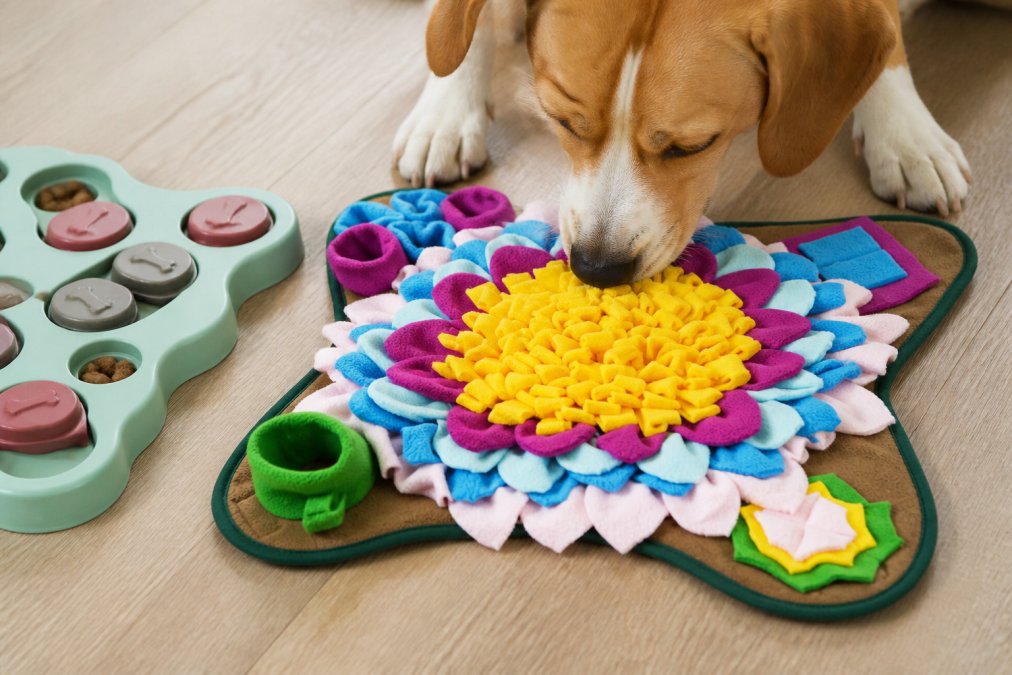
The Smart Duck Feeder (£19.99) combines playfulness with serious anxiety-reduction functionality. The trickle-release mechanism means your dog must nudge, paw, or push the feeder to release kibble, turning mealtime into active problem-solving. The anti-slip base keeps the feeder stable during play.
The Interactive Robot Treat Toy (£19.99) takes enrichment further with its wobble-and-balance design. Treats only release when your dog nudges or pushes it correctly, requiring genuine problem-solving. This feeder is exceptional for dogs that need sustained mental engagement.
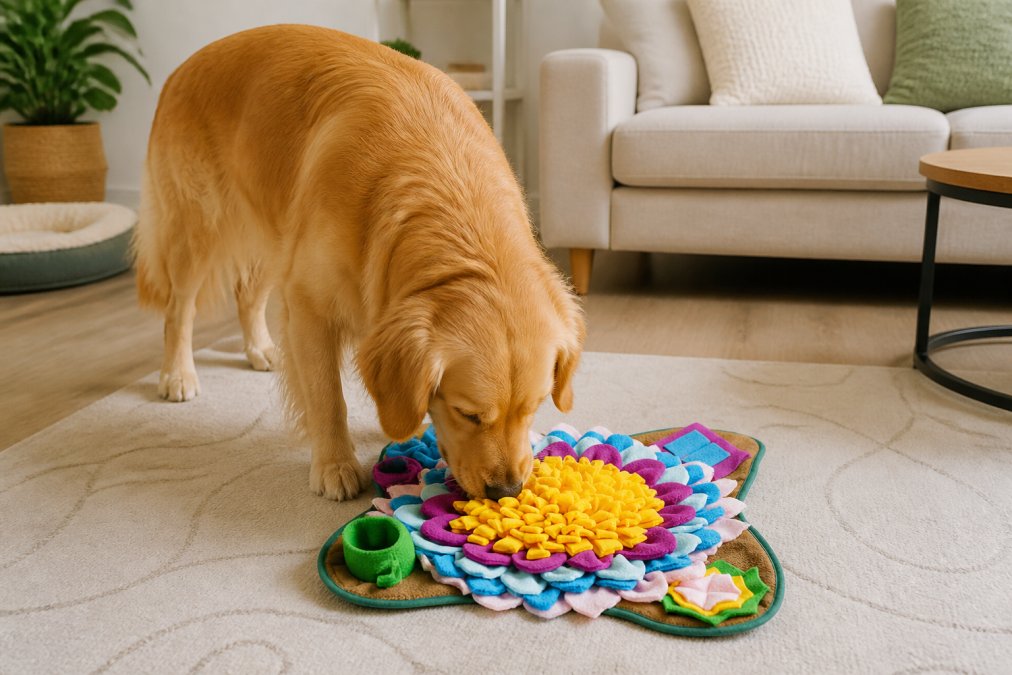
The Snuffle Mat for Dogs (£19.99) uses your dog's natural foraging instincts. You sprinkle kibble or treats between fabric petals, and your dog uses their nose to find and extract food. This engages the olfactory system intensely, which has a documented calming effect on anxious dogs.
Integrating Smart Feeders into Behavioural Therapy
A smart feeder alone doesn't cure separation anxiety; it's a tool within a broader behavioural strategy. The most effective anxiety reduction combines feeding structure with systematic desensitization and, when necessary, professional guidance.
Desensitization means gradually teaching your dog that your departure isn't a threat. Start by leaving for 30 seconds, then return. Gradually extend the duration. The feeder becomes part of this process: you leave, the feeder dispenses food on schedule, and your dog learns that your absence isn't correlated with abandonment.
Behavioural consistency is where most owners fail. A feeder only works if you use it every single day at the same time. The routine itself is the therapy; the feeder is just the delivery mechanism.
Work with a veterinary behaviourist if your dog's anxiety is severe. They can assess whether your dog needs medication alongside behavioural work and identify anxiety triggers you might miss.
Environmental enrichment beyond feeding matters too. Ensure your dog has access to safe spaces, comfortable bedding, white noise to mask outside sounds, and ideally, a window view for visual stimulation. Some owners combine smart feeders with puzzle toys and snuffle mats, rotating them throughout the day so their dog has varied enrichment.
Conclusion
Separation anxiety in dogs is real, and it requires real solutions. Smart dog feeders and interactive feeding systems address the core problem: they provide structure, mental engagement, and predictability that anxious dogs desperately need.
The best feeders from Doggo Shop combine simplicity with effectiveness. Whether you choose the affordable Slow Feeder Dog Bowl at £14.99 for straightforward portion control, or the Interactive Robot Treat Toy at £19.99 for sustained mental enrichment, consistency matters more than complexity. Use it every day at the same time, and you'll see measurable improvements in your dog's anxiety within weeks.

Remember: every purchase from Doggo Shop supports rescue dogs in need worldwide. When you invest in your dog's wellbeing, you're also making a difference for dogs waiting in shelters. Learn more about canine anxiety and enrichment strategies from the Association of Professional Dog Trainers. Start with the feeder that matches your dog's needs, commit to the routine, and watch your anxious dog transform into a calmer, more confident companion.
Frequently Asked Questions
Q: Can smart dog feeders really help reduce separation anxiety?
A: Smart dog feeders can support anxiety management by providing structured feeding routines, mental stimulation, and in some cases, remote monitoring so you can check on your dog while away. They work best alongside behavioural training and desensitisation exercises. Scheduled feeding builds predictability, which many anxious dogs find reassuring. However, they are a tool to complement training, not a standalone solution for separation anxiety.
Q: What should I look for in an automatic pet feeder with camera?
A: Prioritise Wi-Fi stability (to avoid disconnections), clear video quality for monitoring, two-way audio so you can speak to your dog remotely, real-time notifications when your dog eats, and battery backup in case of power loss. Check that portion sizes match your dog's needs and that the feeder is easy to clean. Reliability matters more than extra features if your dog depends on it for anxiety management.
Q: How do slow feeders and puzzle toys help dogs eat more slowly?
A: Slow feeders use maze-like designs or textured surfaces that force dogs to work for each bite, extending mealtime and promoting better digestion. Puzzle feeders require dogs to nudge, paw, or manipulate the toy to release treats, turning eating into an interactive game. Both reduce choking risk and overeating while providing mental enrichment, which is particularly valuable for anxious dogs who benefit from cognitive engagement during meals.
Q: Are interactive feeders safe for dogs that eat too fast?
A: Yes, when chosen correctly. Slow feeder bowls with maze designs, puzzle dispensers, and snuffle mats all slow eating safely by design. The key is selecting one appropriate for your dog's size and kibble preferences. Always supervise initially and check that pieces cannot be swallowed whole. Products from reputable retailers come with safety guidance specific to your dog's weight range.
This article was written using GrandRanker


Leave a comment