


Signs Your Dog Needs Orthopedic Support: A Complete Guide
Table of Contents
- Signs Your Dog Needs Orthopedic Support: What to Watch For
- Dog Joint Pain Symptoms: When to Take Action
- Canine Arthritis Signs and Degenerative Joint Disease
- Orthopaedic Dog Bed Benefits: Supporting Comfort and Recovery
- Breed-Specific Orthopedic Risk Profiles
- Home-Based Mobility Assessment Checklist
- Dog Physiotherapy UK: When to Consult a Specialist
- Environmental Modifications Beyond Bedding
Last Updated: August 2, 2026
Signs Your Dog Needs Orthopedic Support: What to Watch For
Understanding the signs your dog needs orthopedic support can make the difference between early intervention and chronic pain. Dogs communicate pain through behaviour and movement changes rather than vocally, a dog with joint pain might limp up stairs or hesitate before jumping on the sofa, subtle shifts that signal something is wrong.
Joint Pain and Stiffness
Joint pain and stiffness are among the earliest indicators that your dog may benefit from orthopedic support. Stiffness typically appears first thing in the morning or after extended rest, with your dog taking careful steps before moving normally, a classic sign of joint inflammation or arthritis developing.
Watch for hesitation before lying down or getting up, favouring one leg over others, or visible swelling around the knees, hips, or elbows. Some dogs develop a "bunny hop" gait where they move both hind legs together rather than independently, a compensation strategy for hip or knee pain.
Difficulty Rising After Rest
One of the most telling signs your dog needs orthopedic support is difficulty getting up after lying down. A dog with healthy joints springs up effortlessly; a dog with joint issues may need multiple attempts, use its front legs to push itself upright, or cry out during the process. This behaviour is particularly noticeable after several hours of sleep or rest.
The severity correlates directly with the degree of joint degeneration. Mild arthritis causes slight hesitation; moderate to severe arthritis causes prolonged difficulty and visible discomfort. If your dog struggles significantly to rise, veterinary consultation is warranted.
Changes in Gait and Reluctance to Move
Gait changes are among the most observable signs your dog needs orthopedic support. A healthy dog moves with a consistent, symmetrical stride; a dog with joint pain develops a distinctive limp or altered movement pattern. Common changes include shortened stride length, weight shifting to avoid putting full weight on affected limbs, or bunny-hopping.
Reluctance to move is closely linked to gait changes. A dog experiencing joint pain will naturally move less because movement causes discomfort. What once was a 30-minute walk might become a 10-minute shuffle. Your dog might avoid climbing stairs, jumping on furniture, or playing with other dogs.
Avoidance of Jumping or Climbing Stairs
Dogs with orthopedic issues often develop a clear aversion to activities requiring jumping or climbing. Jumping places significant impact stress on joints, particularly the hips and knees. A dog with joint pain learns quickly that jumping causes discomfort and will avoid it proactively, refusing to jump onto the sofa, into the car, or up to greet you at the door.
Stairs present a similar challenge. A sudden change in your dog's willingness to use them suggests joint problems. Descending stairs is often more difficult than ascending because it requires greater control and places more stress on joints.
Dog Joint Pain Symptoms: When to Take Action
Dog joint pain manifests beyond movement. Pain affects your dog's entire physiology and behaviour. Some dogs become more irritable or anxious because chronic pain creates constant low-level stress. Others become withdrawn, preferring isolation. A few develop excessive licking or chewing of affected joints, which can lead to secondary skin problems.

Temperature sensitivity is another symptom many owners overlook. A dog with joint pain often seeks warm environments and may be reluctant to go outside in cold weather. Behavioural changes include reluctance to be touched in certain areas, flinching when picked up, or becoming defensive during grooming.
According to research from the American Animal Hospital Association, recognising these behavioural shifts early allows for more effective intervention. Dogs receiving orthopedic support in early stages of joint disease experience significantly better long-term outcomes than those treated only after severe degeneration.
Canine Arthritis Signs and Degenerative Joint Disease
Arthritis in dogs is degenerative joint disease, meaning it worsens progressively over time. Early-stage arthritis presents with morning stiffness and reluctance to move that improves as the dog warms up. This stage is when intervention is most effective; orthopedic support, weight management, and mobility exercises can slow progression significantly.
Mid-stage arthritis involves consistent lameness throughout the day. The dog shows clear preference for using certain limbs and avoids activities stressing affected joints. Pain medication becomes necessary, and many dogs benefit from supplements supporting joint health. Products like glucosamine and chondroitin supplements have demonstrated effectiveness in slowing cartilage degeneration when started early.

Late-stage arthritis is characterised by severe lameness, significant muscle atrophy in affected limbs, and substantial behavioural changes. Pain management becomes the primary goal.
Hip dysplasia and elbow dysplasia are among the most common causes of early-onset arthritis in dogs. These developmental conditions create abnormal wear patterns leading to arthritis. Certain breeds, including German Shepherds, Labrador Retrievers, and Golden Retrievers, carry genetic predisposition.
| Arthritis Stage | Primary Signs | Movement Characteristics | Intervention Focus |
|---|---|---|---|
| Early | Morning stiffness, reluctance to move | Improves with activity | Prevention, supplements |
| Mid | Consistent lameness throughout day | Avoids jumping, stairs | Pain management, support |
| Late | Severe lameness, muscle loss | Minimal voluntary movement | Pain relief, comfort |
Orthopaedic Dog Bed Benefits: Supporting Comfort and Recovery
An orthopaedic dog bed is one of the most impactful investments you can make for a dog with joint issues. These beds provide crucial support that reduces stress on joints during the hours your dog spends resting. Since dogs sleep 12-16 hours daily, the quality of their resting surface directly affects their pain levels and recovery.
Traditional dog beds offer minimal support; orthopaedic beds use memory foam or other supportive materials that distribute weight evenly and reduce pressure points.
Many orthopaedic beds include gel-infused memory foam that stays cool, helping reduce inflammation. Position the bed away from high-traffic areas and draughts, in a quiet location where your dog can rest undisturbed. Ground-floor placement is preferable to avoid stairs.
At Doggo Shop, we understand that orthopedic support extends beyond bedding alone. Our curated selection of premium dog products includes supportive solutions designed to keep your pup comfortable during recovery. When combined with appropriate supplements and veterinary care, proper bedding becomes part of a comprehensive approach to managing your dog's joint health.
Breed-Specific Orthopedic Risk Profiles
Certain breeds carry significantly higher risk for orthopedic problems due to genetic predisposition and physical structure. Large and giant breeds, including German Shepherds, Labrador Retrievers, Golden Retrievers, and Great Danes, develop arthritis at higher rates. Their greater body weight places more stress on joints, and many carry genetic predisposition to hip and elbow dysplasia.
Dachshunds and other long-backed breeds face specific risk for intervertebral disc disease, where discs in the spine deteriorate or herniate. Small breeds like Chihuahuas and toy poodles frequently develop patellar luxation, where the kneecap slides out of its groove. Bulldogs and other brachycephalic breeds develop orthopedic problems at elevated rates due to their structural build.
Home-Based Mobility Assessment Checklist
Assessing your dog's mobility at home provides crucial baseline data and helps you track changes over time.
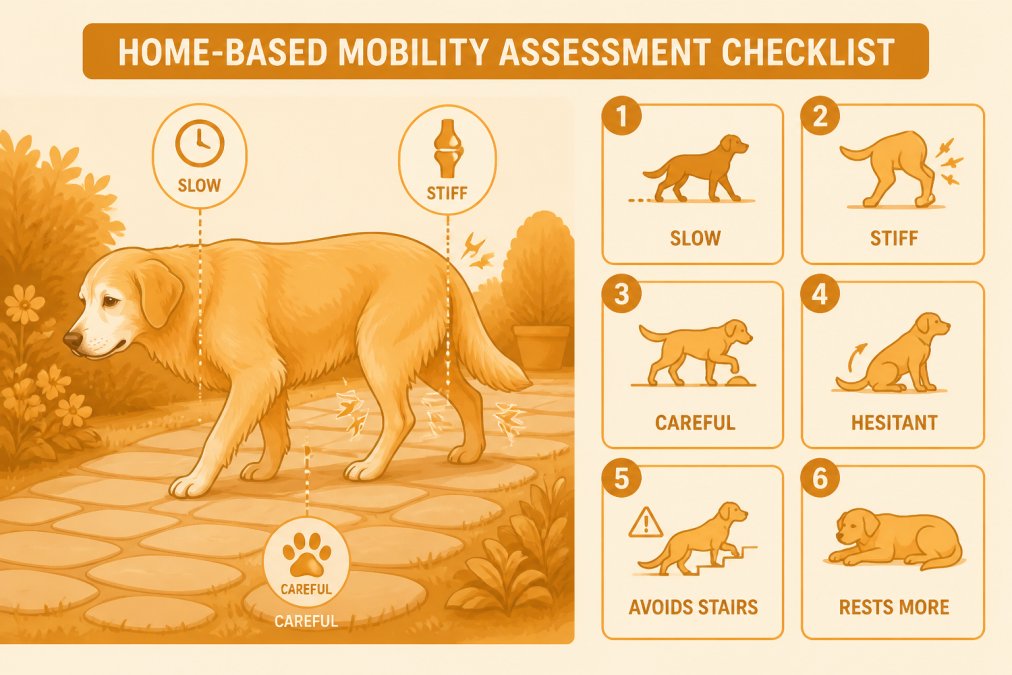
Start with observation during normal daily activities. Watch how your dog rises from lying down, does it need multiple attempts? Does it cry out? Time the process; baseline data helps you track improvement or decline. Observe your dog walking on flat ground. Does it move symmetrically, or does one side move differently? Note any limping, shortened stride, or unusual gait patterns.
Test stair climbing if your home has stairs. Watch whether your dog climbs confidently or hesitantly. Assess jumping ability carefully. Can your dog jump onto furniture at its normal height? Does it attempt but fail? Does it avoid jumping altogether?
Evaluate muscle condition by running your hands along your dog's legs and hindquarters. Do you feel strong muscle, or is it thin and wasted? Compare both sides; muscle loss is often asymmetrical.
| Assessment Area | Normal Findings | Concerning Signs | Action |
|---|---|---|---|
| Rising from rest | Smooth, single motion | Multiple attempts, vocalisation | Consult vet |
| Walking gait | Symmetrical, consistent stride | Limping, shortened stride, bunny-hop | Monitor closely |
| Stair climbing | Confident, steady pace | Hesitation, one-step-at-a-time, avoidance | Consider alternatives |
| Jumping | Confident, successful | Failed attempts, avoidance, reluctance | Assess joint health |
| Muscle condition | Firm, symmetrical | Thin, asymmetrical, wasted | Increase activity carefully |
| Range of motion | Full, pain-free | Restricted, resistance, flinching | Veterinary evaluation |
Document your findings in writing or video. Video is particularly valuable because you can compare your dog's movement over weeks or months.
Dog Physiotherapy UK: When to Consult a Specialist
When your dog shows signs of needing orthopedic support, your first step should be a veterinary consultation. Your regular veterinarian can diagnose the underlying condition and recommend appropriate treatment. However, many dogs benefit from specialist care, particularly canine physiotherapy.
Canine physiotherapy in the UK is increasingly recognised as valuable complement to veterinary treatment. A qualified canine physiotherapist works with your dog to improve mobility, reduce pain, and strengthen muscles supporting affected joints. Treatment typically includes exercises, manual therapy, and sometimes modalities like hydrotherapy or laser therapy.
Hydrotherapy, exercise in warm water, is particularly effective for dogs with arthritis or joint problems. Water supports the dog's weight, reducing stress on joints, while resistance from water provides strengthening benefits.
Finding a qualified physiotherapist requires research. Look for practitioners registered with the Association of Chartered Physiotherapists in Animal Therapy (ACPAT), which maintains standards for professional practice in the UK. Early intervention allows therapists to address problems before they cause secondary complications like muscle atrophy.
Environmental Modifications Beyond Bedding
Creating a supportive home environment extends far beyond providing an orthopaedic bed. Strategic modifications throughout your home can significantly reduce physical demands on your dog's joints.
Ramp installation is one of the most impactful modifications for dogs with hind-end weakness or joint pain. A ramp allows your dog to access furniture, vehicles, or elevated areas without jumping. Ramps should have non-slip surfaces and gradual inclines.
Flooring significantly affects your dog's ability to move safely. Slippery floors like tile or hardwood force dogs to work harder to maintain traction, increasing joint stress. Placing non-slip mats or rugs in high-traffic areas provides grip and reduces effort required for movement.
Furniture height matters considerably. Low furniture is easier for dogs with joint problems to access. Elevated feeders reduce strain on a dog's neck and spine while eating. Temperature control throughout your home impacts joint inflammation; providing access to temperature-varied areas allows your dog to self-regulate based on comfort needs.
Stairs can be managed through environmental modification. Baby gates can restrict access, preventing your dog from attempting them. Some owners rearrange their home to keep their dog's essential areas, sleeping, eating, toilet access, on a single level, eliminating stair use entirely.
When your dog shows signs of joint problems, early recognition and intervention make an enormous difference in long-term outcomes. Orthopedic issues progress more slowly when addressed early, and dogs managed proactively maintain better quality of life throughout their later years. At Doggo Shop, we're committed to helping you provide the best possible care for your dog. Our premium orthopedic support products, combined with joint-health supplements like Complete Joint Care for Dogs with Glucosamine, MSM & Chondroitin (£34.99) and New Flex TrueCanine Dog Hip & Joint Supplement (£29.99), provide comprehensive support for your dog's joint health. Start with proper assessment, implement environmental modifications, and work with your veterinarian to develop a comprehensive care plan. Every purchase supports rescue dogs in need worldwide.
Frequently Asked Questions
What are the early signs your dog needs orthopedic support?
Early signs include limping after rest, reluctance to jump or climb stairs, stiffness when rising, and subtle changes in gait. Your dog may also show less interest in walks or play, avoid certain positions, or experience difficulty with daily activities. These signs often develop gradually, so monitoring your dog's movement patterns regularly helps catch issues early. If you notice any of these changes, contact your vet for an assessment.
How can an orthopaedic dog bed benefit my dog's joint health?
An orthopaedic dog bed provides firm, supportive cushioning that reduces pressure on joints, particularly the hips and shoulders. Quality orthopedic beds distribute weight evenly, which decreases strain during rest and recovery. They're especially beneficial for dogs with arthritis, hip dysplasia, or post-exercise soreness. Proper support during sleep helps reduce inflammation and improves mobility the following day. Look for beds with memory foam or high-density padding for maximum joint support.
When should I seek dog physiotherapy in the UK?
Consider physiotherapy when your dog shows persistent joint pain, limited range of motion, or difficulty with mobility. It's particularly helpful after injury, during arthritis management, or when your dog needs rehabilitation. In the UK, you can ask your vet for a referral to a chartered physiotherapist registered with the Royal College of Veterinary Surgeons (RCVS). Physiotherapy sessions typically include exercises, manual therapy, and movement guidance tailored to your dog's condition.
Can supplements and diet help with canine arthritis signs?
Yes. Supplements containing glucosamine, chondroitin, MSM, and omega-3 fatty acids support joint health and may reduce inflammation. Products like Complete Joint Care for Dogs (£34.99) and New Flex TrueCanine (£29.99) provide targeted joint support. Maintaining a healthy weight through balanced diet also reduces stress on joints. Omega-3 supplements such as Native Pet Fish Oil (£29.99) support mobility and joint function. Always consult your vet before starting supplements to ensure they're appropriate for your dog.
This article was written using GrandRanker


Leave a comment