


Why Your Dog Needs a Raised Feeder: Benefits & Guidance
Table of Contents
- What Is a Raised Feeder and Why It Matters
- Best Height for Elevated Dog Bowls
- How to Stop Dog Eating Too Fast
- Joint Health and Orthopedic Benefits
- Signs of Bloat in Dogs and What You Should Know
- Pros and Cons of Elevated Feeders
- Choosing the Right Raised Feeder for Your Dog
- Conclusion
Last Updated: August 30, 2026
What Is a Raised Feeder and Why It Matters
A raised feeder is an elevated feeding station that positions your dog's food and water bowls above ground level, typically at chest or shoulder height. Unlike traditional floor-level bowls, a raised feeder encourages a more natural eating posture and can address several health and practical concerns that matter to conscientious dog owners.
The reason this matters is straightforward: how your dog eats affects how their body functions. When dogs bend down to floor-level bowls, they're working against their natural anatomy. A raised feeder dogs setup changes that dynamic entirely.
The debate around raised feeders has shifted considerably in recent years. While older guidance sometimes cautioned against them, current understanding recognises that for many dogs, particularly larger breeds and senior dogs, an elevated feeding station offers genuine benefits. The key is understanding which dogs benefit most and how to choose the right height and design for your specific dog.
This guide walks you through everything you need to know: the health advantages, how to measure for the correct height, what the research actually shows about bloat risk, and how to select a raised feeder that will last through years of daily use.
Best Height for Elevated Dog Bowls
The ideal height for an elevated dog feeder positions the bowls at approximately chest or shoulder level when your dog stands naturally in a relaxed feeding posture. Most dogs eat most comfortably when their bowls sit between 15-30 centimetres above the floor, though the exact measurement depends on your dog's size and build.
Here's how to measure correctly: Have your dog stand in a relaxed position. Measure from the floor to the top of their front legs or lower chest. Your feeder height should align roughly with this measurement. A dog eating from a bowl positioned too low will crane their neck downward unnaturally. Too high, and they'll stretch upward, which creates its own strain.
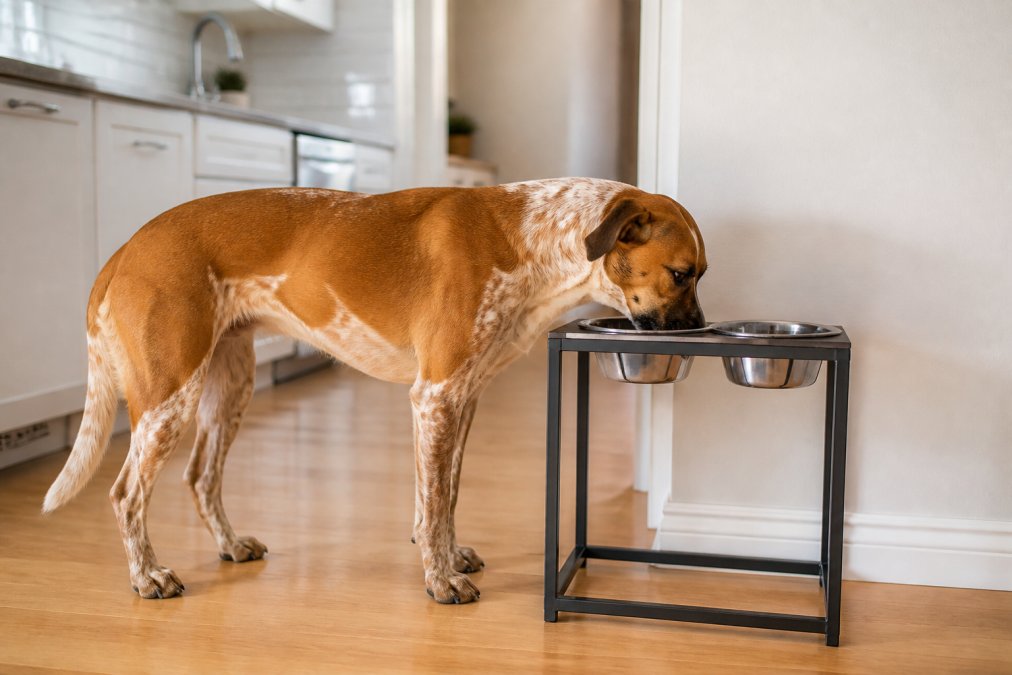
For large and giant breed dogs, this becomes even more important. A Great Dane or German Shepherd eating from floor-level bowls experiences significant strain on their spine, shoulders, and neck simply because of the distance they must bend. An elevated feeder reduces this strain substantially. Small dogs, conversely, benefit from modest elevation, even 10-15 centimetres makes a difference to their posture.
Adjustable feeders offer flexibility as your dog grows or if you own multiple dogs of different sizes. The Zero-Splash Elevated Dog Water Bowl with Adjustable Height from Doggo Shop comes with four height options, allowing you to dial in the exact positioning that suits your dog's anatomy. This matters because the wrong height, even if it's "close", negates many of the postural benefits you're seeking.

Temperature and material also factor into comfort. Stainless steel bowls maintain consistent temperature and resist bacterial buildup better than ceramic or plastic alternatives. These details seem minor until you're watching your dog eat every single day.
How to Stop Dog Eating Too Fast
Dogs that bolt their food consume excess air along with kibble, a phenomenon called aerophagia (peer-reviewed research). This rapid eating behaviour creates multiple problems: gastrointestinal distress, increased bloat risk, poor nutrient absorption, and often vomiting shortly after meals. A raised feeder doesn't automatically solve this, but it creates conditions that naturally slow eating.
When a dog eats from an elevated bowl positioned at chest height, gravity works differently. They can't use their natural "scoop and gulp" technique as effectively. The angle of approach forces slightly more deliberate consumption. For many dogs, this alone can reduce eating speed.
Slow-feeder inserts take this further. These specially designed bowl inserts feature ridges, maze-like patterns, or compartments that force your dog to work around obstacles to access their food. A dog that normally finishes a bowl in 30 seconds might take 3-5 minutes with a slow-feeder insert. The digestive system gets time to register fullness signals, reducing overall intake and improving digestion.
Combining an elevated feeder with a slow-feeder insert creates the most effective setup for fast eaters. The Doggo Shop Zero-Splash Elevated Dog Water Bowl offers slow-feeder options specifically designed to work with the elevated platform. This combination addresses both the mechanical (posture and angle) and behavioural (pacing) aspects of rapid eating.
Feeding frequency matters too. Instead of one large meal, splitting daily food into two or three smaller portions naturally reduces the volume consumed at once. A dog fed twice daily eats more slowly per session than one fed once daily, simply because there's less food in front of them.
Joint Health and Orthopedic Benefits
Large and giant breed dogs carry significant weight through their front legs and shoulders. Every time they bend to a floor-level bowl, they're loading these joints with extra stress. Over months and years, this repetitive strain contributes to arthritis, joint deterioration, and mobility issues that affect quality of life.
An elevated feeder reduces this strain measurably. By positioning bowls at chest height, you eliminate the extreme downward bend that forces excessive weight through the front legs. Senior dogs with existing arthritis experience particular relief. Dogs with orthopaedic conditions, hip dysplasia, elbow dysplasia, or degenerative joint disease, often show improved comfort and willingness to eat when feeding height is optimised.
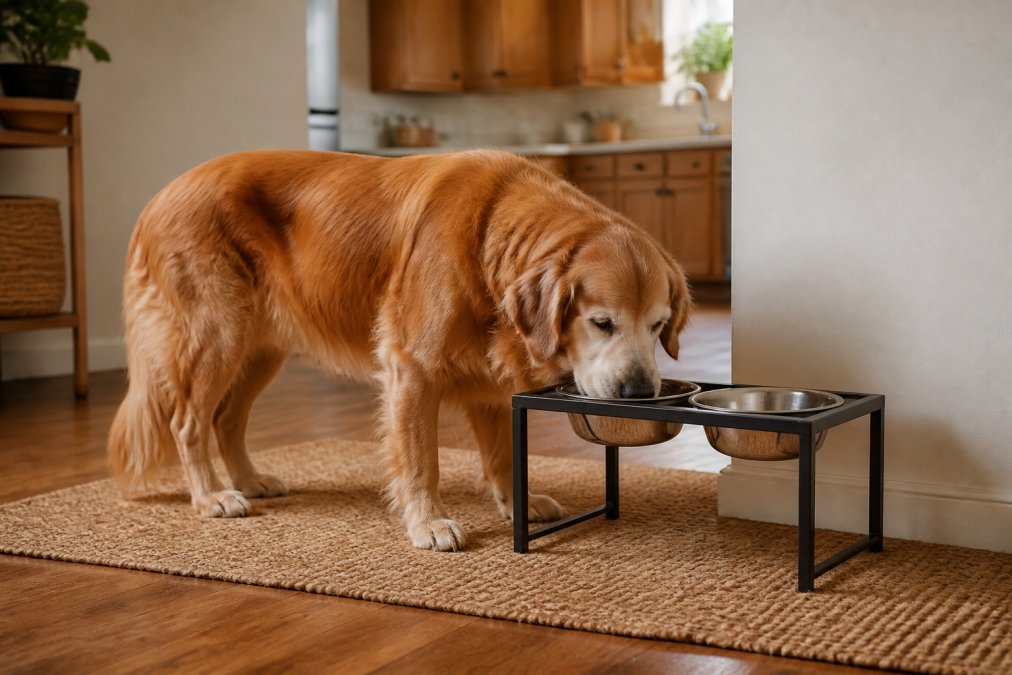
The posture improvement extends beyond the moment of eating. Dogs that eat in better alignment tend to carry themselves differently throughout the day. Owners of large-breed dogs frequently report that their dogs seem more mobile and less stiff after switching to elevated feeders. This isn't dramatic transformation, it's incremental improvement in comfort and function.
Breed predisposition matters here. Giant breeds like Great Danes, Saint Bernards, and Mastiffs benefit most from elevated feeders because the postural strain from floor-level feeding is most pronounced in these larger frames. Medium and small breeds benefit too, but the advantage is less dramatic. Senior dogs of any size show clear preference for elevated feeding stations once they experience the reduced strain.
The connection between feeding posture and long-term joint health isn't theoretical. Dogs that maintain better spinal alignment and reduced joint loading throughout their lives tend to experience less degenerative joint disease in their senior years. Elevated feeders are one practical way to support this.
Signs of Bloat in Dogs and What You Should Know
Bloat, medically termed gastric dilatation-volvulus (GDV), is a serious and potentially life-threatening condition where the stomach fills with gas and may twist on itself (vet.cornell.edu). It's a genuine emergency requiring immediate veterinary attention. Understanding the actual risk factors, and what raised feeders do and don't do, is essential.
The signs of bloat include: a hard, distended abdomen; restlessness and inability to settle; unproductive retching or attempts to vomit; excessive drooling; and rapid or laboured breathing. If your dog shows these signs, seek emergency veterinary care immediately. Time is critical with bloat.
The relationship between raised feeders and bloat is more nuanced than popular advice suggests. Some sources claim elevated feeders prevent bloat; others suggest they increase risk. The reality is more complicated. Raised feeders may reduce aerophagia (excess air consumption) in some dogs, which theoretically reduces bloat risk. However, genetics, feeding speed, meal size, exercise timing, and stress are stronger risk factors than feeder height alone.
Large and giant breed dogs have genuinely higher bloat risk regardless of feeding setup (peer-reviewed research). Breeds like Great Danes, Weimaraners, and German Shepherds are predisposed. A family history of bloat increases risk. Feeding one large meal daily increases risk compared to multiple smaller meals. Vigorous exercise immediately before or after eating increases risk.
What raised feeders actually do is improve posture and potentially slow eating speed, both of which may modestly reduce bloat risk in susceptible dogs. But they're not a bloat prevention strategy on their own. The most effective bloat-reduction approaches are: feeding multiple smaller meals daily, avoiding vigorous exercise for 1-2 hours after eating, managing stress around mealtimes, and monitoring your dog's eating speed.
If your dog is at high risk for bloat, discuss feeding strategies with your veterinarian. They may recommend specific meal sizes, feeding frequency, or other precautions based on your dog's individual risk profile.
Pros and Cons of Elevated Feeders
Advantages of raised feeders:
-
Improved posture and spinal alignment, Dogs eat with less neck and spine strain, particularly beneficial for large, giant, and senior dogs.
-
Reduced joint and shoulder stress, Elevated feeding minimises loading through front legs and shoulders, potentially slowing joint deterioration in predisposed dogs.
-
Slower eating pace, The altered angle naturally encourages more deliberate consumption, reducing aerophagia and improving digestion.
-
Better for senior and mobility-limited dogs, Older dogs or those with arthritis experience genuine comfort improvement.
-
Easier to clean, An elevated feeder keeps bowls off the floor, making cleanup simpler and reducing mess.
-
Hygiene benefits, Elevated bowls are less exposed to floor dirt, dust, and contaminants.
-
Reduced water splashing, Elevated water bowls (particularly splash-proof designs) minimise water mess, especially helpful for large dogs with droopy jowls.
Disadvantages and considerations:
-
Not suitable for all dogs, Puppies and very small dogs may not benefit; some dogs simply prefer floor-level feeding.
-
Cost, Quality elevated feeders cost more than basic floor bowls. A durable stainless steel elevated system like the Doggo Shop Zero-Splash runs £49.99, which is a genuine investment for some households.
-
Space requirements, Raised feeders take up more floor space and may not fit in small kitchens or apartments.
-
Material durability, Cheaper elevated feeders may tip easily or degrade quickly. Stainless steel and non-slip bases matter for longevity.
-
Not a magic solution, Elevated feeders address posture and eating speed, but don't solve all feeding-related issues.
-
Dog preference, Some dogs simply resist change and prefer their familiar floor-level setup.
-
Bloat risk misconception, Elevated feeders don't prevent bloat on their own. This is a common misunderstanding that can lead to false security.
The reality is that elevated feeders solve specific problems well, posture, joint strain, eating speed, mess, but aren't universally necessary for every dog. A healthy young small dog eating at normal speed from a floor bowl faces fewer genuine problems than a senior 40-kilogram dog doing the same.
Choosing the Right Raised Feeder for Your Dog
The best raised feeder for your dog depends on three factors: your dog's size and age, your budget, and the specific problems you're trying to solve.
Size and height: Measure your dog as described earlier. An adjustable feeder accommodates growth if you have a puppy, or multiple dogs of different sizes. Fixed-height feeders are cheaper but less flexible.
Material matters significantly. Stainless steel bowls resist bacteria, maintain temperature better, and last years longer than plastic or ceramic. They're also easier to sanitise. Plastic bowls absorb odours and can harbour bacteria in microscopic scratches. Ceramic breaks if dropped and can chip, creating sharp edges.
Base stability is critical. A feeder that tips easily creates mess and frustration. Look for a non-slip base, weighted design, or raised edges that prevent bowls from sliding. The Doggo Shop Zero-Splash features a stable platform specifically designed to prevent tipping and splashing.
Slow-feeder compatibility: If your dog eats too fast, choose a feeder that accepts slow-feeder inserts or has a built-in maze design. Not all elevated feeders accommodate these.
Ease of cleaning: Can you remove the bowls easily? Are they dishwasher-safe? Does the base collect water or food debris that's hard to reach? These practical details matter when you're cleaning the feeder daily.
Budget considerations: A basic elevated feeder might cost £15-25, but durability suffers. Mid-range options (£30-60) offer stainless steel construction and stability. Premium feeders (£60+) add features like adjustability, slow-feeder integration, or aesthetic design. For most dogs, a quality mid-range feeder provides the best value.
Consider your dog's specific needs. A senior large-breed dog with arthritis benefits most from a quality adjustable feeder with excellent stability. A young, healthy small dog might be perfectly content with a basic elevated setup. A fast eater needs slow-feeder capability. A messy drinker needs splash-proof design.
Conclusion
A raised feeder addresses real problems for many dogs: improved posture, reduced joint strain, slower eating, better digestion, and easier cleanup. For large, giant, and senior dogs, these benefits often translate into noticeable comfort improvements and better long-term joint health.
The key is matching the right feeder to your dog's specific situation. An adjustable, stainless steel elevated feeder with a non-slip base and slow-feeder compatibility solves most feeding-related challenges. At Doggo Shop, we've designed the Zero-Splash Elevated Dog Water Bowl with these exact considerations: adjustable height for any dog size, stainless steel construction for durability and hygiene, splash-proof design to eliminate mess, and compatibility with slow-feeder inserts for dogs that eat too quickly. Shop now and give your dog the comfort and health benefits they deserve, while supporting rescue dogs in need with every purchase.
Frequently Asked Questions
Q: Do vets recommend elevated dog bowls?
A: Veterinary opinion on raised feeders is mixed. Some vets recommend them for senior dogs, large breeds, or dogs with joint issues because they reduce neck strain and improve posture during feeding. However, the relationship between raised feeders and bloat (gastric dilatation-volvulus) remains debated in veterinary medicine. The best approach is to discuss your individual dog's needs with your vet, particularly if your dog has arthritis, mobility issues, or a family history of bloat.
Q: What is the best height for elevated dog bowls?
A: The ideal height should align with your dog's chest or shoulder line when standing in a natural eating position. For most dogs, this is roughly 15-25 cm from the ground, though larger and giant breeds may need 25-30 cm. A bowl that's too high forces your dog to arch their neck, while one that's too low causes them to hunch. Adjustable raised feeders, like the Zero-Splash Elevated Dog Water Bowl with Adjustable Height, allow you to fine-tune the height as your dog grows or their needs change.
Q: Can a raised feeder help my dog stop eating too fast?
A: Yes, raised feeders can slow down eating by encouraging a more natural eating position that promotes better swallowing mechanics. When combined with slow-feeder inserts or bowls designed with ridges, they become even more effective at reducing aerophagia (excess air intake). A slower eating pace improves digestion and reduces the risk of choking. Many owners notice their dogs eat more mindfully from an elevated platform, particularly when paired with portion control and feeding schedules.
Q: Do raised feeders cause bloat in dogs?
A: This is one of the most debated topics in canine nutrition. Some older studies suggested raised feeders might increase bloat risk, but more recent veterinary research does not support a direct causal link. Bloat (gastric dilatation-volvulus or GDV) is multifactorial, involving genetics, eating speed, meal size, and exercise timing. Rather than the feeder height alone, focus on feeding practices: smaller, frequent meals, slowing eating with slow-feeder options, and avoiding vigorous exercise immediately after feeding. Always consult your vet if your dog has risk factors for bloat.
This article was written using GrandRanker


Leave a comment