


Puppy Biting Children: What to Do
Table of Contents
- Why Puppies Bite Children
- Puppy Mouthing vs Biting: Understanding the Difference
- Immediate Steps After a Bite Occurs
- Teaching Bite Inhibition Through Positive Reinforcement
- Best Toys for Teething Puppies
- Puppy Socialisation with Children: Building Safe Interactions
- Physical Separation and Management Techniques
- When to Seek Professional Help
Last Updated: August 21, 2026
Why Puppies Bite Children
Puppies bite children because they explore their world with their mouths. At this developmental stage, their teeth are their primary tool for learning and playing. When a child's hand moves quickly, a puppy sees it as an invitation to play, not a signal to back away.
Puppies don't bite out of aggression or dominance, they bite because they haven't learned that human skin is fragile. Their littermates would yelp if a bite hurt too much, providing natural feedback. Children often squeal or run away, which can actually encourage more biting because the puppy thinks the game is continuing.
The other major reason relates to teething. Between three and six months, a puppy's baby teeth are replaced by adult teeth, and their gums become sore and tender. Chewing and biting provide relief. A puppy in this phase will seek out anything firm to gnaw on, and small hands are often within reach.
Puppy Mouthing vs Biting: Understanding the Difference
Puppy mouthing is gentle, exploratory nibbling during play, while biting refers to harder, more forceful jaw contact that can break skin or cause pain. This distinction matters because it changes how you respond.
Mouthing is softer and part of normal play behaviour. The puppy's jaw pressure is controlled, their body language is relaxed, and their tail is wagging. Mouthing is especially common in puppies under four months old.
Biting involves more pressure and intent, leaving marks or causing discomfort. This can happen during over-excited play, when a puppy is frightened, or when they're frustrated from teething pain.
Learning to read these signals helps you respond appropriately. With mouthing, redirect the puppy's attention to a toy. With biting, especially if it causes injury, take immediate action to stop the behaviour and teach the puppy that biting children ends playtime.
Immediate Steps After a Bite Occurs
First aid and wound care
If a puppy has bitten a child, assess and treat the wound immediately. Wash the bite area with soap and clean running water for at least five minutes to remove saliva and bacteria (the CDC). Pat dry with a clean cloth, then apply an antiseptic solution like hydrogen peroxide or iodine-based disinfectant.
For minor bites that don't break the skin, this basic cleaning is usually sufficient. For bites that break the skin, apply gentle pressure with a clean cloth if there's bleeding. Once bleeding stops, apply antibiotic ointment like Neosporin and cover with a sterile plaster. Monitor the wound over the next few days for signs of infection: increased redness, warmth, swelling, or discharge.
When to seek medical attention
Seek medical advice if the bite is deep, punctures the skin significantly, or shows signs of infection. If the bite is on the face, hands, or any area where scarring would be particularly visible, a healthcare professional should evaluate it.
Contact your GP or visit an urgent care centre if you notice increasing pain, swelling, redness, or discharge within 24 to 48 hours after the bite. If your child has underlying health conditions affecting immune function, or if you're uncertain about severity, err on the side of caution.
Teaching Bite Inhibition Through Positive Reinforcement
Bite inhibition is the puppy's ability to control the force of their bite and understand that they can play without causing pain or injury. This is best taught through positive reinforcement rather than punishment.
Start by redirecting bites to appropriate toys. When a puppy bites a hand during play, immediately stop the interaction and offer a toy instead. Use an excited, encouraging tone: "Yes, bite the toy!" When the puppy bites the toy instead of hands, praise generously and continue play. This teaches them that biting toys leads to fun, while biting people ends playtime.
Yelping is another effective technique. When a puppy bites too hard, let out a high-pitched yelp or "Ouch!" and immediately stop playing. Pause for a few seconds, then resume. If the puppy bites hard again, repeat. This mimics natural feedback puppies receive from littermates.
Consistency is critical. Every adult and child who interacts with the puppy must respond the same way to bites. If one person yelps and stops playing while another continues, the puppy receives mixed signals and learning slows dramatically.
Reward-based training accelerates learning. Praise and reward the puppy when they're playing gently, holding a toy instead of biting hands, and responding to redirection. Use high-value treats like small pieces of chicken or cheese to reinforce calm, gentle interactions with children.
Best Toys for Teething Puppies
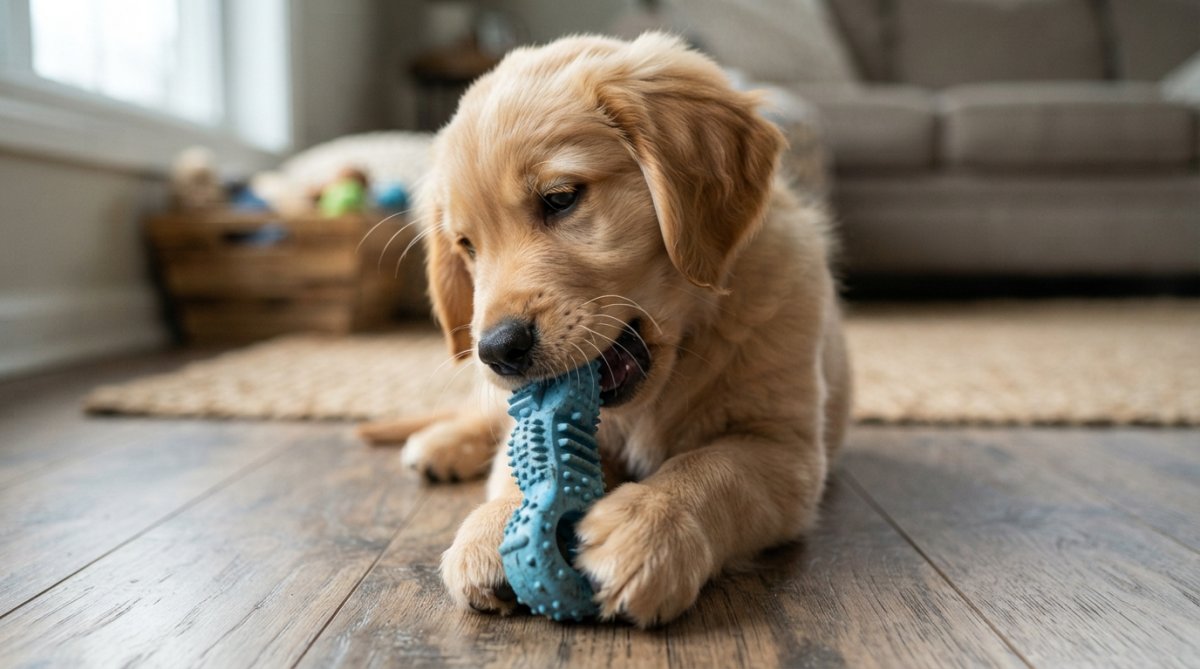
Teething puppies need toys that provide relief from sore gums while keeping them engaged. The right toys redirect biting energy away from hands and furniture.
Rubber chew toys designed for teething are ideal. Look for durable, non-toxic rubber that can withstand vigorous chewing. Toys with textured surfaces provide additional relief as the puppy chews, the bumps and ridges massage sore gums. Doggo Shop's Thick Tire-inspired Durable Dog Chew Toy for Aggressive Chewers is designed specifically for puppies that need something strong, with a treat-dispensing feature that adds mental stimulation.

Rope toys work well for supervised play. The fibrous texture satisfies the chewing impulse, though monitor carefully if the puppy starts shredding the rope to prevent choking.
Puzzle toys that dispense treats combine engagement with relief. As the puppy works to extract treats, they're chewing and problem-solving simultaneously. Doggo Shop's Interactive Suction Cup Tug Toy offers both a chewing surface and interactive play, making it excellent for teething puppies.

Frozen toys provide additional comfort. Soak a rope toy in water and freeze it overnight. The cold numbs sore gums, providing relief similar to a cold teething ring. Offer frozen toys for 10 to 15 minutes at a time.
Rotate toys regularly to maintain interest. A puppy with access to the same toys all day may become bored and return to biting hands or furniture. Introduce toys in rotation to keep novelty high.
Puppy Socialisation with Children: Building Safe Interactions
Age-appropriate expectations
Understanding what to expect at different puppy ages helps you set realistic boundaries. Puppies under 12 weeks old have very limited bite inhibition and minimal impulse control. Expect frequent mouthing and biting, it's developmentally normal. Focus on gentle redirection and teaching.
Between 12 and 16 weeks, puppies are teething intensely and their biting often increases before it decreases. This is the most challenging period. Consistent training and supervision are essential.
By four to six months, many puppies show significant improvement in bite inhibition if you've been consistent with training. Play sessions need to be shorter and more structured, with frequent breaks.
By six months and older, a well-trained puppy should show reliable bite inhibition and play gently with children.
Supervision protocols and boundaries
Never leave a puppy and child unsupervised, regardless of age. An adult must always be present to manage interactions, redirect behaviour, and intervene if needed.
Establish clear physical boundaries. Designate areas where the puppy can be separated from children, a puppy pen, gated room, or crate. This gives the puppy a safe space and children a break from constant interaction. Puppies need rest; tired puppies are more likely to bite.
Teach children how to interact safely. They should approach calmly, avoid sudden movements or loud noises, and never grab at the puppy or pull on ears, tail, or fur. Model gentle interactions yourself.
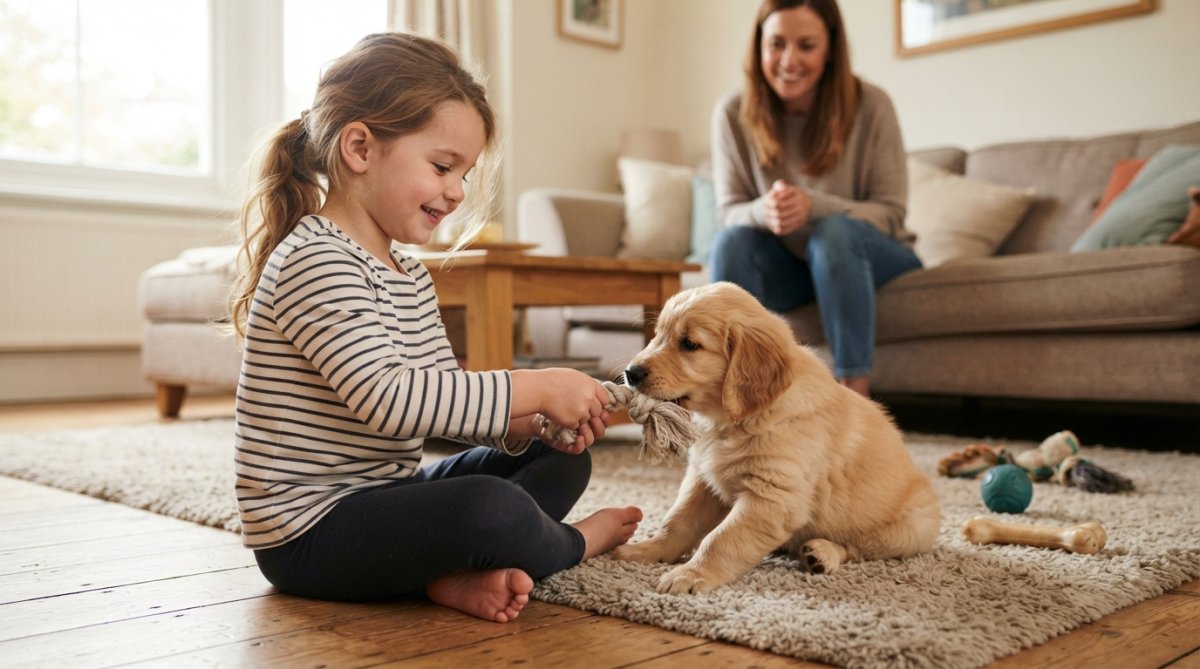
Manage play sessions actively. Set a time limit of 10 to 15 minutes for young puppies. When the puppy shows signs of over-excitement, end the session. A calm puppy is far less likely to bite than an over-stimulated one.
Reward calm interactions heavily. When the puppy is sitting quietly near a child or the child is petting gently and the puppy is calm, reward that behaviour.
Physical Separation and Management Techniques
Sometimes the most effective way to prevent biting is to separate the puppy from situations where biting is likely to occur. This isn't punishment, it's management that protects both puppy and child while training happens.
Use baby gates to create separate spaces. A puppy in one room and children in another can coexist safely. Gradually increase supervised time together as bite inhibition improves.
Puppy pens serve a similar function. A puppy contained in a pen can be in the same room as children without direct interaction, allowing observation and acclimatisation without risk of biting.
Crate training provides a safe space where the puppy can rest without access to children. A crate should never be used as punishment, it should be a positive, comfortable space where the puppy chooses to spend time.
Leashing the puppy indoors during high-risk times gives you immediate control if biting starts. A short lead attached to your belt allows instant redirection without grabbing or punishing.
When to Seek Professional Help
Most puppy biting resolves with consistent training and management. However, if a puppy is biting hard enough to cause significant injury despite consistent training, or if bites are becoming more frequent rather than less frequent after several weeks, consult a certified dog trainer or veterinary behaviourist.
Biting accompanied by other concerning behaviours, growling, stiff body posture, raised hackles, or signs of fear, may indicate a deeper behavioural issue. A professional can assess whether the biting is normal puppy play, fear-based, or something else, and design a tailored training plan.
If a child has been seriously injured or is showing fear or anxiety around the puppy, a professional can help rebuild confidence and establish safer interactions.
Seek help early rather than waiting. A certified trainer can often resolve issues in weeks that might otherwise take months. Look for trainers who use positive reinforcement methods and have experience with puppies and children.
Managing puppy biting children requires patience, consistency, and the right tools. Redirect bites to appropriate toys, teach bite inhibition through positive reinforcement, and supervise all interactions closely. When a puppy has access to durable, engaging toys like those at Doggo Shop, from interactive puzzle toys to textured chew toys designed for teething, they're far more likely to direct their biting energy toward appropriate targets. With time and consistent training, your puppy will learn that gentle play with children leads to fun, while hard biting ends playtime. Most puppies master bite inhibition by six months with this approach, setting the foundation for safe, enjoyable interactions throughout their lives.
Frequently Asked Questions
At what age is puppy biting the worst?
Puppy biting peaks between 12 and 16 weeks, when deciduous teeth are erupting and puppies explore their environment through mouthing. Teething discomfort intensifies the behaviour. Most puppies show significant improvement by 5-6 months as permanent teeth settle. However, play biting can persist beyond this if not addressed through consistent redirection and positive reinforcement during socialisation.
What's the difference between puppy mouthing and actual aggression?
Mouthing is exploratory and playful, soft jaw pressure, relaxed body language, and no intent to harm. Aggressive biting shows stiff posture, growling, snarling, raised hackles, and hard pressure. Puppies mouth during play; aggressive dogs bite with purpose. Most puppy biting is mouthing, not aggression. If your puppy shows signs of true aggression (sustained growling, guarding resources, snapping without play context), seek professional help immediately.
Can a dog be trusted after it bites a child?
Yes, with proper training and management. Most puppies who bite during play learn impulse control through consistent redirection, bite inhibition training, and supervision. The key is addressing the behaviour early and understanding its cause, teething discomfort, over-excitement, or lack of socialisation are all manageable. Dogs that bite from fear, resource guarding, or predatory drive require professional assessment. Early intervention and reward-based training significantly improve outcomes.
How do I know if my puppy's biting requires professional help?
Seek professional help if your puppy shows growling or snarling during interactions, bites with hard pressure leaving marks, guards food or toys aggressively, or bites when startled or handled. Also consult a behaviourist if biting increases despite consistent training, or if your child shows fear around the puppy. A qualified dog trainer or veterinary behaviourist can assess whether the behaviour is normal play biting or a sign of deeper issues requiring intervention.
This article was written using GrandRanker


Leave a comment