


Prevent Bloat in Dogs: Fast Eater Feeding Guide
Table of Contents
- Why Fast Eating Increases Bloat Risk in Dogs
- Signs of GDV in Dogs: When to Call the Vet Immediately
- Dog Slow Feeder Benefits: How They Change Mealtime
- Best Feeding Practices for Large Breeds and Fast Eaters
- DIY Slow-Feeding Hacks and Hydration Management
- Post-Meal Monitoring and Breed-Specific Risk Profiles
- Frequently Asked Questions
Last Updated: September 13, 2026
Why Fast Eating Increases Bloat Risk in Dogs
Gastric dilatation-volvulus (GDV), commonly called bloat, is a life-threatening condition where the stomach fills with gas and twists on itself. Fast eating is one of the most controllable risk factors, and it matters most for deep-chested breeds. This guide from Doggo Shop explains how to prevent bloat dogs face as fast eaters, from mealtime changes to post-meal monitoring.
When a dog gulps food, they swallow air along with it. That swallowed air, known as aerophagia, is the core problem. It fills the stomach with gas, and for dogs with a deep, narrow chest, that gas can trigger the twisting that defines GDV. The PDSA pet health guidance on GDV notes that bloat is a genuine emergency, not a wait-and-see situation.
Below, we'll show you exactly how to slow mealtime down, what symptoms demand an immediate vet call, and the small habits that protect your dog every single day.
Signs of GDV in Dogs: When to Call the Vet Immediately
The clearest signs of GDV in dogs are a swollen, drum-tight abdomen and non-productive retching, where your dog heaves but nothing comes up. If you see either, treat it as an emergency and phone your vet at once.
Other clinical symptoms to watch for include:
- Restlessness and pacing, unable to settle
- Excessive drooling or panting
- Whining or signs of abdominal pain
- A stomach that feels hard and distended to the touch
- Collapse or weakness in later stages
A common mistake is waiting to see if things improve. With GDV, the window for emergency veterinary care is narrow, and a twisted stomach cuts off blood flow within hours. If in doubt, call. The RSPCA advice on when to contact a vet is clear that sudden, severe symptoms always warrant professional attention.
Dog Slow Feeder Benefits: How They Change Mealtime
A slow feeder bowl works by adding obstacles between your dog and their food, so each mouthful takes effort and air intake drops. The dog slow feeder benefits go well beyond speed: better digestion, less vomiting, and a calmer mealtime overall.
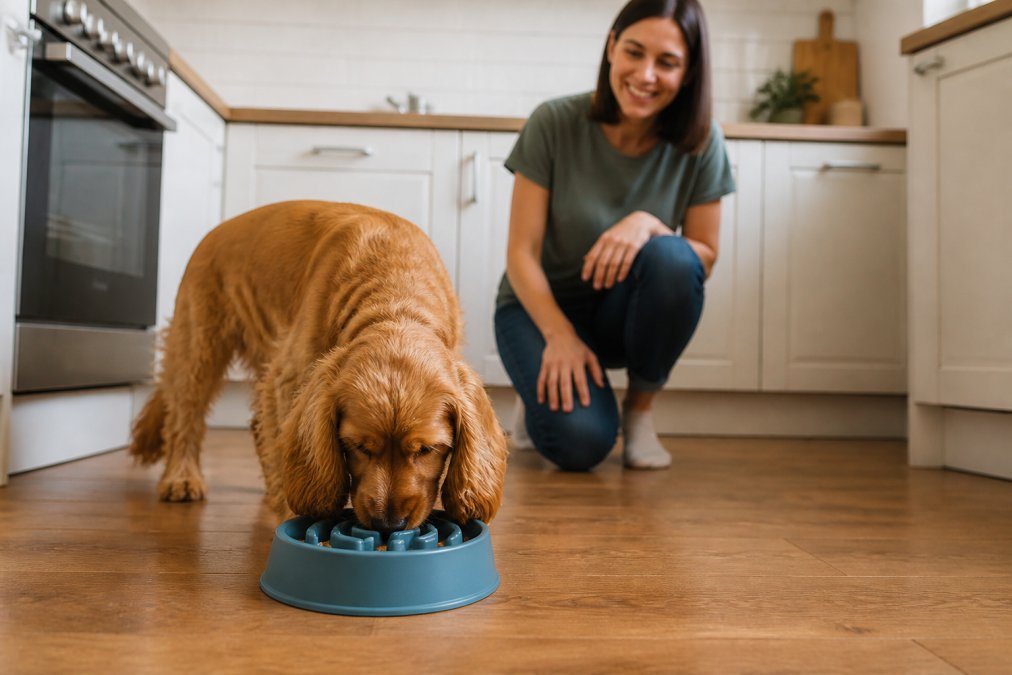
Maze-style designs can slow eating by up to ten times compared with a standard bowl. That matters because a slower food consumption rate reduces aerophagia and the gastrointestinal distress that comes with it. For fast eaters, this is the single most effective change you can make to prevent bloat dogs are prone to.
Best Feeding Practices for Large Breeds and Fast Eaters
The best feeding practices for large breeds combine slower eating with smart timing. Deep-chested dogs need structure around meals, not just a different bowl.
Meal Frequency and Portion Control
Split your dog's daily food into two or three smaller meals rather than one large one. Smaller portions mean less volume in the stomach at once, which lowers the pressure that contributes to GDV. Use a measuring cup or kitchen scale so portion control stays consistent, and avoid free-feeding entirely for fast eaters. Your vet can confirm the right daily amount based on your dog's lean body mass and metabolic rate.
Exercise Timing Before and After Meals
Keep mealtimes well away from strenuous exercise. A common approach is to avoid vigorous activity for at least an hour before and after eating. A post-prandial walk around the block is fine; a full run or a game of fetch is not. This single habit is one of the most overlooked preventative strategies for at-risk dogs.
| Habit | Do This | Why It Helps |
|---|---|---|
| Meal size | 2-3 smaller meals daily | Less stomach volume, lower pressure |
| Bowl type | Slow feeder or lick bowl | Cuts aerophagia from gulping |
| Exercise | Rest 1 hour either side | Avoids triggering a twist |
| Water | Offer freely, but not huge gulps | Supports digestive motility |
DIY Slow-Feeding Hacks and Hydration Management
You do not need to spend much to slow a dog down. The principle behind every hack below is the same: increase the number of small, separate attempts your dog makes to get food, so each swallow is smaller and less air goes down with it. Simple home tweaks work surprisingly well, and they pair nicely with a proper slow feeder.
DIY Slow-Feeding Hacks That Actually Work
- Towel roll: Scatter kibble across a clean, dry towel, roll it up lengthways, and let your dog unroll it to reach the food. A tea towel works for small portions; a bath towel for a full meal. Supervise the first few sessions, as some dogs will chew the fabric.
- Muffin tin: Place a single piece of kibble in each cup of a muffin tin, then rest a tennis ball over each hole. Your dog has to nudge the balls aside to eat. A 12-cup tin turns a 30-second meal into several minutes.
- Scatter feed on a clean floor or short grass: Toss the portion across a small area so the dog has to hunt each piece. Best for dry kibble only, and skip it if your dog guards food.
- Hand-feeding as training: Feed part of the meal one piece at a time as a reward for sits, waits or name response. It slows eating and builds obedience in the same session.
- Lick plate: Spread wet food thinly across a flat plate or a silicone mat. Licking is slower than chewing and produces less air intake. Freeze it in summer for a longer-lasting meal.
- Frozen broth toy: Soak a sturdy rubber toy in low-sodium, onion-free broth, stuff it with a little wet food, and freeze. Onion and garlic are toxic to dogs, so check the broth label carefully.
- Snuffle mat: A fabric mat with hidden pockets of kibble encourages nose-work, which is naturally slow and mentally tiring. Good for flat-muzzled breeds that struggle with deep maze bowls.
Trade-offs to know:
- DIY setups are cheap but not always dishwasher-safe, and fabric items need regular washing to avoid bacterial build-up.
- Some dogs learn to flip a muffin tin or shred a towel. If yours does, a weighted slow feeder is the more durable option.
- Puzzle-style feeding can frustrate anxious dogs. Start with an easy setup and build difficulty over a week.
Hydration Management: The Overlooked Half of the Problem
Most bloat advice focuses on food and ignores water, yet a fast eater is often a fast drinker too. Gulping water after a meal adds volume to an already-full stomach and introduces extra swallowed air, the same aerophagia that makes fast eating risky.
Practical steps:
- Offer water in smaller amounts more often rather than leaving a full bowl down for a dog that drains it in seconds. A shallow bowl with a few centimetres of water is harder to gulp than a deep one.
- Separate water from the main meal by 20-30 minutes where practical, so the stomach is not dealing with a large food load and a large water load at the same time.
- Use a non-slip bowl or a mat so the dish does not slide across the floor. Sliding bowls encourage frantic, fast drinking.
- Watch for heavy drinking after exercise. A dog that has been running and then drains a bowl is swallowing air at speed. Offer a small amount, wait, then offer more.
- Keep water available at all times, restricting water entirely is not the goal and can cause its own problems. The aim is a slower, steadier intake, not less total water.
If your dog regularly vomits water shortly after drinking, or drinks far more than usual, mention it to your vet. Increased thirst can point to conditions unrelated to bloat and is worth ruling out.
Post-Meal Monitoring and Breed-Specific Risk Profiles
The first 60 minutes after a meal are the highest-risk window for a fast eater, and most owners watch the bowl rather than the dog. A simple observation routine closes that gap.
A 60-Minute Post-Meal Watch
Set a timer and check your dog at roughly 10, 30 and 60 minutes after eating. You are looking for a change from their normal post-meal behaviour, not a single dramatic sign.
- 0-10 minutes: Normal settling, a stretch, a drink, then a lie-down. Anything else, pacing, staring at the abdomen, repeated swallowing, is worth noting.
- 10-30 minutes: The classic GDV window. Watch for non-productive retching (heaving with nothing coming up), a drum-tight abdomen, drooling that is heavier than usual, or an inability to get comfortable.
- 30-60 minutes: Restlessness that escalates rather than settles, whining, or a dog that keeps looking at their flank. Later stages bring weakness, pale gums and collapse.
Keep a short note on your phone for a week: meal time, bowl used, how fast the food went, and any behaviour that stood out. Patterns, a dog that always paces after a large meal, for example, are exactly what your vet needs to assess risk.
Breed-Specific Risk Profiles
Bloat risk is not evenly distributed. The shape of the chest matters more than the size of the dog, and the breeds most often flagged by veterinary practices are the deep-chested, narrow-waisted ones.
Higher-risk (deep-chested) breeds commonly cited:
- Great Dane
- German Shepherd
- Standard Poodle
- Weimaraner
- Irish Setter
- Boxer
- Dobermann
- Gordon Setter
- Basset Hound
- Irish Wolfhound
- Saint Bernard
- Labrador Retriever (large, though less deep-chested than the above)
Lower-risk profiles:
- Flat-chested or barrel-chested breeds such as the Pug, French Bulldog, Cavalier King Charles Spaniel and most terriers
- Small and toy breeds generally, where GDV is uncommon though not impossible
- Dogs with a broad, shallow ribcage relative to their depth
A useful rule of thumb: if your dog's chest is deeper than it is wide, and their waist tucks in sharply behind the ribs, treat them as higher-risk regardless of breed label. Mixed breeds with that build carry the same anatomical concern.
What This Means for Your Routine
If your dog falls into the higher-risk group, tighten every variable: two or three small meals, a slow feeder, no vigorous exercise for an hour either side, and a deliberate 60-minute watch after the largest meal of the day. If your dog is lower-risk, the same habits still help with digestion and vomiting, but the urgency is lower.
A preventative surgery called a gastropexy, where the stomach is tacked to the abdominal wall, is sometimes recommended for high-risk breeds, often at the time of neutering. It is a decision to make with your vet, weighing breed, build, age and family history rather than a blanket recommendation.
Pairing slower meals with good digestive support helps too. A veterinary overview of canine digestive health is a useful starting point if your dog regularly shows gastrointestinal distress.
Frequently Asked Questions
Can eating too fast cause bloat in dogs?
Yes. Eating quickly causes dogs to swallow air, a condition called aerophagia. This trapped air can contribute to gastric dilatation-volvulus (GDV), where the stomach fills with gas and twists. Fast eaters, especially deep-chested breeds, face higher risk. Using a slow feeder bowl or puzzle feeder reduces eating speed and the amount of air swallowed, which helps prevent bloat in dogs.
What are the first signs of bloat in a dog?
Early signs include a bloated abdomen, non-productive retching, pacing, drooling, and restlessness. Your dog may try to vomit but nothing comes up. As GDV progresses, the abdomen becomes firm and painful. These clinical symptoms require emergency veterinary care immediately. Do not wait to see if your dog improves. Call your vet or an emergency clinic as soon as you notice these signs.
How can I slow down my dog's eating speed safely?
Try a slow feeder bowl with a maze design, a lick bowl for wet food, or a snuffle mat for treats. These tools add physical obstacles that extend mealtime and reduce gulping. You can also scatter kibble on a towel or use a muffin tin. Always supervise your dog with new feeders. If your dog becomes frustrated, start with easier designs and progress to harder ones.
Are there specific feeding schedules that reduce bloat risk?
Yes. Feed two or three smaller meals daily instead of one large meal. This reduces stomach volume and pressure. Avoid strenuous exercise for at least one hour before and after meals. Stick to a consistent schedule so your dog's digestive system adjusts. For large breeds, raised bowls do not prevent bloat and may increase risk, so keep bowls on the floor unless your vet advises otherwise.


Leave a comment