


Lick Mats for Puppy Teething: A Step-by-Step Guide
Table of Contents
- Why Lick Mats Help Puppies Through Teething
- What to Put on a Puppy Lick Mat: Safe Toppings and Portions
- Frozen Lick Mats for Puppies: Preparation and Benefits
- Are Lick Mats Safe for Puppies: Supervision and Best Practices
- How Long to Use a Lick Mat with Your Teething Puppy
- Introducing a Lick Mat to Your Puppy: A Practical Routine
- Lick Mats vs. Chew Toys: Choosing the Right Tool
- Common Mistakes to Avoid When Using Lick Mats for Puppies
- Frequently Asked Questions
Last Updated: October 10, 2026
Why Lick Mats Help Puppies Through Teething
Puppies experience discomfort when their teeth start coming in around 3-4 weeks of age. Their gums itch, swell, and feel tender. Using lick mats for puppy teething provides them a safe way to soothe that pain while keeping them occupied.
Licking triggers calming hormones and stimulates saliva production, which protects gums and reduces inflammation naturally.
Beyond teething relief, lick mats offer real benefits:
- Mental stimulation keeps growing minds engaged
- Stress relief through the calming effect of repetitive licking
- Oral health support via increased saliva flow
- Slowing eating to aid digestion and prevent bloating
- Redirecting nervous energy into a positive outlet
What to Put on a Puppy Lick Mat: Safe Toppings and Portions
Puppy-Friendly Topping Ideas
Safe options include:
- Greek yogurt (plain, unsweetened)
- Pumpkin puree (plain canned, no spices)
- Bone broth (low sodium, no onion or garlic)
- Wet puppy food (their regular formula)
- Mashed banana (in small amounts)
- Peanut butter (xylitol-free only)
- Soft cheese (mild varieties, small portions)
Avoid anything with chocolate, grapes, raisins, xylitol, or high salt content. These are toxic to puppies.
Mix textures for variety, combine Greek yogurt with pumpkin or layer bone broth with wet food to keep your puppy engaged.
Portion Sizes for Young Puppies
For puppies under 12 weeks:
- Use about 1-2 tablespoons of topping per session
- Limit lick mat sessions to once or twice daily
- Never use the mat as a meal replacement
For puppies 12 weeks to 6 months:
- Increase to 2-3 tablespoons per session
- Still limit to once or twice daily
- Account for topping calories in their daily food intake
Watch for loose stools or discomfort; reduce portions or switch toppings if needed.
Frozen Lick Mats for Puppies: Preparation and Benefits
Step-by-Step Freezing Instructions
Freezing transforms lick mats into a powerful tool for puppy teething; cold numbs sore gums and extends the experience.
Here's how to prepare one:
- Choose your topping from the safe list above
- Spread a thin layer across the mat's grooves (about 0.6 cm thick)
- Place the mat on a flat surface in your freezer
- Freeze for 2-4 hours until solid (overnight is fine)
- Remove from freezer 5 minutes before giving to your puppy
- Place on a non-slip surface to prevent sliding
- Supervise your puppy during the entire session
For extra enrichment, freeze layers: add bone broth first, let it set an hour, then add yogurt on top.
Why Freezing Enhances Teething Relief
Cold reduces inflammation and provides immediate comfort, encouraging longer, more focused licking. Frozen mats also slow consumption, encouraging mindful licking and better digestion, while the texture change keeps puppies interested.
Are Lick Mats Safe for Puppies: Supervision and Best Practices
Age-Appropriate Textures and Materials
Not all lick mats suit young puppies. Choose one designed for their age and chewing strength.
Silicone mats are ideal for teething puppies aged 8 weeks and older. Look for food-grade silicone with soft, rounded grooves; they're flexible, won't damage emerging teeth, and resist tearing.
Rubber mats work for older puppies (4+ months) with stronger jaws. Young puppies can tear pieces off rubber, posing a choking hazard; reserve them for puppies demonstrating reliable licking behaviour.
Plastic or hard resin mats are not recommended for teething puppies; they can crack emerging teeth and splinter, causing gum damage or intestinal blockages.
Always check the manufacturer's age recommendation. A mat labelled "suitable for puppies 12 weeks+" may have grooves too deep or a texture too firm for an 8-week-old.
Inspecting and Replacing Damaged Mats
Inspect your mat before every use. Replace it if grooves flatten, visible tears or chunks appear, discolouration or sticky patches develop, pieces come loose, or an unpleasant odour persists.
Discard immediately if damaged; a damaged mat can cause intestinal blockages requiring emergency surgery.
Wash your mat after every use with warm soapy water and dry thoroughly. Store it in a clean, dry place. Proper maintenance extends its life and prevents bacterial growth.
Supervision Requirements and Choking Prevention
Never leave your puppy alone with a lick mat. Young puppies may try to swallow it, become frustrated and chew it, or experience allergic reactions to toppings.
During supervised use: stay in the same room, place the mat on a non-slip surface on hard flooring, watch for chewing behaviour, and remove immediately if needed. Never use as a substitute for supervision.
Once your puppy is 4+ months old with reliable licking behaviour, you may leave them with a mat for short periods (5-10 minutes) in a puppy-proofed space, checking frequently.
Recognising Signs of Unsafe Use or Oral Distress
Stop use immediately if you notice: bleeding or severely swollen gums, difficulty eating or drinking, excessive drooling, whimpering, refusal to eat after use, visible mat pieces in stool, vomiting, or abdominal pain.
Monitor and reduce frequency if: loss of interest (rotate toppings), chewing rather than licking, mild gum swelling after 48 hours, diarrhoea, or excessive panting.
Teething discomfort is normal, but severe pain, bleeding gums, or difficulty eating may indicate retained baby teeth, infection, or trauma; contact your vet if unsure.
Lick Mats vs. Chew Toys: Understanding the Difference
Both serve a purpose during teething, but they're not interchangeable, and using them correctly prevents injury.
Slow Feeder Dog Lick Bowl – Anti-Choking Non-Slip →
Lick mats are best for:
- Teething pain relief (cold numbs gums and reduces inflammation)
- Calming anxious or restless puppies
- Mental enrichment through problem-solving (how to extract the topping)
- Slowing eating and supporting digestion
- Indoor use during work hours or stressful situations (grooming, vet visits)
- Puppies who are still learning bite inhibition
Chew toys are best for:
- Strengthening jaw muscles and promoting healthy tooth eruption
- Satisfying the urge to chew (not lick), a different behaviour
- Outdoor play and exercise
- Puppies over 4 months with stronger teeth and better chewing control
- Puppies who need to work their jaw to feel satisfied
- Aggressive chewers who destroy soft items (they need something more durable)
The critical safety difference: A lick mat encourages passive, controlled behaviour (sitting and licking). A chew toy encourages active, vigorous behaviour (carrying, shaking, tearing). A puppy who treats a lick mat like a chew toy, shaking it, tearing it, trying to swallow pieces, is not ready for unsupervised mat use and may need a proper chew toy instead.
Many puppies need both. A frozen lick mat soothes sore gums in the morning. A rubber or nylon chew toy keeps them occupied in the afternoon. They work together, not against each other. However, never assume a puppy will use a mat correctly just because they're teething. Introduce it gradually, supervise closely, and be ready to switch to a chew toy if they show chewing behaviour instead of licking.
How Long to Use a Lick Mat with Your Teething Puppy
Start with 5-10 minutes for puppies 8-12 weeks, increasing to 10-15 minutes at 12-16 weeks and 15-20 minutes at 16+ weeks. Use once or twice daily during peak teething (3-6 months), then reduce to a few times weekly. End sessions while your puppy is still engaged.
Introducing a Lick Mat to Your Puppy: A Practical Routine
First Introduction and Familiarisation
Days 1-2: Place an empty mat nearby during calm moments; reward curiosity with praise. Days 3-4: Add aromatic toppings (bone broth, peanut butter) and let them discover it naturally. Days 5-7: Increase topping amounts and introduce freezing during calm moments only. Days 8+: Establish a daily routine at the same time each day.
Troubleshooting Common Introduction Problems
No interest: Warm toppings to increase aroma or introduce during naturally calm moments. Chewing the mat: Remove immediately; use soft silicone and supervise closely. Frantic licking: Limit to 5 minutes and remove while calm to teach control. Losing interest: Rotate toppings and temperatures frequently.
Building a Teething Relief Schedule
Establish a consistent daily schedule: frozen mat with yogurt and pumpkin in the morning (10-15 minutes), room-temperature mat with bone broth at midday (10 minutes), and frozen mat before bedtime (15-20 minutes). Stick to this for 2-3 weeks; your puppy will anticipate calm moments. Adjust timing if teething peaks at specific times of day.
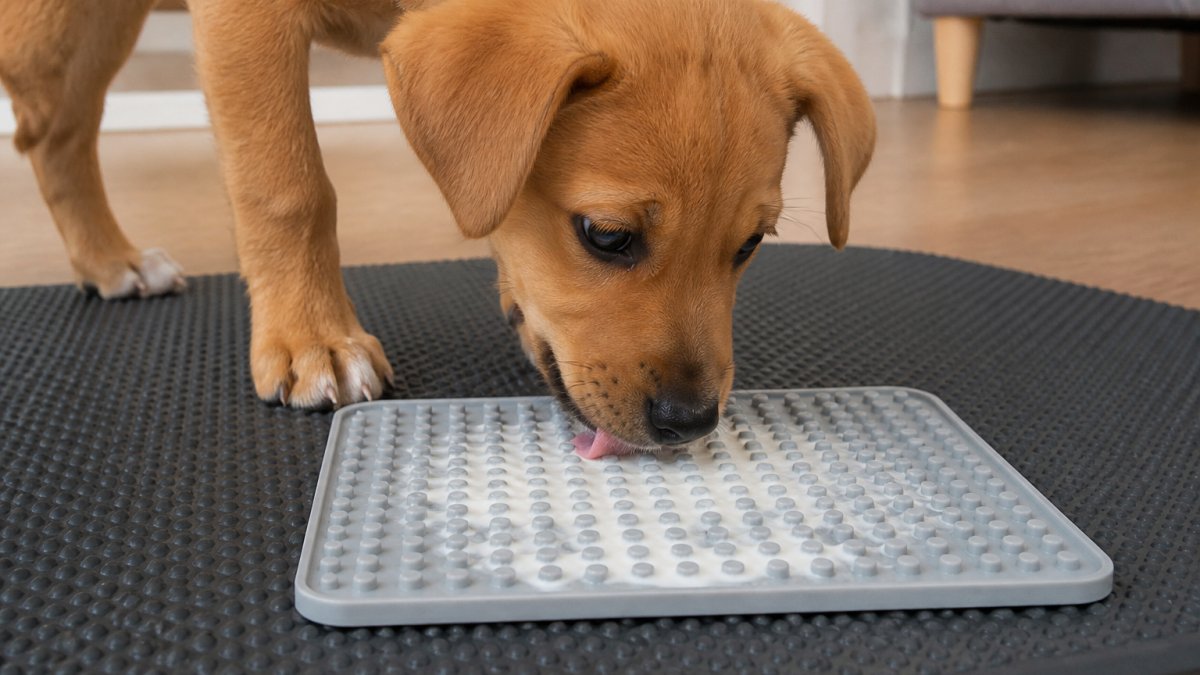
Lick Mats vs. Chew Toys: Choosing the Right Tool
Both serve a purpose, but they're not interchangeable.
Lick mats are best for:
- Teething pain relief (cold numbs gums)
- Calming anxious puppies
- Mental enrichment through problem-solving
- Slowing eating and digestion support
- Indoor use during work hours
Chew toys are best for:
- Strengthening jaw muscles
- Satisfying the urge to chew (not lick)
- Outdoor play and exercise
- Puppies over 4 months with stronger teeth
- Aggressive chewers who destroy soft items
Many puppies need both. A frozen lick mat soothes sore gums in the morning. A rubber chew toy keeps them occupied in the afternoon. They work together, not against each other.
The key difference: a lick mat is passive enrichment. Your puppy sits and licks. A chew toy is active enrichment. They carry it, shake it, and work their jaw.
Common Mistakes to Avoid When Using Lick Mats for Puppies
Leaving them unsupervised. Always watch your puppy with a lick mat. They may try to eat the mat itself, not just the topping. Silicone pieces can cause blockages.
Using unsafe toppings. Chocolate, xylitol, grapes, and onions are toxic. Check every ingredient. When in doubt, stick to plain options like yogurt and pumpkin.
Overfeeding portions. A lick mat isn't a meal. It's a treat and enrichment tool. Count the calories toward their daily intake to prevent weight gain.
Skipping the freeze step. Room-temperature mats are fine, but freezing adds real teething relief. Cold reduces inflammation and extends the experience.
Introducing too early. Wait until your puppy is at least 8 weeks old. Younger puppies lack the coordination and focus to use them effectively.
Using the wrong texture. A mat with sharp grooves can cut tender gums. Soft silicone is always the safest choice for teething puppies.
Not rotating toppings. The same topping every day gets boring. Variety keeps your puppy engaged and interested in the mat.
Ignoring signs of distress. If your puppy whimpers, has bleeding gums, or refuses the mat, stop using it. Not every tool works for every puppy.
Teething is temporary, but the right tools make it manageable. A lick mat gives your puppy a healthy outlet for their discomfort while keeping them calm and mentally engaged. Start slowly, supervise closely, and adjust based on what your puppy needs.
The Doggo Shop team recommends our Slow Feeder Dog Lick Bowl for puppies navigating teething. Its soft silicone grooves are gentle on emerging teeth, and the non-slip base keeps it stable during those intense licking sessions. With toppings like plain Greek yogurt or bone broth, it becomes both a teething relief tool and a calming enrichment activity. Plus, every purchase supports rescue dogs in need worldwide.
Frequently Asked Questions
Can a lick mat help a teething puppy?
Yes. Lick mats provide relief by encouraging repetitive licking, which stimulates saliva production and soothes sore gums. The soft grooves and textured surface redirect nervous energy and offer mental stimulation. Frozen lick mats are especially effective because the cold temperature numbs tender teeth and gums, similar to how puppies naturally chew on cold objects during teething.
What can I put on a lick mat for a puppy?
Safe puppy toppings include Greek yogurt, pumpkin puree, bone broth, and wet food mixed into a paste. Avoid xylitol-containing products and anything high in salt or sugar. Start with small amounts, about a teaspoon for young puppies, and freeze for added teething relief. Always check ingredients to ensure they're age-appropriate.
How long should a puppy use a lick mat?
Sessions typically last 10-20 minutes, depending on your puppy's age and engagement. Offer lick mats once or twice daily during peak teething discomfort (around 3-6 months). Monitor your puppy's interest; most will naturally stop when satisfied. Remove the mat if your puppy becomes frustrated or tries to bite and damage it rather than lick it.
Are lick mats safe for puppies?
Lick mats are safe when used correctly with supervision. Choose silicone or food-grade materials designed for puppies, avoid small detachable parts, and never leave a mat unattended if your puppy is a power chewer. Watch for signs of damage or excessive chewing; if your puppy bites rather than licks, remove the mat and redirect to an appropriate chew toy instead.


Leave a comment