


How to Use a Snuffle Mat for Beginners
Table of Contents
- What Is a Snuffle Mat and Why Dogs Love It
- Benefits of Snuffle Mats for Mental Enrichment
- Step-by-Step Guide to Introducing Your Dog to a Snuffle Mat
- Best Treats for Snuffle Mats and Motivation
- How Long Should a Dog Use a Snuffle Mat Daily
- Snuffle Mat Safety Tips and Supervision
- Troubleshooting Common Behavioural Issues
- Maintenance and Care for Your Snuffle Mat
Last Updated: August 28, 2026
What Is a Snuffle Mat and Why Dogs Love It
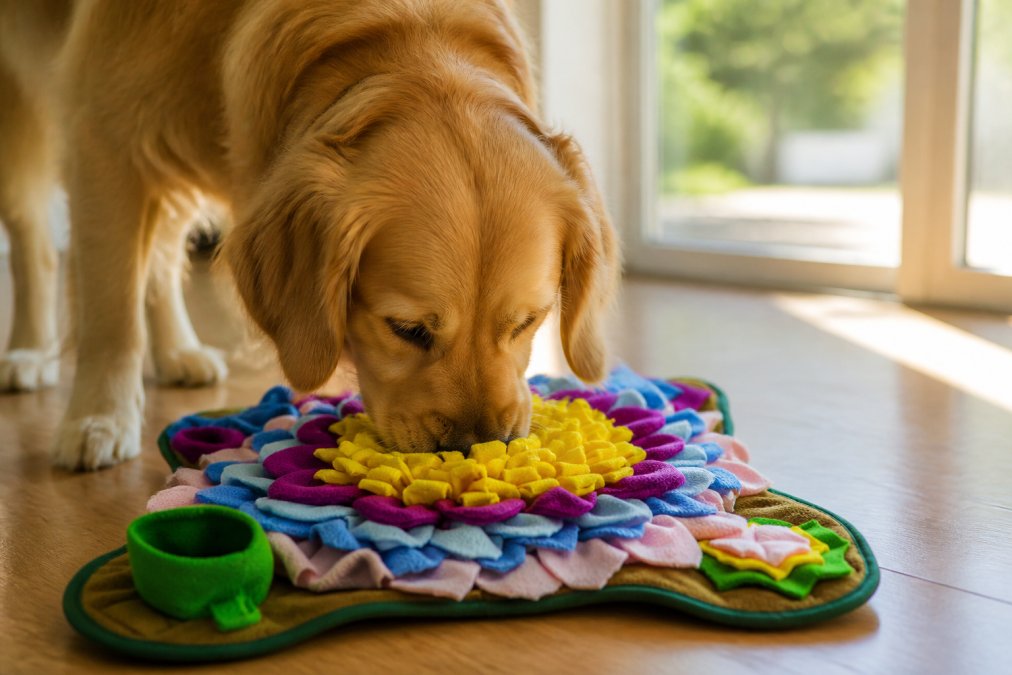
A snuffle mat is an interactive puzzle toy made from fabric strips or fleece sewn into a base, designed for dogs to search through and find hidden treats. The mat mimics natural foraging behaviour, encouraging your dog to use their nose and problem-solving skills to uncover rewards hidden within the woven material.

Dogs are naturally drawn to snuffle mats because they tap into their instinctive prey drive and scent work abilities. When you hide treats in the fabric folds, your dog must use their olfactory senses to locate them, providing genuine mental stimulation. Snuffling activates your dog's parasympathetic nervous system, the part responsible for calming and relaxation (peer-reviewed research). Dogs that spend time working through a snuffle mat often decompress noticeably, their breathing slows, and they shift into a more settled state. This is why snuffle mats are particularly valuable for anxious dogs or those struggling with separation anxiety.
Benefits of Snuffle Mats for Mental Enrichment
Mental enrichment through snuffle mats addresses one of the biggest challenges modern dog owners face: boredom. Dogs left alone for extended periods without cognitive stimulation often develop destructive behaviours. A snuffle mat provides structured, self-directed enrichment that keeps their mind occupied.
Every time your dog searches for hidden treats, they're solving a problem. Their brain works to identify scent trails, track down rewards, and remember which areas of the mat have already been searched. This problem-solving activity creates genuine mental fatigue, the kind that leaves dogs more settled and content than physical exercise alone.
Snuffle mats also slow down fast eaters. Dogs that gulp their food without chewing can develop digestive issues or choking risks. By scattering kibble through a snuffle mat, you force your dog to work for each piece, naturally slowing their eating pace. For dogs with high prey drive, snuffle mats offer a constructive outlet, redirecting hunting instincts away from unwanted behaviours.
The calming effect is perhaps the most underrated benefit. Nose work and scent engagement activate the parasympathetic nervous system, creating a genuinely relaxing experience. Many owners report their dogs are noticeably calmer and more content after a snuffling session.
Step-by-Step Guide to Introducing Your Dog to a Snuffle Mat
Step 1: Choose the Right Treats and Setup
Start with treats your dog finds genuinely rewarding. High-value treats work best for initial introductions: small pieces of chicken, cheese, or training treats your dog gets excited about. Set up your snuffle mat on a washable surface like a tile floor or outdoor patio.
Sprinkle treats visibly across the top of the mat at first. You're not hiding them yet, you're showing your dog that the mat contains good things. Use enough treats that your dog finds several within the first minute.
Step 2: Start with Short Sessions
Keep your first snuffling session to 5-10 minutes maximum. The goal is to build enthusiasm, not exhaust your dog. Watch your dog's body language for engaged sniffing, tail movement, and active searching. If your dog seems confused or disinterested, the treats might not be high-value enough or the difficulty level too high.
End the session on a positive note while your dog is still engaged and wanting more. This creates anticipation for the next session and prevents the snuffle mat from becoming boring.
Step 3: Build Confidence and Duration
Once your dog understands the concept, gradually hide treats deeper within the fabric folds. After 2-3 sessions of visible treats, start tucking treats partially hidden so your dog must search more deliberately. Extend session length gradually from 5-10 minutes to 10-15 minutes as your dog becomes more skilled and engaged.
Introduce variety in your treat choices. Rotate between kibble, training treats, and higher-value rewards to maintain novelty and motivation.
Best Treats for Snuffle Mats and Motivation
The right treat choice makes the difference between a dog that engages enthusiastically and one that ignores the mat entirely. High-value treats work best for initial training: small pieces of cooked chicken, low-fat cheese cubes, or premium training treats your dog doesn't normally get.
Regular kibble works well once your dog understands the game. It's practical for daily use and won't lead to overfeeding since you're typically using your dog's regular meal allowance scattered through the mat. Freeze-dried meat treats are excellent for sustained engagement, providing genuine nutritional value and strong scent motivation.
Peanut butter (xylitol-free) can be smeared lightly through the mat for dogs that need extra motivation, though it's messier to clean up. Avoid chocolate, grapes, raisins, onions, and anything with xylitol, which are toxic to dogs. Also skip anything too large that could become a choking hazard.
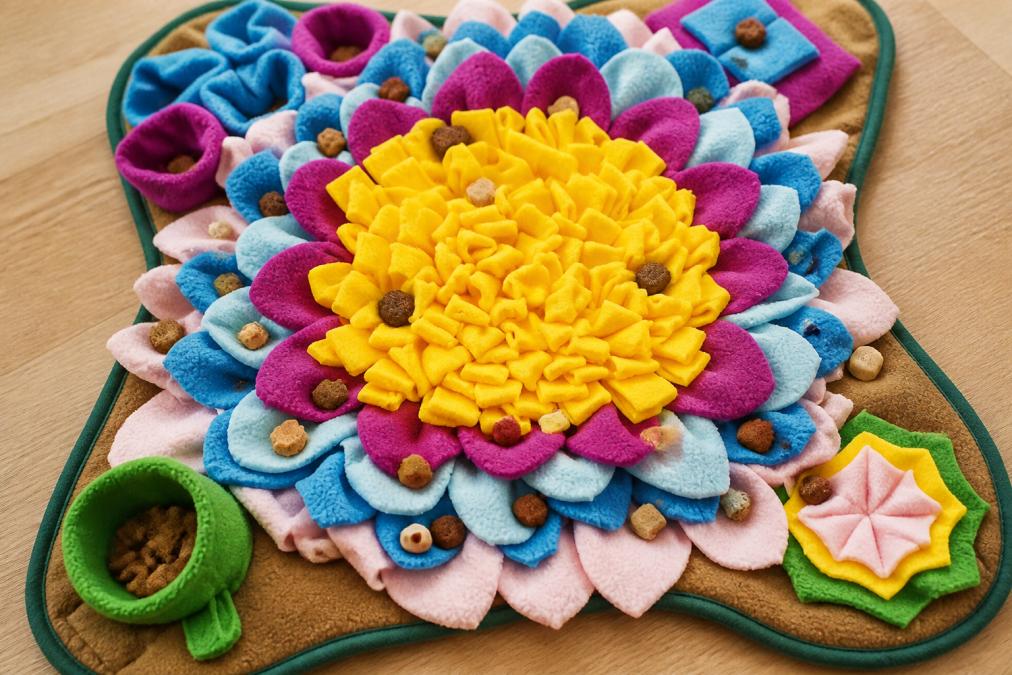
Rotate treat types to maintain novelty. Dogs that always find the same treats eventually lose interest. Mixing kibble, training treats, freeze-dried options, and occasional higher-value rewards keeps engagement high over weeks and months.
How Long Should a Dog Use a Snuffle Mat Daily
Most dogs benefit from 10-15 minutes of snuffling per day. This duration provides meaningful mental stimulation without overextending the activity. Young, high-energy dogs might benefit from two shorter sessions daily, whilst senior dogs or those with lower energy typically need just one session.
Dogs that spend long hours alone benefit from daily snuffle mat use. If your dog is home alone for 8+ hours while you work, a 15-minute snuffling session before you leave can significantly improve their mental state and reduce separation anxiety. On days when your dog gets less physical exercise, increase snuffling time slightly to compensate.
Watch your dog's response to determine the right duration for them. Some dogs will happily work a snuffle mat for 30 minutes, whilst others lose interest after 10. Start with 10-15 minutes and adjust based on your individual dog's enthusiasm and engagement level.
Snuffle Mat Safety Tips and Supervision
Supervision is essential, especially during initial sessions. Watch for signs of frustration, aggressive behaviour, or attempts to ingest fabric. Some dogs become so focused on treats that they lose awareness of what they're chewing, potentially swallowing fabric along with the rewards.
Inspect your snuffle mat regularly for damage. Loose threads, torn seams, or fraying fabric create choking hazards. If your mat is showing significant wear, it's time to replace it. The Interactive Sunflower Snuffle Mat from Doggo Shop is designed with durability in mind, featuring reinforced seams and washable fleece strips that withstand regular use.
Check treats for choking risks before placing them in the mat. Anything your dog can swallow whole without chewing is potentially dangerous. Keep the snuffle mat clean and dry by washing it weekly with warm water and mild detergent. Most quality mats are machine washable, making maintenance straightforward.
Use snuffle mats on non-slip surfaces. A mat that slides around can frustrate your dog and create a negative association with the activity. Never use a snuffle mat as a substitute for proper supervision with dogs that have a history of eating non-food items.
Troubleshooting Common Behavioural Issues
Dog shows no interest in the snuffle mat: The treats aren't high-value enough, or your dog hasn't yet made the connection between the mat and rewards. Start with extremely motivating treats and make them visible on top of the mat initially so the reward is obvious.
Dog becomes frustrated and gives up quickly: You've increased difficulty too fast. Return to making treats obviously visible. Your dog needs multiple easy wins before progressing to hidden treats.
Dog tries to eat the mat itself: This is a serious concern. If your dog has a strong chewing drive or history of eating fabric, supervise constantly or consider skipping this enrichment tool.
Dog loses interest after a few sessions: Novelty matters. Rotate treat types, change the difficulty level, and vary when you use the mat. Use it 4-5 days per week instead of daily, and mix up your approach.
Dog becomes possessive or aggressive with the mat: This signals resource guarding behaviour. Work with a qualified dog trainer before continuing snuffle mat use.
Dog uses the mat but seems anxious or stressed: Some dogs find the searching process stressful rather than calming. If your dog shows stress signals, the snuffle mat might not be the right enrichment tool for them.
Maintenance and Care for Your Snuffle Mat
Proper maintenance extends the life of your snuffle mat and ensures it remains hygienic and safe for your dog. Wash your mat weekly or after every few uses if treats have left residue. Most snuffle mats are machine washable with warm or cool water and mild detergent. Avoid bleach or harsh chemicals.
Air dry your mat completely before storing or using it again. Damp fabric creates ideal conditions for mould and mildew growth. Hang it outside in sunlight if possible, as UV light provides natural antibacterial benefits.
Inspect seams and fabric regularly for damage. Loose threads should be trimmed or sewn back in. Small tears can be hand-stitched before they become larger problems. Store your snuffle mat in a dry location when not in use, away from damp basements or moisture-prone areas.
For persistent odours, soak the mat in a mixture of water and white vinegar before washing. Replace your mat when seams are failing, fabric is thinning significantly, or damage cannot be safely repaired. Quality mats like those offered by Doggo Shop are built to last through regular use, but all materials eventually wear out.
Snuffle mats transform how your dog engages with meals and play, but success depends on proper introduction and realistic expectations. Start with the right treats, keep sessions short, and progress gradually. At Doggo Shop, we understand that mental enrichment is just as important as physical exercise for your dog's wellbeing. Our Interactive Sunflower Snuffle Mat is designed with durability and safety in mind, featuring washable fleece strips and a non-slip base that keeps your dog focused on the puzzle, not the mat sliding around. Every purchase supports rescue dogs in need, shop with us and give your furry friend enrichment that matters.
Frequently Asked Questions
How often should my dog use a snuffle mat?
Most dogs benefit from 10-15 minutes of snuffling daily, though this varies by age and energy level. Puppies and senior dogs may need shorter sessions, whilst active adult dogs can handle multiple 15-20 minute sessions throughout the day. Use snuffle mats as part of a balanced enrichment routine alongside physical exercise and other mental stimulation activities. Avoid overuse, which can lead to dependency rather than building problem-solving skills.
Are snuffle mats good for dogs with separation anxiety?
Yes, snuffle mats can help decompose anxiety by providing a calming, focused activity. The scent work and foraging behaviour naturally engage a dog's olfactory senses, which has a settling effect. Start using the mat during short absences so your dog associates it with a positive, rewarding experience. Combine snuffle mat time with positive reinforcement to build confidence. However, snuffle mats work best alongside broader training and should not replace professional guidance for severe separation anxiety.
What age can a puppy start using a snuffle mat?
Puppies can begin using a snuffle mat from around 8-12 weeks old, once they're reliably eating solid food and showing natural foraging instincts. Start with a mat designed for puppies or use a larger mat with fewer hiding spots to prevent frustration. Keep sessions very short (5-10 minutes) and supervise closely. Use soft, easily findable treats to build confidence. Ensure treats are age-appropriate and sized safely to prevent choking hazards.
Can a snuffle mat help with a dog that eats too fast?
Absolutely. Snuffle mats naturally slow down eating by requiring dogs to search for individual pieces rather than gulping food. This mimics natural foraging behaviour and aids digestion. For fast eaters, combine a snuffle mat with other slow-feeder options like our Slow Feeder Dog Lick Bowl. Spreading meals across multiple enrichment tools throughout the day encourages slower consumption and provides cognitive stimulation simultaneously. This approach reduces bloating and choking risks whilst supporting mental wellbeing.
This article was written using GrandRanker


Leave a comment