


Train Dog to Walk Nicely: A Step-by-Step Guide
Table of Contents
- What You'll Need: Essential Dog Leash Training Tools
- How to Train Dog to Walk Nicely: The Foundation Phase
- How Long Does It Take to Train a Dog to Walk on a Leash
- Stop Dog Pulling on Leash: Proven Techniques
- Essential Dog Walking Commands for Loose Leash Walking
- Managing Distractions and Maintaining Training Consistency
- Common Mistakes to Avoid When Training Loose Leash Walking
- Conclusion
Last Updated: July 16, 2026
What You'll Need: Essential Dog Leash Training Tools
Training a dog to walk nicely on a leash starts with the right equipment. Your setup directly impacts how quickly your dog learns and how safely you both walk together.
Choosing the Right Equipment
A properly fitted collar or harness makes an enormous difference in leash training success. Front-clip harnesses reduce pulling by redirecting your dog's forward momentum when they lean into the leash, offering immediate control improvement.
A standard 6-foot leash gives you enough control for training while allowing your dog some freedom to explore. Longer retractable leashes work against training because they reward pulling by giving more slack when your dog pulls hardest.
High-value treats are essential for positive reinforcement. Choose treats your dog genuinely loves and keep them separate from regular treats so they feel special. Small, soft treats work best because your dog can consume them quickly without breaking focus.
Consider adding a clicker to your toolkit. This small device marks the exact moment your dog does something right, creating a clear bridge between the behavior and the reward.
Safety Considerations for Leash Work
You should be able to fit two fingers comfortably between the collar and your dog's neck, snug but not restrictive. For dogs prone to pulling aggressively, a front-clip harness distributes pressure across the chest rather than concentrating it on the neck and throat. Never use a choke chain or prong collar during training; these tools rely on discomfort and increase anxiety in dogs.
Check your equipment before every walk for fraying leashes, cracked clips, or worn collar material. Replace worn equipment immediately. If you walk in low-light conditions, Safety Dog LED Collar with rechargeable options helps drivers and other pedestrians see your dog from greater distances.
How to Train Dog to Walk Nicely: The Foundation Phase
Before you attempt any formal training, understand that how to train dog to walk nicely requires a calm starting point. A dog that's already overstimulated won't learn effectively.
Starting from a Calm State
Never begin a training walk when your dog is in high-energy mode. If your dog has been indoors all day or is visibly excited, take 10-15 minutes to burn off excess energy in a safe space first. A calm dog learns faster than an excited one because their brain prioritizes learning over survival responses.
The environment matters enormously for early training. Begin in a quiet, familiar location with minimal distractions. Your backyard or a quiet residential street works better than a park filled with other dogs and interesting smells.
Building Engagement and Eye Contact
Dogs that make eye contact with you during walks are far more likely to follow your directions and walk at your pace. Start by teaching eye contact in a controlled setting before your walk. In a quiet room, hold a treat near your eyes and wait for your dog to look at your face. The moment their eyes meet yours, mark with a clicker and reward immediately.
During walks, reward every instance of spontaneous eye contact. Your dog learns that checking in with you is rewarding, which naturally increases engagement. Some dogs naturally focus outward on the environment rather than their handler and need more frequent rewards for eye contact and higher-value treats that compete with environmental distractions.
How Long Does It Take to Train a Dog to Walk on a Leash
Most dogs show noticeable improvement in loose leash walking within 2-3 weeks of consistent training. Puppies typically learn faster because their brains are wired for learning. Adult dogs that have never received leash training may take 4-6 weeks to show reliable progress.
The frequency of training matters more than the duration. Three 15-minute walks daily beats one 45-minute walk weekly. Most trainers recommend at least 5 days per week of consistent practice to build reliable habits.
Consistency from everyone in the household is critical. If one person uses positive reinforcement and another allows pulling, your dog receives conflicting messages that slow learning. When everyone reinforces the same behaviors, progress accelerates noticeably.
Some dogs reach basic competence quickly but plateau. This is normal. Breaking through plateaus requires introducing new challenges gradually and maintaining consistency even after initial success.
Stop Dog Pulling on Leash: Proven Techniques
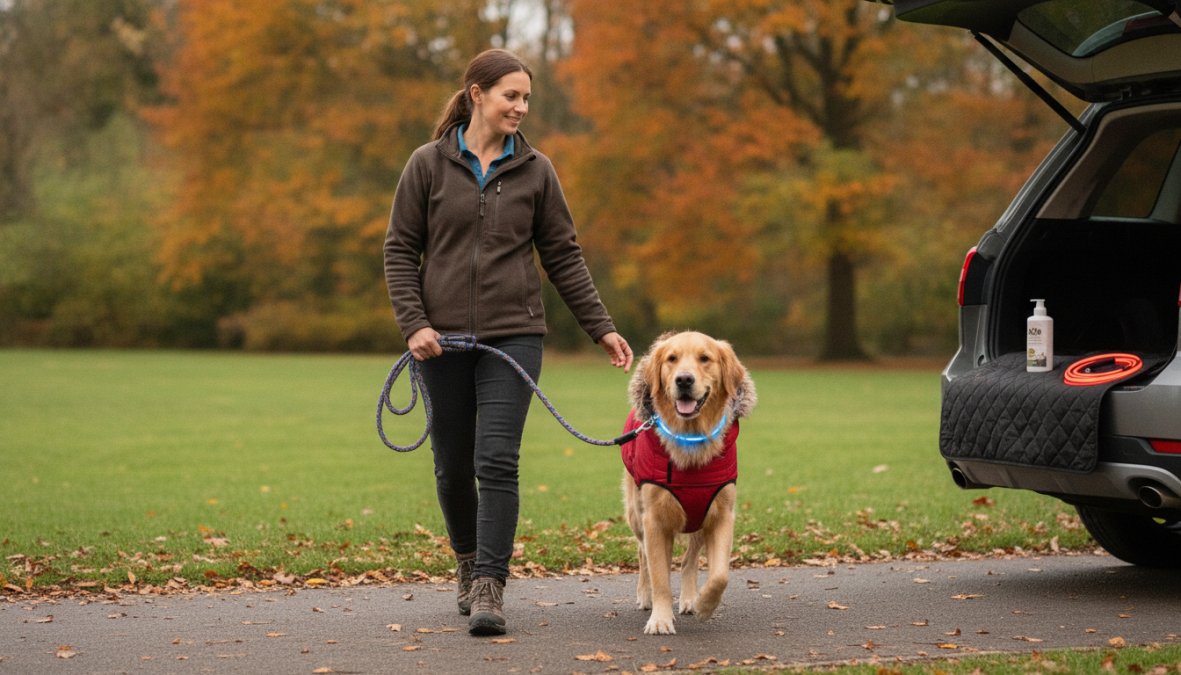
Pulling is the most common leash problem, and it's almost always unintentionally rewarded. Every time your dog pulls and you move forward, even slightly, they learn that pulling works.
The Stop-and-Wait Method
When your dog pulls ahead on the leash, stop walking immediately. Don't yank or correct, simply become immobile. Stand still and wait.
Your dog will eventually realize that pulling doesn't move you forward. The moment the leash goes slack and your dog stops pulling, praise enthusiastically and resume walking. You're teaching a clear cause-and-effect: pulling stops progress, loose leash allows progress.
This method works because it removes the reward for pulling without introducing punishment. Most dogs figure this out within 3-5 walks. The stop-and-wait method demands consistency, if you resume walking even once while your dog is pulling, you've reset their learning.
Preventing Accidental Rewards
Most pulling problems persist because owners accidentally reward the pulling. When your dog pulls toward another dog, a person, or an interesting smell, and you allow them to reach it, you've just taught them that pulling works. Instead, when you notice your dog starting to pull toward something, change direction and walk the opposite way.
Attention, even negative attention, can be rewarding. If your dog pulls and you respond with "No!" or "Stop pulling!", you're providing attention. Instead, ignore pulling completely and only give attention when the leash is loose. High-value rewards should only be given for the specific behavior you want, walking nicely with a loose leash.
Essential Dog Walking Commands for Loose Leash Walking
Commands give your dog specific guidance about what you want. Without clear commands, your dog has to guess your expectations.
Teaching 'Let's Go' and Heel Position
"Let's go" is your signal that it's time to walk and your dog should stay beside you. Start by saying "Let's go" in a cheerful tone, then immediately begin walking. Reward your dog frequently for staying at your side, every 5-10 steps initially.
The heel position is typically on your left side, though either side works as long as you're consistent. Your dog's shoulder should roughly align with your leg. Pick one side and stick with it throughout training to avoid confusion.
Using Marker Words and Clicker Training
A marker word is a specific sound or word that tells your dog exactly when they've done something right. "Yes!" works as a marker word. The clicker device serves the same function. Your dog learns that the marker means a reward is coming.
The timing of your marker is critical. Mark the exact moment your dog does the desired behavior, not a second later. Clicker training works exceptionally well for loose leash walking because the clicker provides immediate, precise feedback.
Managing Distractions and Maintaining Training Consistency
Your dog walks perfectly in your quiet neighborhood, then falls apart at the dog park. This isn't regression, you've trained your dog for a specific environment, not for all environments.
Progressive Distraction Exposure
Introduce distractions gradually, one at a time. Each new environment is technically a new training scenario. Your dog doesn't automatically transfer skills from one place to another.
When introducing a new distraction, reduce other demands. If you're training in a new environment with other dogs present, go back to frequent rewards and simpler expectations. High-value treats become essential when introducing distractions because they must compete with the excitement of a new situation.
Post-Training Maintenance and Avoiding Plateaus
Once your dog walks nicely reliably, the temptation is to stop training. This is when problems emerge. Dogs need ongoing reinforcement to maintain behaviors, especially when distractions increase or routines change.
Maintenance training requires less intensity than initial training, but it must continue. You don't need treats at every step, but your dog should still receive rewards frequently enough to remember that loose leash walking is worthwhile.
If your dog's walking suddenly worsens after improvement, something has changed. Common causes include changes in routine, new stressors, or someone in the household reverting to old training methods. Identify what changed and address it. Research from the American Kennel Club's training resources suggests that dogs maintain learned behaviors best when training remains varied and engaging.
Common Mistakes to Avoid When Training Loose Leash Walking
Using punishment or pain-based corrections teaches your dog to fear the leash, not to walk nicely. Dogs trained with corrections often develop leash reactivity or anxiety.
Inconsistency is the fastest way to extend training. If you enforce loose leash walking some days but allow pulling on others, your dog receives contradictory messages. Consistency must come from every handler, every walk, every day.
Expecting your dog to walk nicely while anxious or overstimulated sets both of you up for failure. Address the underlying anxiety before expecting perfect leash manners.
Moving too fast through training levels causes regression. If you introduce off-leash dogs before your dog walks nicely in quiet environments, you've skipped essential steps.
Forgetting to reward good behavior is surprisingly common. Owners focus on correcting pulling but forget to celebrate walking nicely. Your dog needs to understand which behavior you want.
Training your dog to walk nicely on a leash transforms daily routines into enjoyable experiences. The techniques in this guide work because they're based on how dogs actually learn, through clear communication, consistent rewards, and patience. Doggo Shop offers premium leashes and training tools designed specifically for positive reinforcement training, including adjustable harnesses and treat pouches that make training sessions more effective. Start with the foundation phase, maintain consistency across all handlers, and you'll see reliable progress within weeks.
Frequently Asked Questions
How long does it take to train a dog to walk nicely on a leash?
Timeline varies by age, breed, and prior experience. Puppies may show progress in 2-4 weeks with consistent daily practice, while adult dogs often require 4-8 weeks. Consistency matters more than duration, short, frequent sessions (10-15 minutes daily) outperform occasional longer sessions. Some dogs master basic loose leash walking in weeks; others need months to overcome deep-rooted pulling habits. Patience and regular reinforcement prevent training plateaus.
What dog leash training tools work best for teaching loose leash walking?
A standard 4-6 foot leash paired with a front-clip harness offers better control than a flat collar alone, reducing leash pressure and pulling. Clicker training tools serve as marker words to signal correct behavior instantly. High-value treats reward engagement and compliance. Consider LED collars like Doggo Shop's Light Up Dog Collar ($19.99) for visibility during evening walks. The right equipment prevents accidental rewards for pulling and supports consistent training sessions.
Why does my dog pull on the leash and how can I stop it?
Dogs pull because forward movement is inherently rewarding, they reach their destination faster. Stop dog pulling by using the stop-and-wait technique: freeze when pulling occurs, resume only when leash tension releases. Never reward pulling with forward progress. Manage the environment by reducing initial distractions, building impulse control gradually. Positive reinforcement for walking at your pace and maintaining eye contact redirects pulling behavior. Consistency prevents regression and reinforces that loose leash walking earns rewards.
What's the best way to teach my dog walking commands for nice leash manners?
Start with verbal cues like 'Let's go' paired with forward movement and immediate rewards. Teach heel position by luring your dog beside you with high-value treats. Use marker words or clicker training to mark the exact moment your dog displays correct behavior, then reward instantly. Practice dog walking commands in low-distraction environments first, then gradually increase environmental complexity. Short, frequent training sessions build behavioral cues faster than sporadic practice. Consistency in verbal cue delivery prevents confusion and accelerates learning.
This article was written using GrandRanker


Leave a comment