


How to Stop Dog Eating Too Fast: 7 Proven Methods
Table of Contents
- Why Your Dog Eats Too Fast and What It Means
- Health Risks: Understanding Bloat and Other Dangers
- Slow Feeder Bowls: How They Work and What to Look For
- Scatter Feeding and DIY Slow Feeder Ideas
- Puzzle Toys and Enrichment Feeders for Mental Stimulation
- Practical Strategies to Stop Dog Eating Too Fast
- Common Mistakes to Avoid When Slowing Mealtime
- Transitioning Your Dog to Slower Eating Habits
How to Stop Dog Eating Too Fast: 7 Proven Methods
Last Updated: August 3, 2026
If your dog inhales their meals in seconds flat, you're not alone. Many dog owners face the challenge of how to stop dog eating too fast, and the good news is that this guide from Doggo Shop covers practical, evidence-based strategies to help. Rapid eating isn't just a quirky habit, it poses real health risks. The methods we'll explore range from simple bowl swaps to behavioral adjustments that can transform mealtime into a safer, calmer experience for your pup.

Why Your Dog Eats Too Fast and What It Means
Understanding the root cause of gulping is the first step toward addressing it. Rapid eating often stems from instinct, anxiety, or learned behavior rather than genuine hunger.
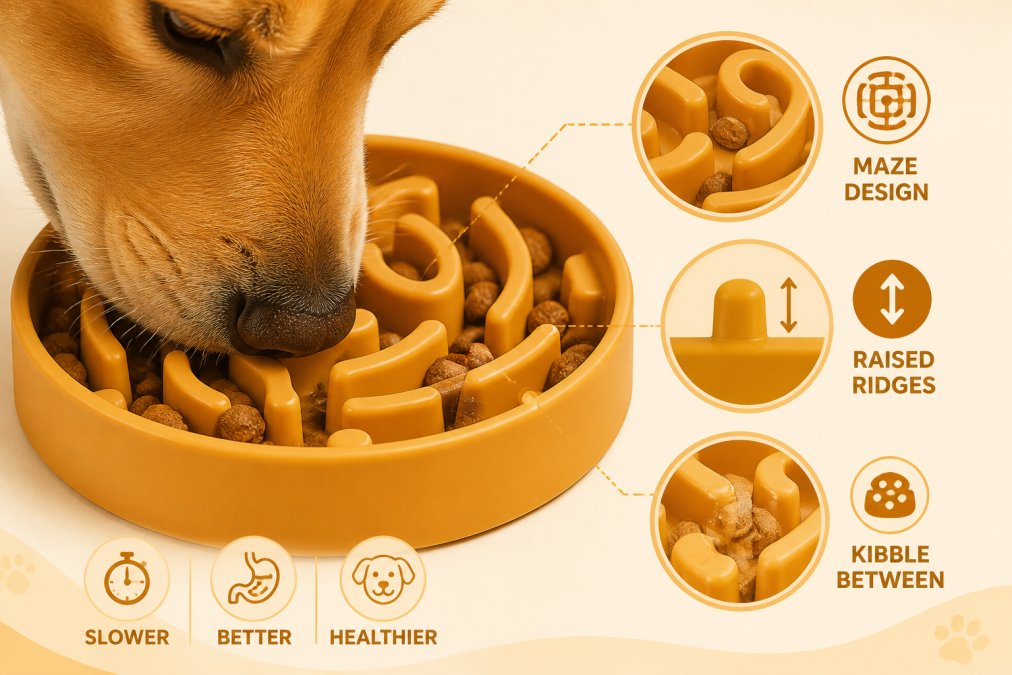
Food urgency and scarcity anxiety drive many dogs to gulp their meals. In the wild, canines compete for resources, and this ancient instinct remains hardwired into domestic dogs. If your dog grew up in a shelter, rescue situation, or multi-dog household, they may have learned that eating quickly means survival. Even dogs raised in stable homes can develop food anxiety if they've experienced another pet stealing their meal. This learned behavior becomes automatic: the bowl appears, and the gulping begins.
Breed-specific eating patterns also play a role. Larger breeds like Labradors and Golden Retrievers are genetically predisposed to enthusiasm around food, their ancestors were bred to retrieve and consume game quickly. Some dogs simply haven't learned to pace themselves because food has always been available and abundant.
Health Risks: Understanding Bloat and Other Dangers
The consequences of dog eating too fast extend far beyond bad manners. Bloat, medically known as gastric dilatation-volvolvulus (GDV), is the most serious risk. This life-threatening condition occurs when the stomach fills with gas and potentially twists, cutting off blood supply. GDV can be fatal within hours if not treated surgically, and rapid eating is one of the primary risk factors.
Beyond bloat, fast eaters face choking hazards from inadequately chewed kibble. Regurgitation is common, and chronic indigestion can reduce nutrient absorption. Behavioral problems can also stem from mealtime stress, dogs that eat rapidly often display food guarding behaviors, making them unpredictable around their bowl or other dogs. The good news is that all of these risks are largely preventable through simple management changes.
Slow Feeder Bowls: How They Work and What to Look For
Slow feeder bowls are purpose-built to create physical obstacles between your dog's mouth and the food. Instead of a flat bottom, these bowls feature ridges, mazes, or raised sections that force your dog to work around the design. Mealtime stretches from seconds to several minutes, allowing proper digestion to begin and reducing bloat risk.
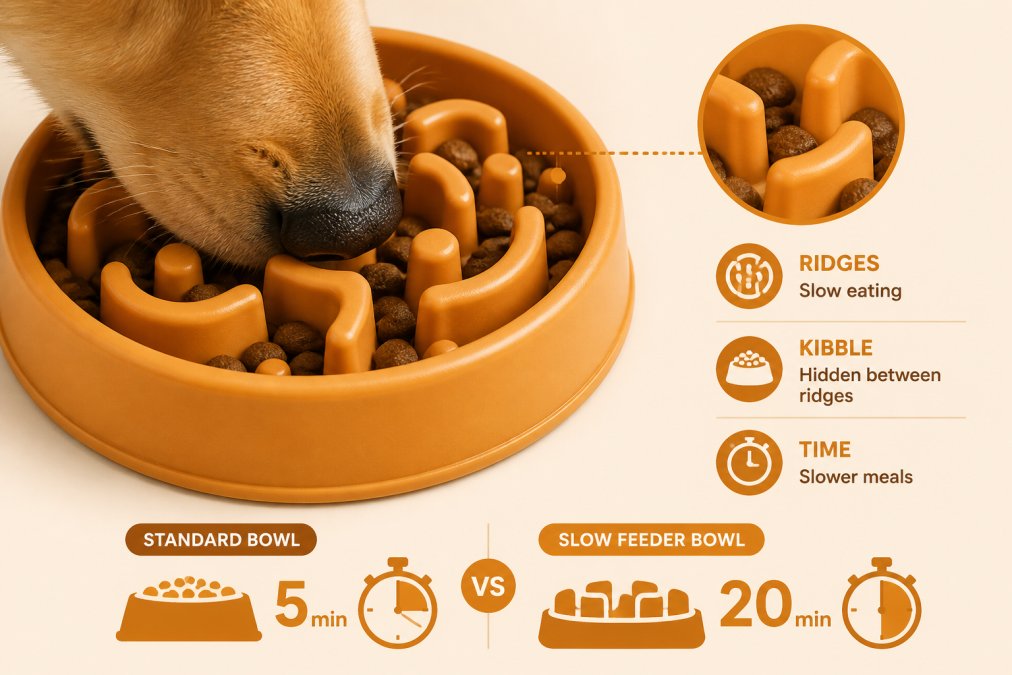
Choosing the right slow feeder bowl for your dog requires attention to a few key factors. First, consider your dog's size and mouth shape, a bowl designed for a small terrier won't work for a Great Dane. Second, check the material. Stainless steel and food-grade silicone are durable and easy to clean; plastic can harbor bacteria and may develop cracks.
Doggo Shop's Slow Feeder Dog Bowl - Anti-Gulping, Anti-Choking Pet Dish (£14.99) is designed specifically to prevent choking and bloating. The anti-gulping design forces your dog to eat at a reasonable rate, turning mealtime into a calmer, healthier experience. For enrichment-focused feeders, the Slow Feeder Dog Lick Bowl - Anti-Choking Non-Slip (£19.99) combines slow-feeding with mental stimulation, transforming a simple meal into an engaging activity.

When selecting a slow feeder, test it with a small amount of food first. Your dog should be able to access kibble without excessive frustration. The bowl should also be dishwasher-safe or easy to hand-wash.
Scatter Feeding and DIY Slow Feeder Ideas
Scatter feeding, spreading kibble across a wide surface, is one of the most effective methods for slowing consumption. Your dog must search for individual pieces rather than consuming a concentrated pile, mimicking natural foraging behavior.
Scatter feeding works outdoors on grass or indoors on tile floors. Simply spread your dog's meal across a larger area than usual. Most dogs naturally slow down because they're hunting rather than gulping.
DIY alternatives to commercial slow feeders offer budget-friendly options. A muffin tin filled with individual kibble pieces creates natural compartments that force separation. Cookie sheets or shallow baking pans work similarly. Some owners use ice cube trays or egg cartons for smaller dogs.
Safety considerations for homemade solutions are critical. Ensure any DIY feeder is made from food-safe materials and free of sharp edges. Ceramic or silicone muffin tins are safer than older metal ones. Always supervise the first few uses.
A snuffle mat offers another option. The Snuffle Mat for Dogs - Interactive Sunflower Treat Puzzle (£19.99) hides kibble within fabric strips, requiring your dog to use their nose to uncover each piece.
Puzzle Toys and Enrichment Feeders for Mental Stimulation
Puzzle toys and enrichment feeders transform eating from a mindless activity into an engaging challenge. These tools slow consumption while providing mental stimulation, especially valuable for dogs that spend hours alone during the workday.
The Interactive Robot Treat Toy - Slow Feeder for Cats & Dogs (£19.99) uses intelligent balance mechanics to dispense treats slowly, turning treat time into a brain-boosting activity. As your dog nudges or paws the toy, it rocks slightly and releases small amounts of food, extending a typical treat session from seconds to minutes.

Dogs that lack mental stimulation often develop behavioral problems and may eat faster out of boredom or anxiety. By making mealtime a puzzle to solve, you're addressing both the physical act of eating and the underlying need for cognitive engagement. Start with easier puzzles and gradually increase difficulty as your dog learns the mechanics.
Practical Strategies to Stop Dog Eating Too Fast
Beyond equipment, behavioral and environmental changes make a significant difference.
Smaller, frequent meals throughout the day distribute your dog's daily food intake across multiple sittings rather than one or two large meals. Instead of a single 2-cup meal, offer four ½-cup meals. This reduces the volume your dog consumes at once, lowering bloat risk and improving digestion.
Adding water or moisture to kibble is one of the simplest interventions. Soak dry kibble in warm water for 5-10 minutes before serving. The kibble softens and expands, increasing volume without adding calories. Your dog feels fuller faster and must chew more thoroughly. Some owners add bone broth or low-sodium chicken broth to kibble for added flavor.
Managing feeding environment and behaviour reduces stress-driven rapid eating. Feed your dog in a calm, quiet space away from other pets. If you have multiple dogs, feed them separately to eliminate competition. Remove the bowl after 15-20 minutes, whether your dog has finished or not. This teaches them that food isn't infinite and creates a predictable routine.
Some dogs eat more slowly when their owner sits nearby calmly. Positive reinforcement works better than scolding, reward your dog for pausing between bites rather than punishing rapid eating.
Common Mistakes to Avoid When Slowing Mealtime
Even well-intentioned efforts can backfire. The first mistake is switching to a slow feeder bowl without any other changes and expecting immediate results. A determined gulper may simply spend more time working around the bowl's obstacles. Combine the bowl with smaller portions and environmental management for best results.
Another error is using a slow feeder bowl that's too difficult for your dog's age or physical condition. Elderly dogs with dental problems may become frustrated rather than slowed down. Puppies may benefit from easier obstacles that still provide some braking effect.
Punishing your dog for eating too fast creates stress and anxiety, which often worsens the problem. Positive reinforcement is far more effective. Some owners add foreign objects to bowls like rocks or coins, these are choking hazards and should never be used.
Inconsistency undermines progress. If your dog eats from a slow feeder one day and a regular bowl the next, they won't develop a new eating pattern. Consistency over weeks and months is necessary for behavioral change to stick.
Transitioning Your Dog to Slower Eating Habits
Change works best when introduced gradually. Start by introducing a slow feeder bowl at one meal per day while keeping the other meal in a regular bowl. After a week, switch both meals.
If your dog finds the slow feeder frustrating initially, make it easier by placing larger pieces of kibble or softer food in it. Gradually return to normal kibble size as they become comfortable.
When adding water or moisture to kibble, start with just a splash of warm water and gradually increase the amount over several meals. For dogs transitioning to smaller, frequent meals, adjust gradually over 7-10 days to prevent digestive upset.
Introduce enrichment feeders during low-stress times, not when your dog is ravenous. Let them explore the empty toy first and put a small amount of high-value treats inside to build positive association.
Track your dog's progress over 2-4 weeks. Most dogs eating too fast show noticeable improvement within this timeframe. You'll see them chewing more deliberately, finishing meals in 5-10 minutes instead of 30 seconds, and displaying less food anxiety around other dogs.
Rapid eating isn't just annoying, it's a health risk that deserves your attention. The strategies in this guide address both the physical and behavioral sides of the problem, giving your dog the best chance at safe, healthy mealtimes. Doggo Shop's slow feeder bowls and enrichment toys are designed to make this transition easier while supporting your dog's overall wellbeing. Every purchase contributes to rescue dogs in need worldwide. Start with one simple change this week, whether that's a slow feeder bowl, scatter feeding, or smaller meal portions, and watch your dog's eating habits transform. Your pup's digestive health and your peace of mind are worth the effort.
Frequently Asked Questions
What causes a dog to eat too fast?
Dogs eat too fast for several reasons: food urgency (anxiety about food availability), breed predisposition (some breeds naturally gulp more), competition from other pets, or simple habit. Understanding the root cause helps you choose the right solution. A dog with scarcity anxiety may need reassurance that food is always available, whilst a Labrador's natural gulping tendency might respond better to a physical barrier like a slow feeder bowl.
What are the main health risks of rapid eating, including bloat symptoms in the UK?
The most serious risk is gastric dilatation-volvulus (GDV), commonly called bloat, where the stomach fills with gas and potentially twists. Signs include a swollen abdomen, restlessness, drooling, and attempts to vomit without producing anything. Other risks include choking, regurgitation, and poor digestion. Bloat is a veterinary emergency requiring immediate attention from your vet. Rapid eating also increases aerophagia (swallowing air), which contributes to digestive discomfort and gas.
Are slow feeder bowls safe for all dog breeds and sizes?
Slow feeder bowls are generally safe, but design matters. Large-breed dogs benefit most from deeper bowls with larger ridges, whilst small breeds need shallow bowls with smaller obstacles to prevent frustration. Always choose a bowl sized appropriately for your dog's muzzle. Check that ridges are smooth and don't have sharp edges. Monitor your dog's first few uses to ensure they're eating comfortably rather than struggling or becoming stressed.
How long does it take to see improvement when slowing my dog's eating?
Most dogs adjust within 1-2 weeks of introducing a slow feeder bowl or changing feeding method. You may notice immediate changes in gulping behaviour, but digestive improvements take longer. Monitor your dog's energy, coat quality, and digestion over 4-6 weeks. If your dog shows signs of stress or refuses to eat from a slow feeder, transition more gradually or try a different method like scatter feeding or puzzle toys. Patience and consistency are key to establishing new eating habits.
This article was written using GrandRanker


Leave a comment