


How to Recycle Old Dog Beds: A Step-by-Step Guide
Table of Contents
- Why Recycling Old Dog Beds Matters
- Step 1: Assess the Condition of Your Dog Bed
- Step 2: Clean and Prepare Your Dog Bed for Donation
- Donate Dog Beds to Animal Shelters and Rescue Centres
- Step 3: Disassemble Your Dog Bed for Recycling
- Upcycling Old Dog Beds: Creative Alternatives
- Recycling and Disposal Options for Dog Bed Materials
- Conclusion
Last Updated: August 22, 2026
Why Recycling Old Dog Beds Matters
When your dog's bed finally falls apart, the instinct to toss it in the bin is strong. But old dog beds represent a genuine opportunity to extend their life through donation, upcycling, or responsible recycling. The materials inside, memory foam, synthetic fibres, cotton covers, can often find new purpose rather than ending up in landfill. At Doggo Shop, we believe that caring for your dog extends to caring for the planet they'll inherit, which is why we're committed to helping conscious pet owners like you understand how to recycle old dog beds responsibly.
Textile waste represents a significant environmental challenge. According to the UK government's waste and contamination statistics, textiles account for a substantial portion of household waste, yet many items could be diverted through proper recycling or donation channels. When you recycle a dog bed rather than discarding it, you're participating in the circular economy, keeping materials in use longer and reducing demand for new production.

Recycling old dog beds isn't complicated. You have multiple pathways depending on the bed's condition: donation to animal shelters and rescue centres, disassembly for material recycling, creative upcycling projects, or responsible disposal through your local authority's household waste and recycling centre. Below, we'll walk you through every option so you can choose the approach that fits your situation.
Step 1: Assess the Condition of Your Dog Bed
Before you decide what to do with an old dog bed, you need to honestly evaluate its condition. This assessment determines whether donation is viable or whether disassembly and recycling is the better path.
Start by examining the cover. Run your hands over the fabric and check for tears, stains, or damage. A cover with minor wear but no holes or significant soiling can often be cleaned and donated. However, if the cover has large tears, permanent stains that won't wash out, or signs of mould or mildew, donation becomes problematic. Animal shelters have strict hygiene standards and won't accept bedding that poses health risks to their animals.
Next, assess the filling material. Press down on the bed and feel for lumps, compression, or areas where the stuffing has shifted. Memory foam that has flattened significantly or poly-fill that has bunched up indicates the bed is past its useful life for comfort. However, even compromised filling can be recycled if the cover is removed and the materials are sorted properly.
Check the structural integrity. Look at seams, zippers, and the base. If the bed has a waterproof or non-slip underside, verify it's still intact. Beds with compromised bases or broken zippers are typically better suited for disassembly and material recycling rather than donation.
Finally, consider the bed's size and style. Large dog beds or specialty designs may be more challenging to donate if they're no longer in demand. Smaller beds, standard rectangular shapes, and neutral colours typically have better odds of being accepted by shelters.
Step 2: Clean and Prepare Your Dog Bed for Donation
If your assessment indicates the bed is suitable for donation, proper cleaning is essential. Animal shelters operate under strict hygiene protocols, and a clean bed is far more likely to be accepted.
Begin with a thorough vacuum. Use a handheld or upright vacuum to remove loose hair, dirt, and debris from both sides of the bed, paying special attention to seams and crevices where pet hair accumulates.
For the cover, check the care label for washing instructions. Most dog bed covers are machine-washable. Use warm or hot water and standard laundry detergent. If the bed has stubborn stains, pre-treat these areas with a stain remover or enzymatic cleaner before washing. Wash the cover separately from other laundry.
Dry the cover thoroughly. Damp bedding can develop mould during storage or transport. Use a tumble dryer on medium heat if the care label permits, or air-dry in direct sunlight, which naturally sanitises fabric and eliminates odours.
For the bed's base or non-removable components, wipe down with a damp cloth or pet-safe disinfectant. Once clean and dry, inspect the bed one final time. If you notice any odours, stains that didn't come out, or signs of damage, reconsider whether donation is appropriate.
Donate Dog Beds to Animal Shelters and Rescue Centres
Donating a clean, functional dog bed directly to an animal shelter or rescue centre is one of the most meaningful ways to extend its life. Your donation provides comfort to animals in need while reducing waste.
The Dogs Trust and similar UK animal welfare organisations regularly accept donations of bedding and supplies. However, each shelter has its own acceptance criteria and donation procedures. Before you donate, contact the specific organisation to confirm they accept dog bed donations and understand their requirements.
Most shelters require that donated beds be clean, have no visible damage or tears, have no strong odours, and show no signs of pests or disease. When you contact a shelter, ask: Do they accept dog bed donations? What condition must the bed be in? Do they prefer whole beds or disassembled components? Do they have size or style preferences? How should you deliver the donation?
Document your donation for tax purposes if you itemise deductions. Most charities can provide a receipt confirming the donation date and item description.
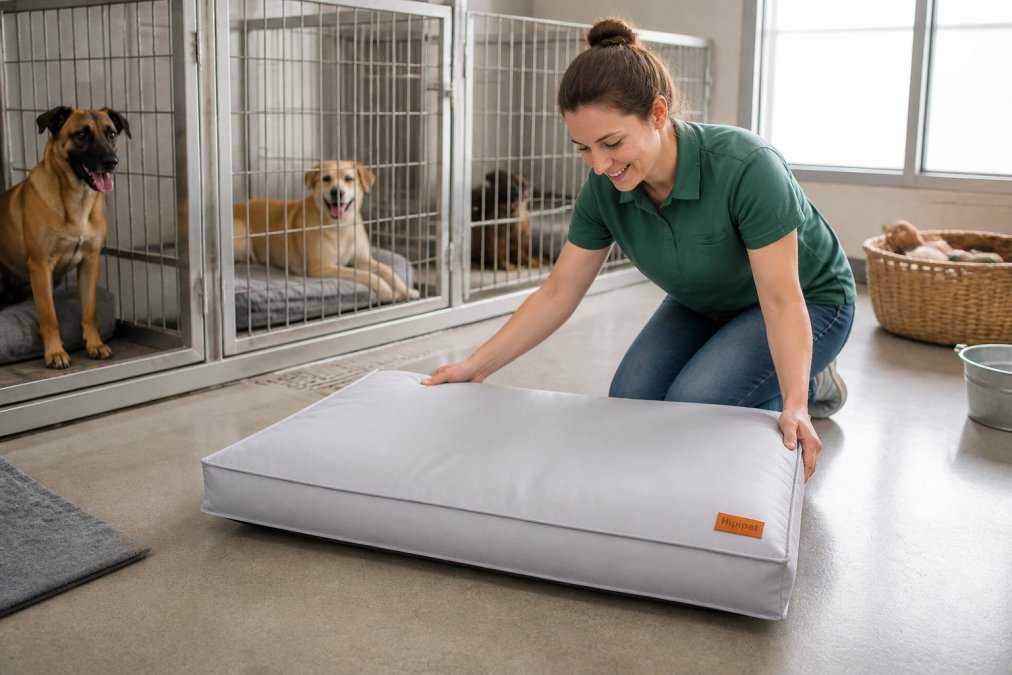
Beyond shelters, consider local animal rehoming centres, cat and dog rescue organisations, or wildlife sanctuaries. Some horse rescues and farm sanctuaries also accept donated bedding. The key is to contact the organisation first rather than showing up unannounced.
Step 3: Disassemble Your Dog Bed for Recycling
If your dog bed isn't suitable for donation, disassembly allows you to recycle individual materials responsibly. This process separates components into textile, foam, and synthetic materials, each of which has its own recycling pathway.
Removing the Zipper and Cover
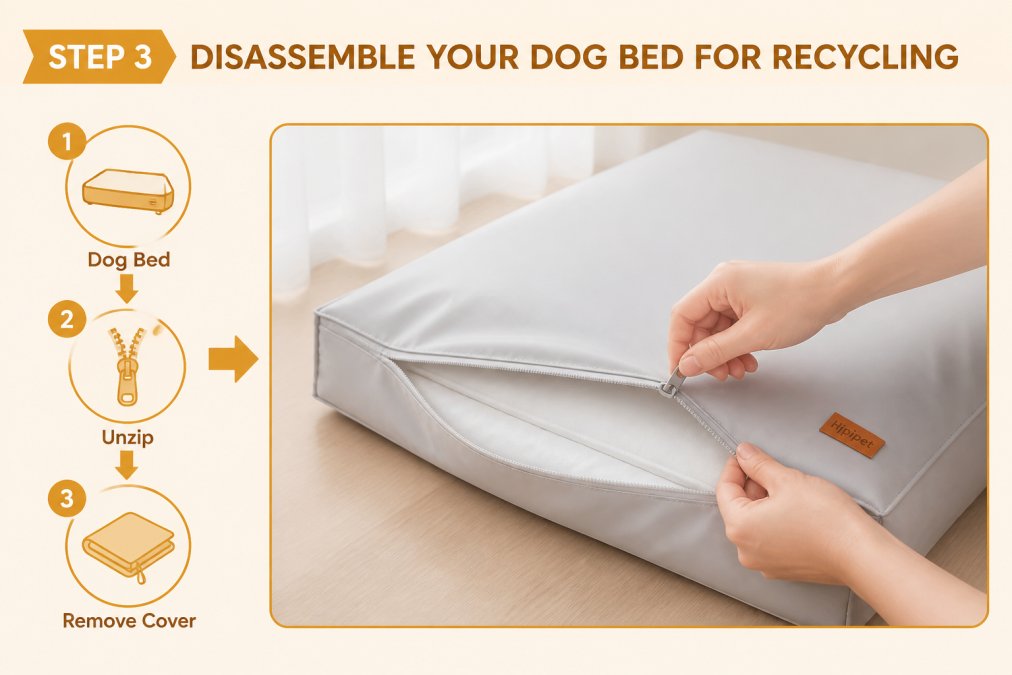
Start by locating and removing the zipper. Most dog beds have a removable cover with a side or bottom zipper. Carefully unzip the cover completely. If the zipper is stuck, apply a small amount of graphite lubricant to ease it.
Once unzipped, gently pull the cover away from the filling material. Take your time to separate the components cleanly without tearing the fabric or scattering filling.
Examine the cover fabric. If it's made of cotton, polyester, or a cotton-blend, it can be recycled through textile recycling banks. If the cover is heavily soiled, torn, or damaged, it may need to go to household waste instead. Set aside any metal components like zippers, snaps, or reinforcement rings for general waste, as most household recycling schemes won't accept small metal items.
Separating Filling and Foam Components
With the cover removed, you'll see the bed's interior filling. Dog beds typically contain memory foam, polyurethane foam, poly-fill, or cotton batting.
For memory foam or solid foam layers, carefully cut or peel them away from the bed's base. Memory foam is denser and comes away in chunks or sheets. Place this material aside for foam recycling.
Poly-fill is looser and fluffier. If it's stuffed inside a mesh or fabric inner layer, cut or carefully tear open this layer and separate the poly-fill. Poly-fill can be challenging to recycle through standard schemes but has uses in upcycling projects or can sometimes be accepted by specialist textile recyclers.
The bed's base, often a waterproof or non-slip material, should be examined separately. If it's made of rubber, PVC, or other synthetic material, check whether your local authority accepts these materials. Many do not, so the base may need to go to general waste unless a specialist recycling centre in your area accepts it.
Keep different materials in separate bags or containers to ensure each material goes to the appropriate facility.
Upcycling Old Dog Beds: Creative Alternatives
Before you recycle, consider whether your old dog bed could find new life through upcycling. Creative repurposing keeps materials out of the waste stream and often costs less than purchasing new items.
The cover fabric can become cushion covers, tote bags, or pet blankets. If the fabric is durable and attractive, you can cut it into sections and sew new items.
Memory foam or poly-fill can be repurposed as stuffing for new pet beds, cushions, or craft projects. If you're handy with a sewing machine, you could create smaller beds for cats or other pets.
The bed's base material, if waterproof, can become a garage or garden mat, a protective layer for storage, or a floor mat for messy areas. Waterproof materials are particularly valuable for upcycling since they're difficult to recycle through standard schemes.
For those interested in larger projects, disassembled dog bed materials can be combined with other reclaimed materials to create outdoor pet shelters, garden furniture, or storage solutions. Online upcycling communities often share creative ideas and inspiration.
The advantage of upcycling is that it extends the bed's usefulness, requires no specialist facilities, and often costs nothing beyond your time.
Recycling and Disposal Options for Dog Bed Materials
Once you've disassembled your dog bed, each material component needs to go to the appropriate recycling or disposal facility. Understanding where each material goes ensures responsible end-of-life management.
Textile Recycling and Fabric Scraps
Dog bed covers are typically made from polyester, cotton, or cotton-polyester blends. These materials can be recycled through textile recycling banks, which are collection points found across the UK in car parks, supermarkets, and community centres.
According to the Textile Recycling Association, textile banks accept clean, dry clothing and fabric items. Dog bed covers qualify as textiles. Before you take your cover to a textile bank, ensure it's completely dry, as moisture can contaminate the entire batch.
Place the cover in a bag and drop it at your nearest textile bank. Most operate 24/7. The collected textiles are sorted by professional recyclers who separate them by fibre type, colour, and condition. Some fabrics are remanufactured into new clothing or home furnishings, while others are shredded and used as industrial wiping cloths or insulation material.
If your area doesn't have a textile bank nearby, contact your local authority's waste management team. Many councils operate household waste and recycling centres that accept textiles.
Memory Foam and Synthetic Materials
Memory foam and polyurethane foam are more challenging to recycle than textiles. Standard household recycling schemes typically don't accept foam materials because they require specialised processing equipment.
However, specialist foam recyclers do exist. Search for "foam recycling" or "mattress recycling" services in your area, as many of these facilities accept foam from pet beds. Some will collect larger items, though smaller quantities may need to be dropped off.
Alternatively, contact your local authority's household waste and recycling centre. Many centres now accept foam items at dedicated drop-off points. If specialist recycling isn't available locally, foam may need to go to general waste.
Household Waste and Recycling Centre Guidelines
Your local authority's household waste and recycling centre is a critical resource for materials that don't fit standard kerbside recycling. These centres accept bulky waste, including large pet beds, foam components, and mixed materials.
To use your local centre effectively, first check your council's website to confirm which materials they accept. Most centres accept textiles, foam, and mixed household items, but policies vary by location.
When you visit, separate your dog bed components into distinct piles: textiles in one area, foam in another, and any plastic or rubber components separately. This separation makes processing more efficient.
The UK government's waste and recycling guidance provides postcode-specific information about your nearest recycling facilities and accepted materials.
Conclusion
Recycling an old dog bed doesn't require specialist knowledge, it requires only a clear understanding of your options and a commitment to responsible disposal. Whether you donate to an animal shelter, disassemble for material recycling, or upcycle creatively, you're making a meaningful choice for the environment and for animals in need.
At Doggo Shop, we understand that caring for your dog means caring for the world they live in. When you're ready for a replacement bed, our range of durable, washable dog beds, like our Waterproof Dog Bed and Cozy Dog Sofa Bed, are built to last, reducing the need for frequent replacements. Plus, every purchase supports rescue dogs and cats in need worldwide. Shop with us and give your pup the comfort they deserve while making a difference.

Frequently Asked Questions
Q: What can I do with an old dog bed?
A: You have several options: donate it to animal shelters or rescue centres if it's in good condition, recycle the individual materials (fabric, foam) at textile banks or household waste recycling centres, or upcycle it into pet bedding for other animals, garden cushions, or cleaning cloths. The best choice depends on the bed's condition and your local recycling facilities.
Q: Can I donate used dog beds to animal shelters?
A: Yes, many animal shelters and rescue centres welcome clean, undamaged dog beds. Contact your local shelter first to confirm they accept donations and ask about their hygiene standards. Beds must be free from stains, odours, and tears. Organisations like Dogs Trust and RSPCA rehoming centres often accept pre-loved bedding, but policies vary by location, so check before donating.
Q: How do I dispose of a memory foam dog bed?
A: Memory foam is difficult to recycle through standard household waste schemes. Check with your local council's recycling centre, as some accept bulky waste or specialist foam recycling. If the bed's cover is removable, separate the cotton or polyester fabric for textile recycling. The foam itself may need specialist disposal, so contact your local authority's waste management team for guidance on proper disposal.
Q: Are dog beds recyclable at household waste recycling centres?
A: Most recycling centres accept dog beds as bulky waste, but acceptance depends on your local authority's policy. Disassembled beds are easier to process: fabric goes to textile recycling, and foam may require specialist handling. Contact your local council or visit their website to confirm what they accept before taking your bed to the centre.
This article was written using GrandRanker


Leave a comment