


How to Prevent Dog Bloat: A Complete Prevention Guide
Table of Contents
- What Is Bloat and Why It Matters
- Dog Breeds Prone to Bloat: Who's at Risk
- Slow Feeder Bowls for Dogs: Your First Prevention Step
- Feeding Schedule to Prevent Bloat: Timing and Portions
- Exercise, Activity, and Stress: Managing Post-Meal Behaviour
- Signs of Gastric Torsion in Dogs: When to Act Fast
- Prophylactic Gastropexy: Surgical Prevention for High-Risk Dogs
- Conclusion
Last Updated: August 7, 2026
What Is Bloat and Why It Matters
Bloat in dogs, medically known as gastric dilatation-volvulus (GDV), is a life-threatening condition where the stomach fills with gas and may twist inside the abdominal cavity. This emergency requires immediate veterinary intervention, without treatment, a dog can go into hypovolemic shock within hours. Understanding how to prevent dog bloat symptoms is one of the most important things you can do as a dog owner, particularly if you have a large or giant breed.
The reason bloat demands such urgency is simple: it's fast and often fatal. A dog can be healthy one moment and in critical condition the next. The stomach expands with gas, cutting off blood supply to the stomach wall and surrounding tissues. If the stomach rotates (volvulus), the situation becomes even more dire. The consistent message is that prevention beats emergency treatment every single time.
What makes this condition particularly insidious is that it can strike seemingly healthy dogs with no warning. There's no single cause, it's usually a combination of factors working together. A dog's genetics, feeding habits, activity level, and even stress all play a role. The good news is that most of these factors are within your control.
Dog Breeds Prone to Bloat: Who's at Risk
Not all dogs face equal risk. Certain breeds have a significantly higher predisposition to bloat due to their deep chest cavity and body structure. Understanding your dog's risk profile is the first step in prevention.
Large and giant breeds dominate the bloat statistics. Great Danes, German Shepherds, Standard Poodles, Doberman Pinschers, Boxers, and Weimaraners top the list. The deeper and narrower the chest, the higher the risk. This chest shape creates more space for the stomach to move and rotate, and it allows gas to accumulate more easily in the abdominal cavity.
Breed isn't destiny, though. A Labrador Retriever with poor feeding habits faces more risk than a Great Dane eating slowly from a proper bowl. However, if your dog is a deep-chested breed, you should treat bloat prevention as non-negotiable rather than optional.
Age matters too. Dogs over seven years old face increased risk, as do dogs with a family history of bloat. If a parent or sibling of your dog has experienced GDV, your dog's risk rises significantly. Some research suggests that neutered or spayed dogs may have slightly elevated risk compared to intact dogs, though the evidence is mixed.
The takeaway: know your dog's risk category. If you have a large or giant breed, or if bloat runs in your dog's family line, every prevention strategy in this guide becomes essential rather than nice-to-have.
Slow Feeder Bowls for Dogs: Your First Prevention Step
The single most effective prevention tool available to you is a slow feeder bowl. This isn't optional for high-risk dogs, it's foundational.

A slow feeder bowl forces your dog to eat more slowly by creating barriers within the bowl that require the dog to work around them. Instead of gulping down a bowl of kibble in 30 seconds, your dog spends several minutes eating the same amount. This slows gastric filling, reduces air intake, and gives the digestive system time to process food properly.
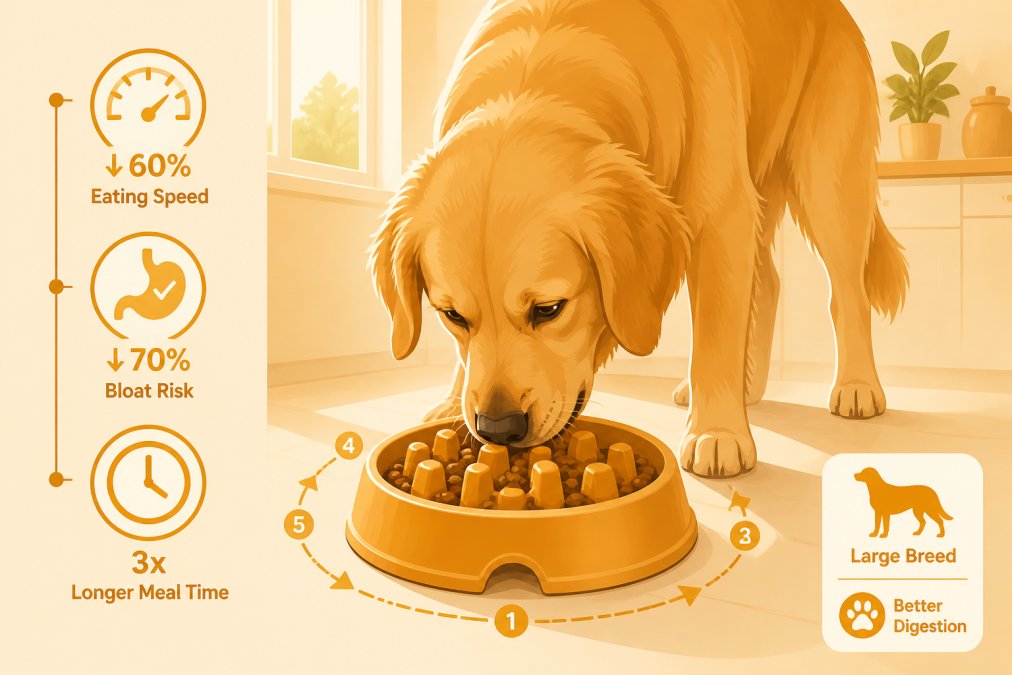
The Doggo Shop Slow Feeder Dog Bowl (£14.99) is designed specifically for this purpose, with anti-gulping ridges that break up the meal into smaller portions. For dogs that need even more enrichment during feeding, the Slow Feeder Dog Lick Bowl (£19.99) combines slow feeding with textured surfaces that encourage licking rather than gulping, this approach is particularly effective for anxious dogs, as the licking action itself has a calming effect.
Why does this matter for bloat prevention? Fast eating is one of the primary risk factors. When a dog gulps, they swallow air along with food. That air accumulates in the stomach, creating gas that expands the organ. A slow feeder bowl addresses this directly.
The investment is minimal, even a quality slow feeder bowl costs less than an emergency vet visit. Most owners see an immediate change in their dog's eating behaviour within the first few meals. Your dog might initially seem frustrated by the slower pace, but they adapt quickly. Within a week, slow feeding becomes normal.
Feeding Schedule to Prevent Bloat: Timing and Portions
How often and how much you feed your dog matters as much as how fast they eat. The feeding schedule you establish directly impacts your dog's bloat risk.
Split meals into smaller portions fed multiple times per day rather than one large meal. A dog that eats one large meal is at significantly higher risk than a dog eating two or three smaller meals. If your dog currently eats one 400g meal per day, consider splitting it into two 200g meals, one in the morning, one in the evening. For dogs at very high risk, three smaller meals might be appropriate.
The timing around exercise is critical. Never feed your dog immediately before or after vigorous activity. Exercise causes the stomach to move and shift within the abdominal cavity. Feeding a dog that's just finished intense exercise, or feeding them right before a walk, creates the exact conditions where bloat develops. The general guideline is to wait at least one to two hours after exercise before feeding, and avoid strenuous activity for two to three hours after a meal.
Meal composition matters as well. Some evidence suggests that kibble that absorbs water and expands in the stomach may increase risk. Soaking kibble in water for 10-15 minutes before feeding allows it to expand outside the stomach rather than inside. This is a simple change with potentially significant protective value. Some owners also find that adding a probiotic supplement supports overall digestive health, the Native Pet Probiotic Powder for Dogs (£24.99) provides beneficial bacteria that may help with gastrointestinal stability.

Avoid foods that cause excessive gas production. High-fat meals, foods with lots of air whipped into them, and certain grains can increase stomach gas. Stick to consistent, quality food rather than switching brands frequently, which can upset digestion.
Water access during meals is another consideration. Some veterinarians recommend removing water for 30 minutes before and after feeding to prevent excessive fluid intake that might distend the stomach. Others suggest this makes minimal difference. The safest approach is to provide water at normal times but avoid large amounts immediately around mealtimes.
Exercise, Activity, and Stress: Managing Post-Meal Behaviour
What your dog does after eating is just as important as what they eat. The period immediately following a meal is when bloat risk peaks.
For at least two to three hours after eating, keep your dog calm and quiet. This means no running, jumping, or vigorous play. No trips to the park. No rough-housing with other dogs. This isn't about being overprotective, it's about respecting the window of vulnerability when the stomach is full and most prone to movement and torsion.
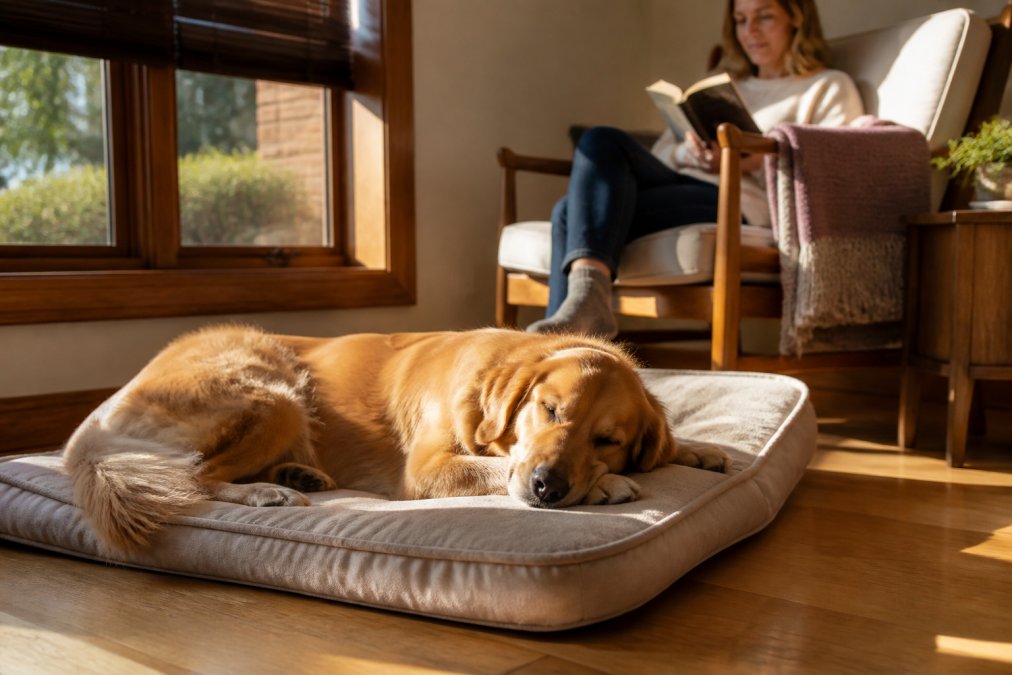
Stress is an underestimated bloat risk factor. A stressed or anxious dog has elevated cortisol levels, which can affect stomach function and increase gas production. Dogs that are nervous around feeding time, or that experience separation anxiety, face elevated bloat risk. If your dog shows signs of anxiety, panting, pacing, whining, address this directly.
Interactive toys and enrichment activities can help reduce stress, but timing matters. Provide enrichment activities well before meals or several hours after, not immediately around feeding time. The Interactive Robot Treat Toy (£19.99) from Doggo Shop can occupy your dog during calm periods, but avoid using it right after a meal.
Some owners find that creating a dedicated, quiet feeding space reduces mealtime stress. A separate room or a quiet corner away from household chaos gives your dog a calm environment for eating. This simple environmental change can reduce anxiety-driven eating behaviours.
Post-meal rest isn't punishment, it's protection. A dog resting calmly on their bed after eating is a dog at lower risk of bloat. Make this the normal routine, and your dog will adapt quickly.
Signs of Gastric Torsion in Dogs: When to Act Fast
Knowing the early warning signs of bloat could save your dog's life. The window between symptom onset and critical emergency is often just a few hours.
The earliest signs are often subtle. A dog with bloat may show restlessness, pacing, inability to settle, changing positions frequently. Non-productive retching (attempting to vomit but producing nothing) is a classic early sign. The dog's abdomen may appear distended or tight. You might notice excessive salivation or drooling. Some dogs show signs of abdominal pain, whining, reluctance to lie down, or a hunched posture.
As bloat progresses, the signs become more urgent. The dog may show tachycardia (rapid heart rate), pale gums, and lethargy. Breathing may become laboured. The dog might collapse or show signs of shock. By this stage, minutes matter.
The critical point: if your dog shows any combination of restlessness, non-productive retching, abdominal distension, and discomfort, contact an emergency veterinary clinic immediately. Don't wait. Don't try home remedies. Don't monitor at home. Bloat is not something you manage, you treat it in an emergency setting.
Many owners report that their dog seemed fine one moment and showed severe symptoms the next. This isn't an exaggeration. The progression can be remarkably fast, particularly if the stomach has rotated.
Trust your instincts. You know your dog better than anyone. If something feels wrong, it probably is. A false alarm at an emergency clinic is far better than delaying treatment for actual bloat.
Prophylactic Gastropexy: Surgical Prevention for High-Risk Dogs
For dogs at extremely high risk, particularly those with a family history of bloat or previous episodes, prophylactic gastropexy is worth discussing with your veterinarian.
Gastropexy is a surgical procedure that permanently attaches the stomach wall to the abdominal wall, preventing the stomach from rotating. The procedure is performed during routine surgery (often spaying or neutering) or as a standalone operation. A prophylactic gastropexy means your dog cannot develop the volvulus (rotation) component of bloat, though gastric dilatation could theoretically still occur.
The decision to pursue prophylactic gastropexy is individual and should be made in consultation with your vet. The procedure adds cost to spaying or neutering, typically an additional £200-400 at UK veterinary clinics, though prices vary. For a dog with a strong family history of fatal bloat, many owners consider this a worthwhile investment.
Post-operative recovery for prophylactic gastropexy is relatively straightforward. Most dogs recover within 7-10 days. Activity should be restricted during this period, no jumping, running, or rough play. Pain management is typically needed for the first few days. Your vet will provide specific post-operative instructions and schedule follow-up checks.
The benefit is significant: a dog with prophylactic gastropexy cannot experience the life-threatening stomach rotation that makes bloat so deadly. This doesn't eliminate all bloat risk, but it removes the most dangerous component.
If your dog is a large or giant breed with bloat in the family history, having this conversation with your vet before an emergency situation arises makes sense. It's one more tool in your prevention toolkit.
Bloat is a serious condition, but it's also highly preventable. The combination of slow feeding, proper meal timing, stress management, and awareness of warning signs puts you in control. Start with the fundamentals: invest in a quality slow feeder bowl, establish a split-meal feeding schedule, and keep your dog calm after eating. These three changes alone dramatically reduce bloat risk.
At Doggo Shop, we've built our product selection around the needs of dogs at risk, from slow feeder bowls designed to prevent gulping to probiotic supplements that support digestive health. Every purchase supports rescue dogs in need, so you're protecting your own dog while helping others. Start with the Slow Feeder Dog Bowl (£14.99) and make calm, controlled mealtimes your new normal. Your dog's safety depends on the habits you establish today.

Frequently Asked Questions
What are the first signs of bloat in a dog?
Early signs of bloat include restlessness, non-productive retching (retching without vomiting), abdominal distension, and lethargy. Your dog may pace, drool excessively, or seem uncomfortable. These symptoms can progress rapidly to shock and collapse. If you notice any of these signs, contact your veterinarian immediately, bloat is a life-threatening condition that requires emergency surgery.
Which dog breeds are most prone to bloat?
Deep-chested and giant breeds face the highest risk, including Great Danes, German Shepherds, Standard Poodles, Setters, and Boxers. Large breeds with narrow chests and deep abdomens are particularly susceptible to gastric dilatation-volvulus (GDV). If you own one of these breeds, preventive feeding strategies and awareness of warning signs are essential.
Can bloat in dogs be prevented?
While you cannot eliminate bloat risk entirely, you can significantly reduce it through multiple strategies: using slow feeder bowls, feeding smaller, frequent meals, avoiding strenuous exercise immediately after eating, and managing stress. Some high-risk dogs benefit from prophylactic gastropexy, a surgical procedure that anchors the stomach to prevent rotation. Consult your veterinarian about the best prevention plan for your dog.
How does feeding frequency affect the risk of GDV?
Feeding your dog two or three smaller meals per day, rather than one large meal, reduces the risk of gastric dilatation-volvulus. Large meals cause rapid stomach distension, which increases the likelihood of the stomach rotating. Slower feeding methods, such as using slow feeder bowls or lick bowls, further decrease risk by slowing consumption and allowing better digestion.
This article was written using GrandRanker


Leave a comment