


How to Keep Senior Dogs Comfortable at Home
Table of Contents
- What Changes as Dogs Age: Spotting the Signs of Arthritis in Dogs
- Create a Warm, Draught-Free Resting Zone
- Why Orthopaedic Dog Beds for Senior Dogs Are Worth It
- Adapt Your Floors and Doorways for Safer Movement
- Senior Dog Mobility Aids: Ramps, Steps and Harnesses
- Adjust Exercise and Diet to Protect Ageing Joints
- Support Your Senior Dog's Mind and Senses
- Conclusion: Build a Daily Routine Around Comfort
- Frequently Asked Questions
Last Updated: September 5, 2026
Caring for an ageing dog means noticing the small shifts long before they become obvious problems. The slowing pace on stairs, the hesitation before jumping onto the sofa, the extra moment taken to settle into a lying position. Learning how to keep senior dogs comfortable at home is about adapting your space to match their changing body, and this guide from Doggo Shop covers the practical changes that make a real difference to their daily life. We will walk through every room of the house, from the flooring under their paws to the bed they sink into at night.
What Changes as Dogs Age: Spotting the Signs of Arthritis in Dogs
Recognising the signs of arthritis in dogs early is the single most effective way to slow its impact on their quality of life. Ageing joints lose cartilage, which means bone can rub against bone, causing stiffness that is often worse after a nap or on cold mornings (PubMed). Many owners dismiss these clues as "just slowing down", but they are actually pain signals.
Common indicators to watch for include:
- Reluctance to climb stairs or jump into the car
- Lagging behind on walks that were once easy
- Visible stiffness when rising from a lying position
- Flinching or whimpering when touched around the hips or spine
- Licking or chewing at specific joints
Age-related changes affect every dog differently, and smaller breeds often show signs later than larger ones. If you notice any of these behaviours persistently, a conversation with your vet is the right first step. Veterinary advice matters here because some conditions, such as hip dysplasia, need a different management plan than general age-related stiffness.
Create a Warm, Draught-Free Resting Zone
A senior dog's body struggles to regulate temperature as it ages, which is why a warm, draught-free sleeping area is non-negotiable. Cold air settles at floor level, and an arthritic dog lying directly on a chilly surface will stiffen up considerably faster than one resting on an insulated bed. Place their bed away from exterior doors, windows, and cold spots in the room.

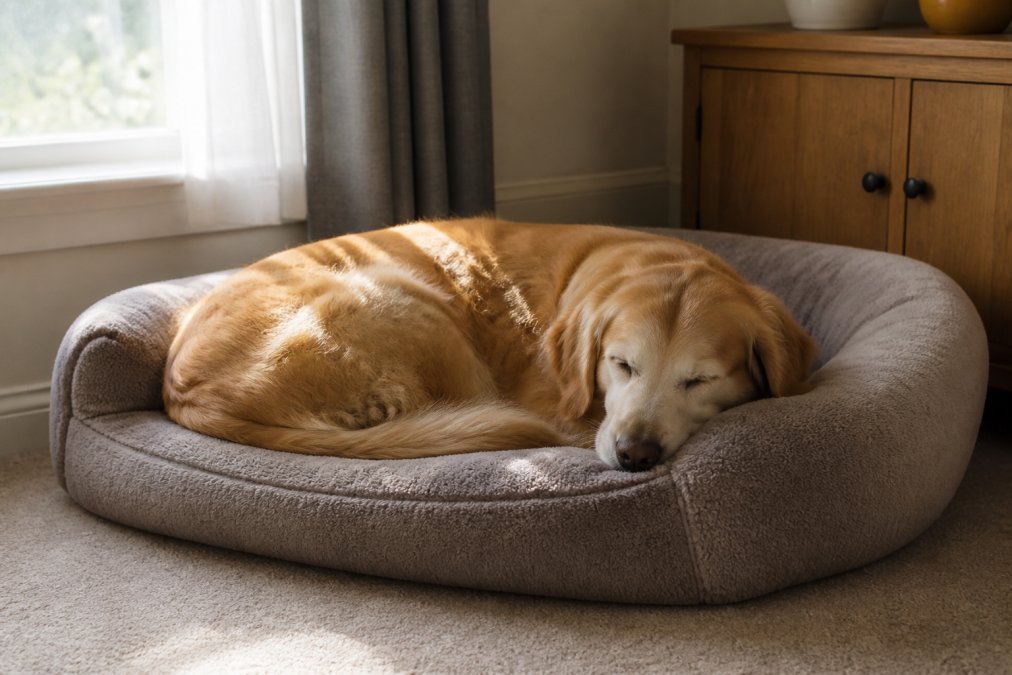
The quiet space should also be out of the main foot traffic. A dog with aching joints values uninterrupted rest, and a corner spot that lets them see the room without being disturbed strikes the right balance. Adding a blanket they can burrow into gives them control over their own warmth, which many seniors appreciate.
Why Orthopaedic Dog Beds for Senior Dogs Are Worth It
Orthopaedic dog beds for senior dogs are not a luxury purchase; they are a targeted response to joint pain. Standard beds compress flat under your dog's weight, offering zero support to hips and elbows that are already sore. An orthopaedic bed uses higher-density foam that contours to the body without bottoming out, distributing weight evenly across pressure points.
The difference is visible within days. Dogs that previously circled for ten minutes before lying down often settle immediately on a supportive surface. Look for beds with a removable, washable cover, because incontinence and accidents become more common with age, and you will want to clean the bed without ruining the foam inside.
For a balance of support and easy maintenance, the Waterproof Dog Bed - Washable Non-Slip Pet Mattress uses high-elastic memory fabric that repels moisture while the PP cotton filling cushions sore joints. The non-slip base keeps it steady when your dog climbs on and off, which matters when mobility is fading. At £19.99, it delivers orthopaedic-style support.

Adapt Your Floors and Doorways for Safer Movement
Slippery floors are the biggest home hazard for a senior dog with mobility issues. Hardwood, laminate, and tile offer zero grip, and a dog that loses its footing can tear a muscle or aggravate existing joint damage. The fix is simple: provide traction everywhere your dog walks.
Non-slip rugs and runners in high-traffic areas are the first step. Place them along the route from the bed to the water bowl, and at the top of stairs. For larger areas where rugs are impractical, anti-slip tape applied in strips across the floor gives paws something to grip. You can also trim the fur between your dog's paw pads, which improves contact with the floor surface.
Doorways need attention too. If your dog has to step over a threshold or squeeze through a narrow gap, widen the opening or install a small ramp. The goal is a clear, straight path between the areas your dog uses most, with no obstacles that require awkward twisting or stretching.
Senior Dog Mobility Aids: Ramps, Steps and Harnesses
Senior dog mobility aids exist to preserve independence, not to signal defeat. A dog ramp for the sofa or car boot lets your dog access the places they love without the jarring impact of jumping down, which is one of the hardest movements on arthritic joints. Dog steps serve the same purpose for lower furniture like beds.
A well-fitted harness is equally important. Collars put pressure on the neck and spine, which is problematic when those structures are already painful. A front-clip harness gives you better control and lets you support your dog's weight when they need help on stairs or uneven ground.
| Mobility Aid | Best Use | Key Benefit |
|---|---|---|
| Dog ramp | Car boot, high beds, sofas | Eliminates jumping impact |
| Dog steps | Low furniture, window seats | Gentle incremental ascent |
| Support harness | Stairs, walks, vet visits | Takes weight off hind legs |
| Non-slip booties | Hard floors, outdoor terrain | Adds grip on slick surfaces |
Introduce any new aid gradually. Let your dog sniff it, reward them for standing near it, and practice with treats before relying on it in a real situation. The thing nobody tells you about mobility aids is that dogs often resist them at first, so patience during the transition period is essential.
Adjust Exercise and Diet to Protect Ageing Joints
Exercise for a senior dog should maintain muscle without aggravating joints, and the balance is more delicate than most owners realise. Muscle supports the joints, so a dog that stops moving entirely will actually get stiffer and weaker. The answer is more frequent, shorter walks rather than one long outing, and low-impact activity such as swimming or gentle off-lead wandering.
Weight management is arguably more impactful than any supplement. Excess body weight directly increases the load on arthritic joints, and a dog carrying extra kilos will feel every step more acutely. Senior-specific diet formulas are lower in calories but higher in quality protein to preserve muscle mass while preventing fat gain. If you are unsure about portions, ask your vet to calculate your dog's ideal daily intake.
Joint supplements can support the body's natural repair processes, but they need time to work. Glucosamine, MSM, and chondroitin are the ingredients most commonly recommended for joint health, and consistent daily use over several weeks is required before you will notice a difference. The Complete Joint Care for Dogs supplement combines these in human-grade form.

Support Your Senior Dog's Mind and Senses
Cognitive decline in senior dogs is often misunderstood as simple 'slowing down', but for many it is a recognised condition: Cognitive Dysfunction Syndrome (CDS). The environment plays a pivotal role in managing this. Unlike physical arthritis, the confusion, anxiety, and altered sleep-wake cycles of CDS are heavily influenced by how predictable and navigable the home is. By making targeted adjustments, you can significantly reduce your dog's stress and help them feel safe in their own space.
Lighting and Visual Cues
A common early sign of CDS is increased anxiety after dark. As vision deteriorates and cognitive processing slows, shadows and changes in light can become disorienting. Leave a low-level night light on in the areas your dog frequents, such as the hallway to the garden or the path to their water bowl. This simple measure can prevent the midnight pacing and confusion that many owners report. During the day, keep curtains open to maintain consistent, natural light levels, but avoid harsh glare on shiny floors, which can appear as a barrier or a pit to a dog with declining vision.
Layout Consistency and Scent Markers
Dogs with CDS thrive on routine, and this extends to the physical layout of your home. Once you find an arrangement that works, resist the urge to rearrange furniture. A moved sofa can become a confusing obstacle for a dog navigating by memory. To help them orient themselves, use scent markers. Placing a small, unwashed blanket or a piece of your worn clothing near their bed, food station, and the back door provides a familiar olfactory 'signpost' that can guide them even when their sight or memory fails.
The Multi-Pet Household: Creating a Sanctuary
A senior dog with cognitive decline is easily overwhelmed by the fast, unpredictable movements of younger pets. What was once playful interaction can now be a source of stress and anxiety. The most effective solution is to create a dedicated 'senior sanctuary', a room or a large, gated-off corner that is strictly off-limits to the younger animals. This space should contain everything your senior needs: an orthopaedic bed, a water bowl, and a pee pad (placed near the door if accidents are common). This is not about isolation; it is about providing a safe retreat where they can rest without being startled or knocked over.
Managing Interactions and Resources
When the younger pets are around, supervise their interactions closely. A boisterous dog may not understand why their older companion no longer wants to play, and their attempts to engage can cause physical and mental distress. Teach the younger dog a solid 'leave it' or 'go to your bed' command to give the senior a clear escape route. Critically, ensure the senior dog has unimpeded access to food and water. A younger dog may guard a shared bowl or simply eat too quickly, leaving nothing for the senior. Place the senior's food and water station inside their sanctuary or in a separate location where the younger pets cannot reach it, ensuring they can eat and drink in peace without competition.
Engaging the Senses Without Physical Strain
Mental stimulation remains vital, but it must be adapted to their limits. Swap long walks for short, frequent 'sniffaris' in the garden, allowing them to explore at their own pace. Puzzle feeders that require them to nudge or paw for treats provide cognitive engagement without demanding joint-stressing movement. Even simple games like hiding a treat under a cup and letting them find it can provide a sense of accomplishment. The goal is to provide gentle, positive mental challenges that build confidence, not frustration.
Conclusion: Build a Daily Routine Around Comfort
Keeping a senior dog comfortable at home is not about grand gestures; it is about consistency across many small details. The non-slip rug in the hallway, the orthopaedic bed in the corner, the ramp by the back step, and the shorter walk in the morning all combine to reduce pain and preserve dignity. Start with the changes that address your dog's most obvious struggles, then build out from there.
At Doggo Shop, we believe every senior dog deserves a comfortable, supported life, which is why we donate 100% of our profits per order to rescue dogs and cats in need worldwide. Our range of supportive beds, mobility aids, and joint care supplements is curated to help you care for your ageing companion at every stage. Get started with Doggo Shop and give your senior dog the comfort they have earned.
Frequently Asked Questions
How can I make my older dog feel more comfortable at home?
Start with the basics: provide an orthopaedic bed away from cold draughts, and lay non-slip rugs over slippery flooring. Raise food and water bowls to a comfortable height so your dog doesn't strain their neck. Keep their daily routine steady, and add gentle warmth with a heat pad designed for pets if your home runs cold. Watch how your dog moves and adjust your home around their specific trouble spots, whether that is a ramp for the sofa or a litter tray by the back door.
What are the common signs of arthritis in dogs to look out for?
Look for stiffness after rest, a reduced willingness to climb stairs or jump onto furniture, and a change in gait. Your dog might lag behind on walks, show reluctance to rise, or yelp when touched in certain areas. They may also lick or chew at painful joints. These signs often worsen in cold, damp weather. If you notice these changes, book a veterinary appointment for a proper diagnosis and discuss pain relief options alongside home adjustments like orthopaedic beds and ramps.
Should I change my senior dog's exercise routine?
Yes, adapt it to protect their joints. Swap one long walk for two or three shorter, slower outings spread through the day. Stick to flat, soft terrain like grass or woodland paths instead of pavements and steep hills. Watch for signs of fatigue or lagging and let your dog set the pace. Low-impact activity like gentle swimming is excellent for maintaining muscle mass without stressing arthritic joints. Always confirm any new exercise plan with your vet, especially if your dog takes joint supplements or pain medication.
This article was written using GrandRanker


Leave a comment