


How to Improve Mobility in Senior Dogs: 7-Step Guide
Table of Contents
- Step 1: Spot the Signs of Arthritis in Dogs Early
- Step 2: Book a Veterinary Consultation and Pain Assessment
- Step 3: Build a Senior Dog Exercise Routine That Works
- Step 4: Choose the Best Mobility Supplements for Dogs
- Step 5: Adapt Your Home for Senior Dog Mobility
- Step 6: Try Massage, Hydrotherapy and Other Hands-On Therapies
- Step 7: Track Progress and Know When to Seek More Help
- Frequently Asked Questions
Last Updated: September 17, 2026
Step 1: Spot the Signs of Arthritis in Dogs Early
Learning how to improve mobility in senior dogs starts with noticing the small changes first. Arthritis in dogs is the gradual breakdown of joint cartilage that causes stiffness, pain, and reduced movement. It rarely appears overnight.
In truth, early signs are easy to miss. Watch for these:
- Stiffness after rest, especially in the morning
- Reluctance to climb stairs or jump on the sofa
- Slower pace on familiar walks
- Licking or chewing at a joint
- Shifting weight off one leg
A common mistake is waiting for a limp before acting. By then, joint damage is often advanced. PDSA pet health advice on arthritis in dogs notes that early vet advice makes a real difference to comfort.
Step 2: Book a Veterinary Consultation and Pain Assessment
A veterinary consultation is the only way to confirm arthritis and rule out other causes. Your vet will feel each joint, check range of motion, watch your dog walk, and may suggest X-rays or blood tests. Many owners discover their dog has hip dysplasia, cruciate disease, or a spinal issue alongside arthritis. Knowing this shapes every choice that follows, from exercise to home setup.
Ask specifically about a structured pain assessment. Vets use validated tools to score discomfort, which is far more reliable than guessing. This gives you a baseline to track against later, and it means changes in your dog's comfort are measured rather than felt.
A simple at-home pain checklist
You do not need a clinical scale to spot a trend. Most practitioners find that scoring the same five behaviours weekly catches subtle decline before it becomes chronic. Rate each from 0 (normal) to 3 (clearly affected):
- Rising from rest, does your dog pause, rock forward, or need a nudge before standing?
- Stairs and thresholds, do they hesitate at the top step, skip a step, or refuse the sofa entirely?
- Walk pace and distance, do they slow sooner than they did a month ago on the same route?
- Grooming and posture, is there a new reluctance to turn, squat, or lift a leg?
- Night behaviour, restlessness, pacing, or whining when the house is quiet often signals breakthrough pain.
Add the five scores for a weekly total out of 15. A rise of three or more points over two weeks is a reasonable prompt to book a review, even if your dog still seems cheerful. Dogs mask discomfort well, and a wagging tail is not proof of comfort.
What to bring to the appointment
Bring notes, not impressions. Record when your dog seems stiff, how long walks take before they slow, whether they hesitate on stairs, and any change in appetite or mood. Note the supplements and any medication you are already giving, including doses. Specific detail helps your vet judge severity and choose the right starting point.
Be ready to discuss pain relief openly.
Ask these questions
- What is my dog's pain score today, and what would improvement look like?
- Which joints are affected, and is there an underlying condition to manage?
- What exercise limits should I respect this month?
- When should we review, and what would trigger an earlier visit?
A good consultation gives you a baseline, a plan, and a clear signal for when to come back. That turns the rest of this guide from guesswork into a series of measured adjustments.
Step 3: Build a Senior Dog Exercise Routine That Works
A senior dog exercise routine should be short, gentle, and consistent. Little and often beats one long weekend walk.
Low-impact exercise keeps muscles strong without jarring sore joints:
- Leash walking at a steady pace
- Gentle swimming if your dog enjoys water
- Slow sniff walks that let your dog set the pace
- Short play sessions with soft toys
Step 4: Choose the Best Mobility Supplements for Dogs
The best mobility supplements for dogs support joint health without replacing vet care. Look for proven ingredients in clear doses.
Key ingredients to look for:
Complete Joint Care for Dogs →
- Glucosamine supports cartilage repair
- Chondroitin helps joints hold water and stay cushioned
- MSM eases stiffness and supports flexibility
- Omega-3 fatty acids reduce inflammation naturally
- Green lipped mussel offers EPA and DHA for joint comfort
Step 5: Adapt Your Home for Senior Dog Mobility
Home changes often deliver the fastest comfort gains. Small tweaks remove daily strain on sore joints, and most cost far less than a course of treatment. The single biggest win is flooring, because a senior dog takes thousands of steps a day on whatever surface you have.
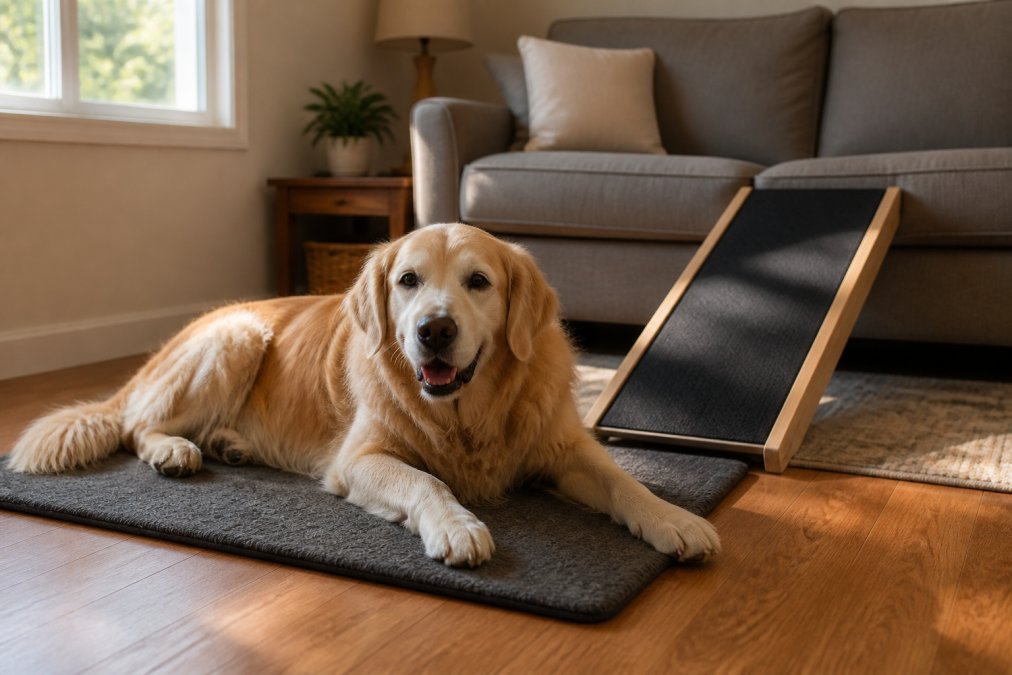
Floor surface optimisation
Slippery tiles, laminate, and polished hardwood give paws almost no grip. A dog that slips once starts bracing, and bracing loads the joints unevenly. Over months, that fear of slipping reduces how much your dog moves at all, which accelerates muscle loss.
- Main walkways, lay rubber-backed runners along the path from bed to door and from door to food bowl. Rubber backing matters; a loose rug is its own hazard.
- Resting spots, place a non-slip mat under every bed and water bowl so your dog has grip when standing up and turning.
- Hard-floor zones, kitchens, hallways, and bathrooms are the worst offenders. Interlocking foam or rubber mats cover large areas cheaply and can be cut to fit.
- Stairs and ramps, add non-slip treads or a carpet runner fixed at both ends. Bare wooden stairs are a common cause of falls in older dogs.
- Paw grip, for dogs that still slip on carpet, adhesive paw grips or toe grips can add traction. They need replacing periodically and suit some dogs better than others, so introduce them gradually.
Reduce jumping and climbing
- Add a ramp to the sofa or bed, and train your dog to use it with treats before they need it
- Use a harness with a support handle to help with stairs, or a sling under the hindquarters for dogs with weak back legs
- Raise food and water bowls to a comfortable height so your dog does not have to stoop
- Keep a supportive orthopedic bed in each room your dog rests, so they never have to choose between comfort and being near you
- Block access to furniture your dog should no longer jump onto, rather than relying on them to self-limit
A waterproof, non-slip bed like our [Waterproof Dog Bed(https://doggoshop.co/products/waterproof-dog-bed-washable-non-slip-pet-mattress) | doggoshop.co] keeps joints cushioned and stays put on hard floors. It's machine-washable too, which helps if your dog has accidents.

Light, temperature, and access
Two quieter factors matter more than most owners expect. First, lighting: dim hallways and night-time trips to the garden hide hazards. A plug-in night light along the route reduces stumbles. Second, warmth: cold floors stiffen sore joints, so a raised bed or a warm mat in your dog's favourite spot can make mornings noticeably easier.
Step 6: Try Massage, Hydrotherapy and Other Hands-On Therapies
Hands-on therapies ease pain and keep joints flexible. They work best alongside vet care, not instead of it.
Physical therapy and stretching exercises also help:
- Slow, gentle range of motion stretches
- Passive leg movements guided by a therapist
- Balance exercises on soft, stable surfaces
Step 7: Track Progress and Know When to Seek More Help
Tracking turns guesswork into clear decisions. Keep a simple weekly log of walks, stiffness, and mood.
Note three things:
- How far your dog walks before slowing
- Morning stiffness on a 1-5 scale
- Whether they still greet you at the door
Seek more help when you notice:
- Limping that lasts more than a few days
- Refusing to walk or eat
- Whining or restlessness at night
- Sudden weakness in the back legs
| Sign to Track | What to Record | When to Act |
|---|---|---|
| Morning stiffness | Score 1-5 daily | Rising score over 2 weeks |
| Walk distance | Minutes before slowing | Steady decline |
| Appetite | Normal or reduced | Refusing food for a day |
| Mood | Playful or withdrawn | Withdrawal lasting days |
Frequently Asked Questions
How to help a senior dog with mobility issues?
Start with a vet check to rule out treatable conditions. Then focus on gentle daily exercise, joint supplements containing glucosamine and omega-3, and home changes like non-slip rugs and ramps. Keep walks short and consistent. A 10-minute stroll twice a day often works better than one long walk. Monitor your dog's comfort and adjust as needed.
What is the best mobility supplement for a senior dog?
Look for supplements with glucosamine, chondroitin, MSM, and omega-3 fatty acids. Green-lipped mussel and collagen can also support joint health. Always choose products formulated for dogs and consult your vet before starting. Consistency matters more than brand; give daily and allow 4-6 weeks to see improvement.
How far should you walk a 12 year old dog?
Every dog is different, but a 12-year-old dog often does well with 15-30 minutes of low-impact walking per day, split into two shorter sessions. Watch for stiffness or lagging and let your dog set the pace. If they seem tired, cut it short. Senior dog exercise routine should prioritise consistency over distance.
Can home modifications help a senior dog with arthritis?
Yes. Simple changes like adding non-slip mats on hard floors, providing an orthopaedic bed, and using ramps for stairs or sofas can reduce strain on joints. Keep food and water bowls elevated to avoid neck pain. These adjustments make daily movement easier and can improve quality of life for arthritic dogs.


Leave a comment