


How to Find Cruelty-Free Dog Treats: A 2026 Guide
Table of Contents
- What Does Cruelty-Free Mean for Dog Treats?
- Understanding Cruelty-Free Pet Product Certifications
- How to Check Pet Food Ingredients for Ethical Sourcing
- Best Vegan Dog Treats in the UK
- Making Your Own Cruelty-Free Dog Treats at Home
- Verifying Brand Claims: How to Know If a Company Is Truly Cruelty-Free
- Hypoallergenic and Sensitive Stomach Cruelty-Free Options
- Eco-Friendly and Sustainable Treat Packaging
- Frequently Asked Questions
Last Updated: September 2, 2026
What Does Cruelty-Free Mean for Dog Treats?
Cruelty-free dog treats are products made without harming animals during production, testing, or ingredient sourcing. This means no animal testing, no exploitation of animals for ingredients, and ethical treatment throughout the supply chain. A truly cruelty-free treat considers the entire journey from farm to bowl, encompassing how ingredients are sourced, whether suppliers use fair labour practices, and whether manufacturing respects animal welfare at every stage.
Many pet owners assume all commercial treats are made responsibly. The reality is more complex. Some brands use animal testing, source ingredients from suppliers with poor animal welfare records, or make vague claims without backing them up. The good news: the market for ethical pet products has grown significantly, with more brands prioritising transparency and certifications available to help you verify claims.
Understanding Cruelty-Free Pet Product Certifications
Certifications provide third-party verification that a brand's cruelty-free claims are genuine. Rather than taking a company's word for it, certification bodies audit practices and supply chains to ensure standards are met. When you see a certification badge, it signals that an independent body has verified the company's practices.
Key certifications to look for
Leaping Bunny is one of the most rigorous certifications available. It certifies that a company hasn't conducted or commissioned animal testing, and it applies to finished products and ingredients. The standard requires ongoing monitoring and spot checks.
PETA's Beauty Without Bunnies programme certifies cruelty-free cosmetics and personal care products. Some pet brands carry this certification, indicating no animal testing anywhere in their supply chain.
Choose Cruelty-Free (CCF) is an Australian-based certification organisation that audits companies for animal testing practices. They maintain a publicly searchable database of certified companies.
Vegan Society certification confirms that a product contains no animal-derived ingredients and wasn't tested on animals. This is relevant for plant-based treat options.
How to verify certifications on packaging
A legitimate certification appears as a logo or badge on the product packaging or the brand's website. Cross-check any certification by visiting the certifying organisation's official website and searching their certified company database. Look for a unique certification number or reference code on the packaging. Check the certification's expiry date, as certifications require renewal. Visit the certifying body's website directly and search their database for the company name.
How to Check Pet Food Ingredients for Ethical Sourcing
Reading ingredient labels is your first line of defence against greenwashing. Understanding what to look for separates genuine cruelty-free treats from products that simply market themselves that way.
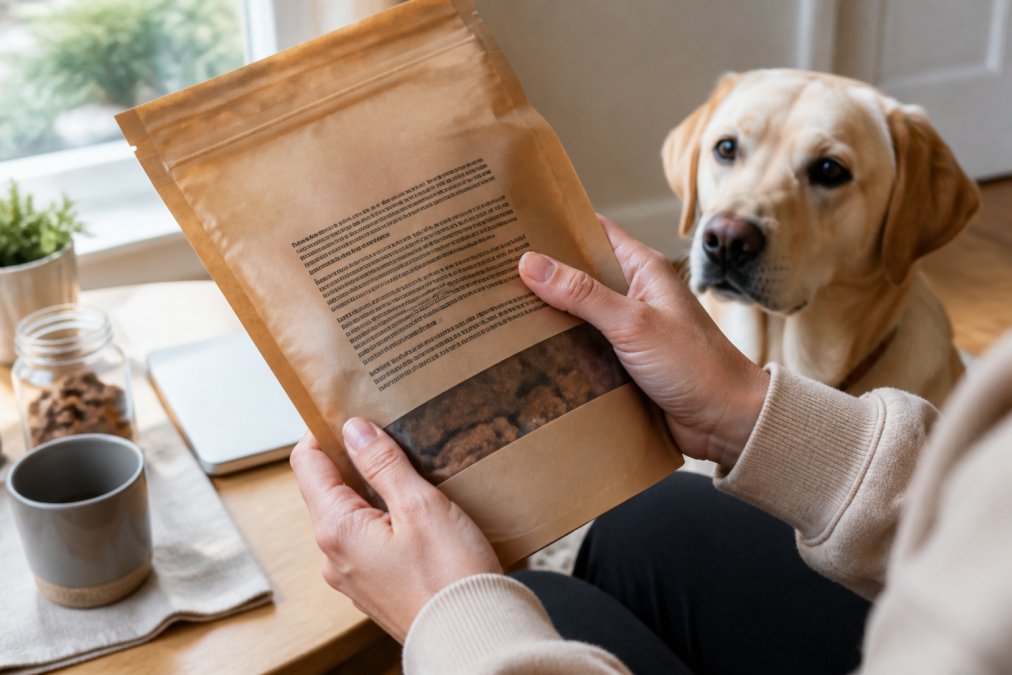
Reading ingredient labels effectively
Ingredients are listed by weight in descending order. Focus on the first few ingredients, which make up the bulk of the product. If you see vague terms like "meat by-products" or "animal derivatives," that's a sign the company isn't being transparent about sourcing.
Look for named ingredients: "chicken" rather than "poultry meal," "sweet potato" rather than "vegetable extract." Named ingredients indicate the manufacturer knows exactly what's in the product. Check for plant-based proteins like lentils, chickpeas, and peas, which are ethical protein sources that don't require animal farming.
Ingredients to avoid in dog treats
Bone meal and meat by-products often come from factory farming operations with poor animal welfare standards. Palm oil contributes to habitat destruction and animal suffering. Rendered animal fats can come from any animal source without specification. Mystery proteins listed as "animal protein" or "meat meal" without specifying the source are red flags.
Best Vegan Dog Treats in the UK
Plant-based treats have evolved significantly and are now mainstream options. The key is ensuring they're nutritionally complete and palatable enough that your dog enjoys them.
Vegan treats rely on plant proteins like peas, lentils, and chickpeas to replace meat. A well-formulated plant-based treat combines multiple protein sources to ensure complete amino acid profiles.
Plant-based options and nutritional completeness
Pea and lentil-based treats are the most common plant protein sources. Sweet potato and vegetable treats serve as nutrient-dense bases. Coconut oil-based treats provide healthy fats that support skin and coat health. Superfoods like spirulina and nutritional yeast add micronutrients.
When evaluating plant-based treats, check whether the manufacturer specifies that the formula is "nutritionally complete and balanced." This means it meets established nutritional standards for dogs.
Transitioning your dog to plant-based treats
Start slowly, introducing plant-based treats gradually over 7-10 days. Begin with small portions, as plant-based treats often have different calorie and fibre content. Observe your dog's digestion and energy levels. Mix plant-based treats with familiar options initially to help your dog associate them with positive experiences. Ensure your dog's main diet remains balanced, with treats comprising no more than 10% of daily calorie intake (e.g., Federation of European Pet Food Manufacturers).
Making Your Own Cruelty-Free Dog Treats at Home
Homemade treats give you complete control over ingredients and sourcing. You know exactly what goes into each treat and where each ingredient comes from.

Simple DIY recipes using natural ingredients
Peanut Butter and Oat Biscuits: Mix 200g natural peanut butter (xylitol-free), 150g rolled oats, and 100ml water. Combine until a dough forms, roll out, cut into shapes, and bake at 180°C for 12-15 minutes.
Sweet Potato Chews: Slice sweet potatoes lengthwise into quarter-inch strips and bake at 120°C for 3 hours until completely dried.
Carrot and Apple Bites: Combine 200g grated carrot, 100g grated apple, and 150g wholemeal flour. Form small balls and bake at 180°C for 15 minutes.
Pumpkin and Coconut Treats: Mix 200g pumpkin puree, 100ml coconut oil, and 200g wholemeal flour. Form into small balls and bake at 160°C for 20 minutes.
Always avoid ingredients toxic to dogs: chocolate, grapes, raisins, onions, garlic, and xylitol.
Storage and safety guidelines
Homemade treats last 5-7 days in an airtight container at room temperature. For longer storage, refrigerate for up to two weeks or freeze for up to three months. Use airtight containers to maintain freshness. Label containers with the date made and contents. Before serving frozen treats, allow them to thaw at room temperature for 15-20 minutes. Check treats regularly for signs of spoilage and discard immediately if any appear.
Verifying Brand Claims: How to Know If a Company Is Truly Cruelty-Free
Marketing claims sound impressive, but they often lack substance. True cruelty-free companies back claims with transparent practices and verifiable information.
Researching company practices and supply chains
Start with the company's official website and look for a dedicated page about their animal welfare policy or sourcing practices. Check whether the company provides supplier information and can trace ingredients back to their sources. Search for independent reviews and testimonials from animal welfare organisations. Look for third-party audits or certifications. Contact the company directly with specific questions about their practices. Genuine companies respond promptly with detailed answers.
Red flags and greenwashing tactics
Vague language like "ethically sourced" or "responsibly produced" without specifics is a classic greenwashing tactic. Missing ingredient sourcing information suggests the company doesn't know or doesn't want to disclose where ingredients come from. No response to direct questions indicates the company isn't transparent. Certification claims without verification are red flags. Pricing that seems too good to be true often is, as ethical sourcing increases production costs. Recent certification after years without it can indicate opportunistic greenwashing. Lack of transparency about animal testing is a major red flag.
Hypoallergenic and Sensitive Stomach Cruelty-Free Options
Dogs with allergies or sensitive digestion need treats formulated with their health in mind. Hypoallergenic treats eliminate common allergens like beef, chicken, wheat, and soya, typically using novel proteins and limited ingredient lists.
Single-protein treats are ideal for dogs with sensitivities. Grain-free formulations benefit dogs with wheat or gluten sensitivities. Limited ingredient treats contain fewer than five main ingredients, reducing the chance of triggering sensitivities. Digestive support ingredients like pumpkin, sweet potato, and probiotics help dogs with sensitive stomachs.
When introducing any new treat to a dog with sensitivities, start with very small portions and monitor for reactions over 48-72 hours.
Eco-Friendly and Sustainable Treat Packaging
Packaging reflects a company's commitment to sustainability. Even if the treats themselves are ethically made, wasteful packaging undermines that effort.
Recyclable packaging made from cardboard, paper, or aluminium reduces landfill waste. Compostable packaging breaks down naturally without leaving toxic residue. Minimal packaging reduces waste from the start. Refillable options let you reuse containers, drastically reducing packaging waste. Plastic-free alternatives eliminate persistent environmental problems.
Check whether the company offsets its carbon footprint or uses renewable energy in manufacturing. Consider the entire lifecycle: production, transportation, use, and disposal.
Finding cruelty-free dog treats means looking beyond marketing claims and verifying actual practices. Check certifications, research sourcing, read ingredient labels carefully, and don't hesitate to contact companies directly with questions. Your dog deserves nutrition that aligns with your values, and the market now offers genuine options that deliver both ethics and quality.
At Doggo Shop, we're committed to helping conscious pet owners make informed choices. Our interactive toys and feeders, like the Snuffle Mat for Dogs at £19.99, complement ethical treat choices by encouraging natural foraging behaviours and slower, healthier eating. With every purchase, you're supporting rescue dogs and cats in need worldwide, because ethical pet care extends beyond treats to how we treat all animals. Shop with us and give your pup the very best while making a difference.

Frequently Asked Questions
Q: What does 'cruelty-free' actually mean when buying dog treats?
Cruelty-free dog treats are made without testing on animals and sourced from suppliers that don't harm animals in production. The label means no animal testing occurred at any stage of development or manufacturing, and ingredients come from ethical sources. Look for verified certifications like Leaping Bunny or PETA to confirm these claims, as the term alone isn't legally regulated in the UK.
Q: How can I verify if a pet treat brand is truly cruelty-free?
Check for third-party certifications on the packaging, visit the brand's website to review their animal testing policy, and research their supply chain transparency. Contact the company directly to ask about their ingredient sourcing and manufacturing practices. Cross-reference with certification databases like Leaping Bunny or the Vegan Society. Genuine cruelty-free brands openly share their ethics and testing policies.
Q: Are plant-based dog treats always cruelty-free?
Not necessarily. A treat can be plant-based but still tested on animals or contain ingredients from suppliers with poor animal welfare practices. Plant-based means the ingredients are from plants, not animals, but cruelty-free refers to how those ingredients were sourced and tested. Always check for cruelty-free certifications alongside plant-based claims to ensure both ethical and vegan credentials.
Q: What certifications should I look for on dog treat packaging?
Look for Leaping Bunny (gold standard for no animal testing), PETA certification, the Vegan Society logo for plant-based options, and Fair Trade marks for ethical sourcing. Each certification guarantees different standards, so multiple logos indicate a brand committed to comprehensive ethical practices across testing, ingredients, and animal welfare.
This article was written using GrandRanker


Leave a comment