


7 Steps to Clean Memory Foam Dog Beds Properly
Last Updated: October 26, 2026
Quick Summary
To clean memory foam dog beds, unzip and machine wash the cover on a cold, gentle cycle, then spot-clean the foam insert with a barely damp cloth and mild soapy water. Never soak or machine wash the insert, and air-dry it flat until completely dry before reassembling.
- Vacuum both the cover and insert with an upholstery brush before anything gets wet.
- Never soak, submerge, or machine wash the memory foam insert.
- Sprinkle bicarbonate of soda on dry foam for at least an hour to lift odour, then vacuum.
- Use an enzyme cleaner for urine or vomit, testing a hidden patch first.
- A lightly spot-cleaned insert may dry in 6 to 12 hours in a warm, ventilated room.
Table of Contents
- What You'll Need Before You Start Cleaning
- Step 1: Check the Care Label and Unzip the Cover
- Step 2: Vacuum Loose Hair, Dirt and Debris
- Step 3: How to Wash a Dog Bed Cover
- Step 4: Spot-Clean the Foam Insert Safely
- Step 5: How to Clean a Dog Bed That Can't Be Washed
- Step 6: How to Remove Dog Smell From a Dog Bed
- Step 7: How to Dry a Memory Foam Dog Bed Completely
- Frequently Asked Questions
What You'll Need Before You Start Cleaning
Cleaning memory foam dog beds is not the same as washing a regular cushion. Memory foam holds water, loses shape when soaked, and breaks down fast in a hot dryer. Get the method wrong and you'll wreck the bed.
Before you start, gather these:
- A vacuum with an upholstery brush
- A soft brush or rubber glove
- A mild, pet-safe detergent
- A spray bottle
- Two clean cloths or sponges
- Bicarbonate of soda
- Warm water
- A towel and a drying rack
Memory foam is a dense, open-cell material that absorbs liquid and holds it. That's why the cover gets washed and the insert gets spot-cleaned. Keep that split in mind for every step below.
One more thing: never put the foam insert in a washing machine. We'll show you why in Step 4.
Step 1: Check the Care Label and Unzip the Cover
Start with the label, every time. The care label tells you the fabric type, the water temperature, and whether the cover can be machine washed at all. Ignore it and you risk a shrunken cover or a ruined zip.
Here's what to look for:
- Machine wash symbols: a tub icon means it's washable
- Temperature: cold water protects most fabrics and prevents shrinking
- Dryer symbols: a crossed-out tumble dryer means air-dry only
- Bleach warnings: most covers need non-chlorine bleach or none at all
Now unzip the cover and remove the foam insert. Set the insert aside somewhere dry and off the floor. Zip the cover back up before washing so the zip doesn't snag other laundry.
If the cover is thin, worn, or the zip is broken, the bed may be near the end of its life. Our guide to durable dog beds for large breeds covers what to look for in a replacement.
Step 2: Vacuum Loose Hair, Dirt and Debris
Vacuum both parts before anything gets wet. Water turns loose hair into a matted mess that's far harder to remove later.
Use the upholstery brush attachment on a low suction setting. Work in slow, overlapping strokes across the cover and the foam insert. Pay attention to seams, corners, and the base of any bolster, where hair and grit collect.
For embedded hair, a rubber glove or a stiff brush lifts it before you vacuum.
Then flip the insert and vacuum the other side. You're removing surface debris now so the next steps actually reach the fabric.
Step 3: How to Wash a Dog Bed Cover
Washing the cover is straightforward if you follow the label. Most removable covers take a cold, gentle cycle with a mild detergent.
- Shake the cover out outdoors to release loose dirt
- Zip it closed
- Wash on a cold, delicate cycle
- Add a mild, pet-safe detergent, not a biological one
- Skip fabric softener, which traps odour
- Run an extra rinse to clear soap residue
Wash covers separately from your own laundry. Pet hair and dander will cling to clothing, and the cover needs room to move in the drum.
For heavier soiling, pre-treat stains with a small amount of detergent and a soft brush before washing. Never use non-chlorine bleach unless the label allows it.
If the cover is not removable, move to Step 5.
Step 4: Spot-Clean the Foam Insert Safely
Spot-clean the foam insert with a damp cloth and a little mild soapy water. Never soak it, never machine wash it, and never submerge it. Foam that stays wet inside grows mould and loses its support.
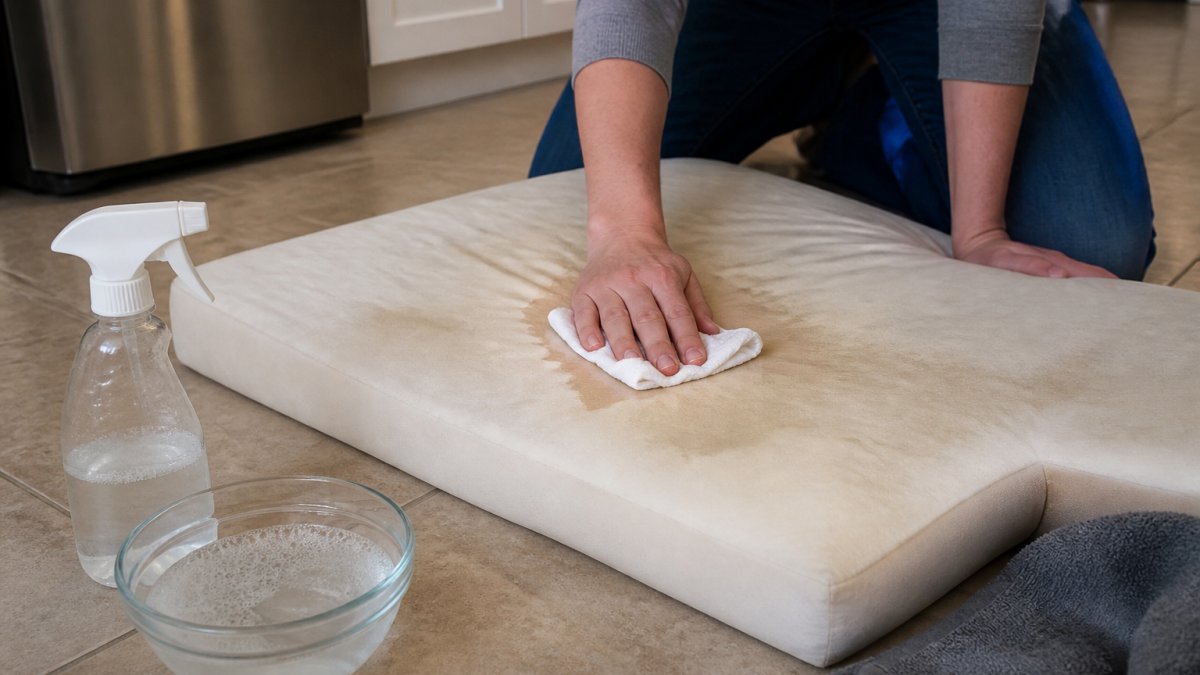
Work like this:
- Mix a few drops of mild detergent in a bowl of warm water
- Dampen a cloth, wring it out so it's barely wet
- Dab the stained area, working from the outside in
- Rinse with a clean, damp cloth to lift soap residue
- Press a dry towel onto the area to pull out moisture
Use a sponge for larger areas, but keep the pressure light. You're cleaning the surface, not pushing water into the core.
Waterproof Dog Bed – Washable Non-Slip Pet Mattress →
Watch out: soaking the insert is the single most common mistake. A wet core can take days to dry and may never recover its shape.
Step 5: How to Clean a Dog Bed That Can't Be Washed
Some beds have a fixed cover, and some inserts can't take water at all. For those, surface cleaning is your only safe option.
Follow these steps:
- Vacuum thoroughly on both sides
- Sprinkle bicarbonate of soda over the surface
- Leave it for at least 30 minutes to absorb odour
- Brush or vacuum it away
- Wipe down with a cloth lightly dampened with a pet-safe cleaner
- Air the bed outdoors in shade, not direct sun
For beds with a waterproof outer layer, wipe with a damp cloth and mild soap, then dry straight away. Waterproof fabric repels moisture but the seams can still let water through.
If the bed is old, flattened, or the foam has crumbled, cleaning won't bring it back. A washable, waterproof dog bed with a removable cover is far easier to keep fresh, and it's the route we'd take once a fixed-cover bed starts to smell.

Step 6: How to Remove Dog Smell From a Dog Bed
Dog smell lives in two places: the fabric fibres and the foam itself. Regular washing handles the cover. The insert needs a different approach, and the method depends on what caused the smell.
Start with the simplest treatment and escalate only if the smell persists. Bicarbonate of soda is the first line of defence. Sprinkle a thin, even layer over the dry foam, leave it for at least an hour, longer for older stains, then vacuum it off with the upholstery brush. It lifts surface odour without adding moisture, which is critical because moisture is what reactivates smell in foam.
For urine, vomit, or drool, you need an enzyme cleaner made specifically for pet messes. Enzymes break down the proteins and uric acid crystals that cause the smell, rather than masking them with perfume. Here is the foam-safe method:
- Blot up any fresh liquid with a dry towel first, press firmly, do not rub
- Test the enzyme cleaner on a hidden patch of foam and leave it for an hour to check for discolouration
- Apply the cleaner sparingly to a cloth, not directly to the foam, and dab the affected area
- Work from the outside of the stain inward to avoid spreading it
- Leave the enzyme product to dwell for the time stated on the label, usually 5 to 15 minutes, so it can break down the proteins
- Blot dry with a clean towel and press firmly to draw out moisture
- Allow the foam to air-dry completely before reassembling the bed
A few rules that make a real difference:
- Never use bleach or ammonia-based cleaners on foam, ammonia can set urine stains and bleach degrades the foam structure
- Avoid heavy perfumes and scented sprays, which dogs find overwhelming and which mask rather than remove odour
- Do not saturate the foam with cleaner; a damp cloth is safer than a spray bottle directed at the insert
- Air the bed outdoors in shade whenever the weather allows, as fresh air and ventilation do more than any product
- Wash the cover more often in warm months, when bacteria and odour build up faster
If the smell returns within days of treatment, the foam core is likely holding moisture or the stain has penetrated deeper than the surface. Move to Step 7 and dry it properly before treating again. For persistent urine odour, a second application of enzyme cleaner after the foam is fully dry is usually more effective than a heavier first application.
Step 7: How to Dry a Memory Foam Dog Bed Completely
Drying is the step most people rush, and it's the one that matters most.
Lay the insert flat on a drying rack in a well-ventilated room. Do not prop it on its side or hang it, as foam can distort under its own weight when wet. Flip it every few hours so both faces get air.
Drying time depends on how damp the foam became and the conditions in the room. A lightly spot-cleaned insert in a warm, well-ventilated room with a window open may dry in 6 to 12 hours.
To check it's dry, press firmly into the centre with your palm. It should feel roomy and spring back with no cool, damp sensation.
A pet hair dryer helps speed up the cover and the outer layer of the insert. A bath robe or towel keeps your dog dry after a wash so it doesn't climb onto a damp bed.

If the weather is dry and mild, airing the insert outdoors in shade for a few hours can speed drying and freshen the foam. Bring it in before evening damp settles. Once everything is bone dry, reassemble the bed and give it a shake.
Drying times vary with how damp the foam got and the conditions in the room, so use these figures as your guide.
| Situation | Drying time | Note |
|---|---|---|
| Lightly spot-cleaned insert, warm ventilated room | 6 to 12 hours | Window open |
| Heavily treated insert or cool, humid room | 24 to 48 hours | Do not reassemble until dry throughout |
| Pet hair dryer on cover and outer layer | Not stated | Cool setting, at least 30 cm from foam |
| Airing outdoors in shade | A few hours | Bring in before evening damp settles |
Frequently Asked Questions
Can I wash a memory foam dog bed in the washing machine?
No. The foam insert should never go in a washing machine, because water and agitation break down the foam cells and leave it damp inside. Only the removable cover can be machine washed, and only if the care label allows it. Unzip the cover, wash it separately on a cold, delicate cycle with mild detergent, and spot-clean the insert by hand instead. Always check the manufacturer instructions first, as some covers are hand-wash only.
How do I get rid of a smell from a memory foam dog bed?
Start by vacuuming loose hair and debris, then spot-clean the foam with a damp cloth and mild pet-safe cleaner. For lingering odours, sprinkle baking soda over the dry foam, leave it for a few hours, and vacuum it off. Enzyme cleaners help with urine and vomit smells, but test on a hidden area first. Air the bed outside on a dry day and make sure the foam is completely dry before reassembling, since trapped moisture causes musty smells.
How often should I clean my dog's memory foam bed?
Vacuum the bed weekly to remove loose hair and dirt, and wash the cover every two to four weeks depending on how much your dog sheds and how often they use the bed. Spot-clean stains as soon as they happen. Dogs with allergies, skin conditions or frequent muddy walks may need more frequent cleaning. Check the care label and manufacturer instructions for any specific guidance on cleaning frequency.
Can I use baking soda to deodorise a memory foam dog bed?
Yes, baking soda is a safe, dry way to lift odours from memory foam. Sprinkle a thin layer over the dry foam insert, leave it for a few hours to absorb smells, then vacuum it off thoroughly. Avoid making a paste with water, as moisture can soak into the foam and cause mildew. For urine or vomit stains, use an enzyme cleaner after the baking soda treatment and allow the foam to air-dry fully.


Leave a comment