


How to Choose a Dog Bed: A 2026 Guide
Table of Contents
- How to Measure a Dog for a Bed
- Understanding Your Dog's Sleeping Position and Habits
- Best Orthopaedic Dog Beds for Joint Support
- Choosing Materials for Durability and Comfort
- Washable Dog Bed Covers and Maintenance
- Budget vs. Premium: Finding the Right Investment
- Transitioning Your Dog to a New Bed
- Conclusion
Last Updated: August 18, 2026
How to Measure a Dog for a Bed
The foundation of choosing the right dog bed starts with accurate measurements. Your dog's size determines not just which bed will fit, but how comfortable they'll actually be when they settle in for sleep.
Measure your dog from nose to tail while they're stretched out in their natural sleeping position. This gives you the length you need. For width, measure across their body at the widest point, typically across the shoulders or hips. Many dogs prefer a bed that's at least 15cm longer than their body length, this extra space lets them stretch without their paws hanging off the edge.
Don't rely on your dog's breed alone. A large breed dog might be leaner than expected, while a smaller breed could be stockier. Weight matters too, but it's less important than the actual measurements. A dog weighing 20kg might need a different size bed than another 20kg dog if their body shape differs significantly.
Write down three measurements: length (nose to tail), width (shoulder to shoulder), and height (if your dog likes to curl up). Height becomes important if you're considering bolster beds, which have raised edges that support nesting behaviour. Many dogs naturally seek out this kind of raised-edge support, so understanding your dog's sleeping habits helps guide your choice here.
At Doggo Shop, we've found that oversizing slightly is better than undersizing. A bed that's too small forces your dog into an uncomfortable curl, which can strain joints over time. A bed with a bit of extra room lets them shift positions throughout the night, which is especially important for older dogs or those with joint concerns.
Understanding Your Dog's Sleeping Position and Habits
How your dog sleeps tells you a lot about what kind of bed they'll actually use. Some dogs curl up tight, while others stretch out completely. Others shift between both positions during the night.
Dogs that curl into a tight ball often have a strong denning instinct. They feel more secure when they're enclosed, which is why bolster beds with raised edges are popular with these dogs. The cushioned walls provide a sense of containment that helps them relax. If your dog regularly curls up on your sofa, in a corner, or under furniture, they're signalling that they prefer this enclosed feeling.
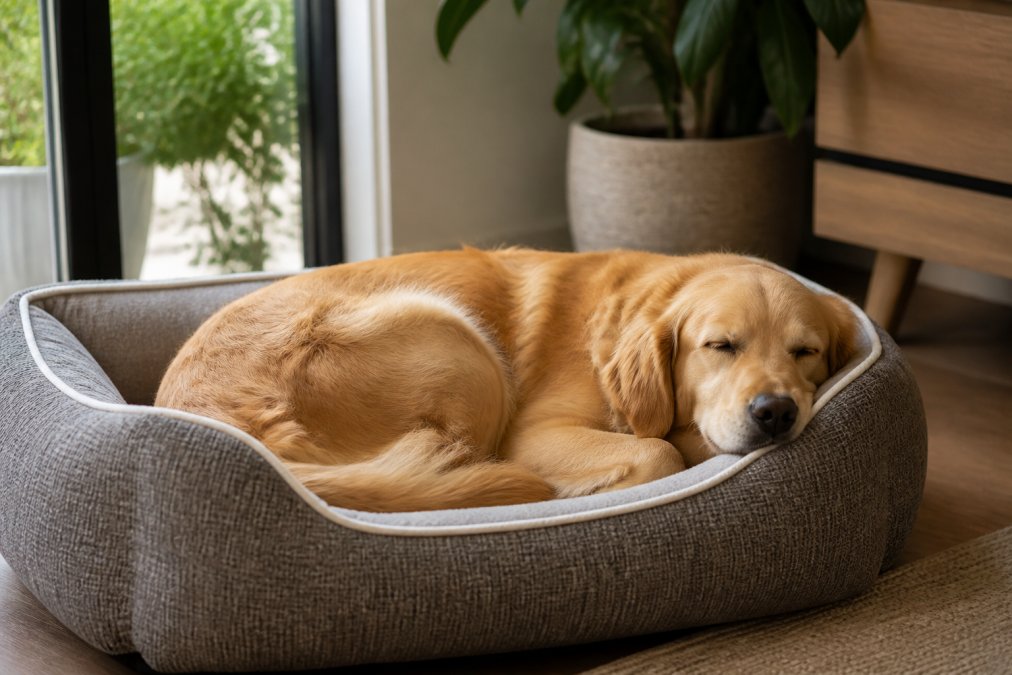
Dogs that stretch out flat need a different approach. These dogs want room to extend their legs fully without any restriction. A traditional flat bed or mat works better than a bolster bed for these dogs. Watch your dog for a few nights, if they regularly kick out and seem frustrated by edges, they're telling you they need space.
Some dogs switch between both positions depending on temperature and mood. On warm nights, they might stretch out. On cold nights, they curl up for warmth. If your dog does this, consider a bed that accommodates both, a larger flat bed with optional bolster cushions, or a bed that's wide enough for stretching but has subtle side support.
Age affects sleeping position too. Younger dogs tend to be more active sleepers, shifting positions frequently. Older dogs often settle into one preferred position and stay there. Senior dogs also benefit from orthopaedic foam that reduces pressure on joints, especially if they're dealing with arthritis or mobility issues.
Temperature regulation matters more than most people realize. Dogs that curl up tightly are often trying to conserve body heat. If your home is cool, a bed with higher sides and a cushioned interior will help. Dogs that stretch out are usually trying to cool down, so a flat, breathable surface works better.
Best Orthopaedic Dog Beds for Joint Support
Orthopaedic foam has become essential for dogs with joint problems, but it's valuable for healthy dogs too. Memory foam and orthopaedic support reduce pressure on joints and can prevent problems from developing in the first place.
Orthopaedic beds use specialized foam that distributes your dog's weight evenly across the surface. This reduces pressure points, areas where joints and bones bear concentrated weight. For dogs with arthritis, hip dysplasia, or general stiffness, this difference is noticeable within days. Many owners report their dogs moving more freely and showing less reluctance to jump or climb stairs after switching to an orthopaedic bed.
The density of the foam matters. Higher density foam provides better support but might feel firmer. Lower density foam is softer but breaks down faster. For dogs over 25kg or those with existing joint problems, aim for medium to high density foam. For lighter dogs or those without joint concerns, medium density offers a good balance of comfort and durability.
Waterproof lining is crucial if your dog is incontinent, has accidents, or simply drinks water before bed. A bed with a waterproof base prevents urine or spilled water from soaking into the foam, which would ruin it. Look for beds with a non-slip base too, this keeps the bed stable on hard floors, which is especially important for older dogs that need secure footing when they're getting up or lying down.
The Cozy Dog Sofa Bed from Doggo Shop combines memory foam support with a washable cover, making it ideal for dogs that need both joint support and easy maintenance. At £29.99, it provides orthopaedic benefits without requiring a premium price tag.

Consider your dog's canine mobility as they age. Dogs that struggle to stand or have difficulty lying down need beds with softer edges they can lean against. Bolster beds with cushioned walls provide this support naturally. Flat beds with memory foam still offer joint protection, but they don't provide the edge support that helps dogs lower themselves down more gradually.
Choosing Materials for Durability and Comfort
Material choice determines how long your bed will last and how comfortable your dog actually feels. Different materials serve different purposes, and the best choice depends on your dog's habits and your home environment.
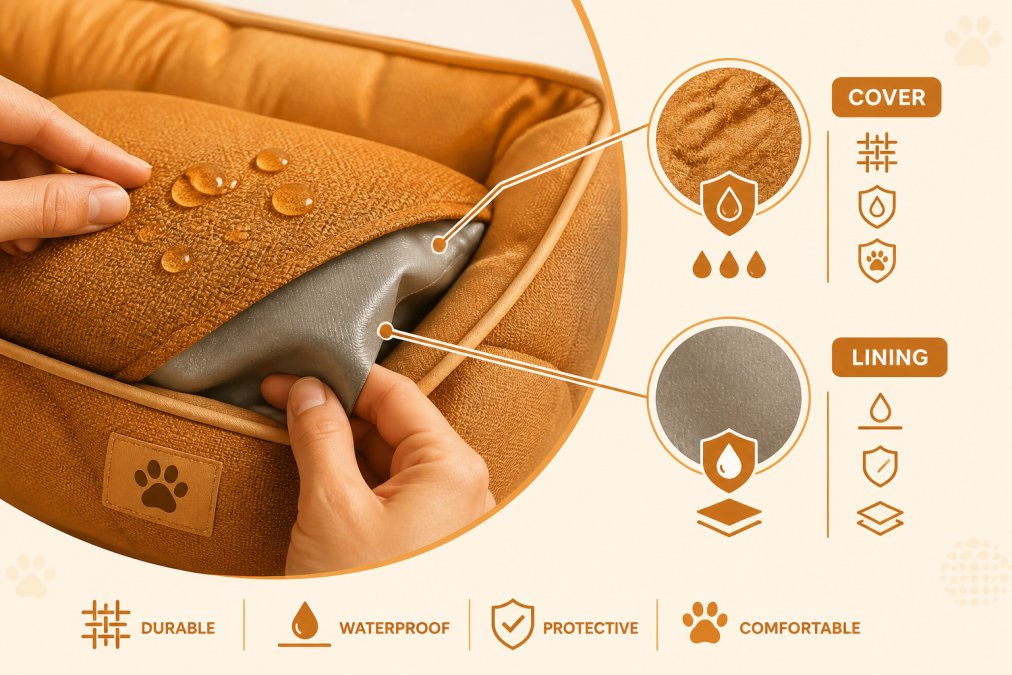
Canvas and heavy-duty nylon are the most durable options for power chewers. These materials resist tearing far better than soft fabrics. If your dog has a history of destroying beds, canvas or nylon should be your starting point. These fabrics are also typically washable and dry quickly, which matters if you're dealing with accidents or muddy paws regularly.
Memory foam provides cushioning and support, but it breaks down over time. Higher quality memory foam lasts longer than budget versions. The fill density affects longevity, denser foam maintains its shape better through years of use. If your dog is a heavy sleeper who stays in one spot most of the day, memory foam will compress faster in that area.
Hypoallergenic materials matter if your dog has sensitive skin or allergies. Some dogs react to synthetic fabrics or certain fill materials. Natural materials like cotton blends are gentler on sensitive skin, though they're less durable than synthetic options. If your dog scratches excessively or has skin irritation, the material might be the culprit.
Waterproof lining protects the foam from moisture damage. Dogs with incontinence issues, puppies still being housetrained, or dogs prone to accidents need this feature. A waterproof lining prevents urine from reaching the foam underneath, which would otherwise create permanent odours and reduce the bed's lifespan dramatically.
Temperature regulation through fabric choice affects how comfortable your dog feels. Breathable fabrics allow air circulation, which helps dogs cool down. Thicker, insulating materials trap warmth, which older dogs or those in cold climates prefer. Some beds use dual-layer designs, a breathable top surface with insulating material underneath, to provide both options.
Non-slip bases keep the bed stable on hard floors. Dogs with arthritis or mobility issues need this stability when standing up or lying down. A bed that slides across the floor when your dog moves creates frustration and can aggravate joint problems. Look for rubber or textured bases that grip the floor.
Washable Dog Bed Covers and Maintenance
A machine washable cover extends your bed's lifespan significantly and keeps it hygienic. Most quality dog beds now come with removable, washable covers, this is one feature worth prioritizing.
Wash covers every 2-4 weeks depending on how much your dog sheds and whether they spend time outdoors. Dogs that go on muddy walks or spend time in the garden need more frequent washing. Shedding dogs benefit from weekly washing to control loose hair. Covers that are easy to remove and wash get cleaned more often, which means your dog sleeps on a cleaner surface.
Use cool water and mild detergent. Hot water can damage elastic and fade colours, while harsh detergents can irritate sensitive skin. Air dry when possible, tumble drying can shrink covers and damage elastic. If you do use a dryer, use a low heat setting.
The Waterproof Dog Bed from Doggo Shop at £19.99 features a washable cover with a waterproof lining underneath. This design lets you wash the cover regularly while the waterproof base protects the foam from moisture damage. The combination addresses two major maintenance challenges.

For the foam itself, spot-clean stains immediately. Use a damp cloth and mild soap, then allow to air dry completely before your dog uses the bed again. Never submerge the foam in water or machine wash it. If the foam develops odours despite regular cover washing, sprinkle baking soda on it, let it sit for a few hours, then vacuum it up. This absorbs odours without chemicals.
Check the base and seams regularly for wear. Seams can start to fray after months of use, especially if your dog is a power chewer. Small rips should be repaired immediately with a fabric patch, letting them expand will ruin the bed. Many quality beds include repair patches or can be sent for professional repair rather than replacement.
Rotate your dog's bed position occasionally if it's in the same spot constantly. This prevents the floor underneath from wearing and gives the foam a chance to recover from compression. If one side of the bed is getting more use, rotating it helps distribute wear more evenly.
Budget vs. Premium: Finding the Right Investment
Dog beds range from under £15 to over £100, and the price difference reflects real variations in materials, durability, and support. Understanding where to invest makes sense financially.
Budget beds (£15-25) typically use lower density foam and basic fabrics. They work fine for healthy young dogs that don't have joint concerns and aren't destructive. The Cozy Winter Washable Pet Kennel Bed at £19.99 offers good value in this range, it provides basic comfort with a washable cover. These beds usually last 1-2 years before the foam compresses significantly.
Mid-range beds (£25-50) add features like memory foam, waterproof linings, and more durable fabrics. They last longer and provide better support. The Cozy Dog Sofa Bed at £29.99 and the Waterproof Warm Dog Sofa Bed at £29.99 both sit in this range, offering orthopaedic benefits and washable covers. These beds typically last 3-5 years with proper care.

Premium beds (£50+) use high-density orthopaedic foam, premium fabrics, and advanced features. They're worth the investment for senior dogs, dogs with joint problems, or power chewers that destroy cheaper beds. A premium bed that lasts 5+ years costs less per year than replacing budget beds every year.
Calculate the cost per year of use. A £25 bed that lasts 18 months costs about £17 per year. A £60 bed that lasts 5 years costs £12 per year. The premium bed actually saves money over time, plus your dog gets better support.
Consider your dog's specific needs. A young, healthy dog that sleeps anywhere might not need premium support. An older dog with arthritis absolutely benefits from orthopaedic foam. A power chewer needs durable materials that won't be destroyed in weeks. Match the price point to the actual requirement.
Doggo Shop focuses on the mid-range premium space, beds that provide real benefits (memory foam, waterproof lining, washable covers) without the luxury markup. This positioning makes sense for most dog owners who want quality without excess cost.
Transitioning Your Dog to a New Bed
Dogs often resist new beds, especially if they've been using the same one for years. A gradual transition works better than simply replacing the old bed overnight.
Start by placing the new bed near the old one. Let your dog investigate it without pressure. Some dogs will jump on it immediately. Others need days to get curious. Patience matters here, forcing your dog onto a new bed creates negative associations.
Place treats or toys on the new bed to create positive connections. When your dog goes near it, offer praise and treats. Make the new bed the source of good things, not a replacement for something they loved.
If your dog has a strong attachment to the old bed, try placing it inside the new bed initially. This preserves the familiar scent while introducing the new bed. Once your dog is comfortable, gradually remove the old bed piece by piece.
For dogs that sleep in crates, introduce the new bed inside the crate first. This contained space feels safer for anxious dogs. Once they're comfortable there, you can move the bed to an open area if desired.
Some dogs transition in a few days. Others take weeks. Older dogs or anxious dogs often need more time. There's no rushing this, forcing it creates stress and can lead to accidents or destructive behaviour as your dog expresses anxiety.
If your dog absolutely refuses the new bed after several weeks, consider their sleeping position and habits again. Maybe you chose the wrong style. A dog that needs bolster support won't be happy on a flat mat, no matter how comfortable. A dog that stretches out won't settle in a bed with high walls. Going back to observe their natural preferences often reveals the mismatch.
Choosing the right dog bed requires understanding your dog's size, sleeping habits, and health needs. Start with accurate measurements, observe how your dog naturally sleeps, and prioritize support for joints if your dog is older or has mobility concerns. Material durability matters if your dog is destructive, while washable covers make maintenance easier across all dogs.
At Doggo Shop, we believe your dog deserves a bed that supports their health while fitting your lifestyle. Our range of orthopaedic and washable beds, from the Waterproof Dog Bed at £19.99 to the Cozy Dog Sofa Bed at £29.99, combines comfort with practicality. Every purchase supports rescue dogs in need worldwide. Shop now to give your dog the quality rest they deserve while making a real difference.
Frequently Asked Questions
How do I know what size dog bed to buy?
Measure your dog from nose to tail base while stretched out, then add 15-20 cm. Measure height from floor to shoulder. Choose a bed that allows your dog to stretch fully and curl up comfortably. Most dogs prefer beds where they can rest their head on a bolster without feeling cramped. Our size guide helps match these measurements to bed dimensions.
Are orthopaedic dog beds worth the investment?
Yes, especially for senior dogs, puppies, or breeds prone to joint issues. Orthopaedic beds with memory foam provide superior pressure point relief and support for canine mobility. They reduce strain on joints and promote better sleep quality. While more expensive upfront, they last longer and can prevent costly vet bills related to arthritis or mobility problems. Many owners report their dogs sleep deeper and more peacefully on orthopaedic options.
What materials are best for a washable dog bed cover?
Look for heavy-duty nylon, canvas, or polycotton blends that resist tearing from chew-resistant fabrics. Ensure the cover is machine washable at 30-40°C for easy maintenance. Waterproof linings protect against accidents and spills. Hypoallergenic materials benefit dogs with sensitive skin or allergies. Check that seams are reinforced and zips are durable. Our Waterproof Dog Bed features a washable cover with non-slip base, making cleaning simple and keeping the bed in place.
How do I transition my dog to a new bed?
Place the new bed near their current sleeping spot for 3-5 days so they become familiar with it. Rub a cloth with their scent or your scent on the bed to encourage use. Reward them with treats when they approach or lie on it. Gradually move the bed to its final location over a week or two. Some dogs adapt in days; others need patience. Avoid forcing them onto the bed. Most dogs naturally settle into a new bed within 1-2 weeks with positive reinforcement.
This article was written using GrandRanker


Leave a comment