


Grain-Free Dog Food for Sensitive Stomachs: Benefits
Table of Contents
- What Grain-Free Dog Food Actually Is
- Signs of Food Intolerance in Dogs
- How Grain-Free Diets Ease Digestive Discomfort
- Grain-Free vs Grain-Inclusive: A Nutrition Comparison
- Which Dogs Actually Benefit from Grain-Free Food?
- How to Transition Dog Food Safely Over 7 Days
- The Grain-Free and DCM Debate: What You Need to Know
- Fiber, Probiotics and Budget: Making Grain-Free Work
- Frequently Asked Questions
Last Updated: September 27, 2026
What Grain-Free Dog Food Actually Is
Grain-free dog food is a complete canine diet that excludes cereal grains such as wheat, maize, rice and barley, replacing them with alternative carbohydrate sources like sweet potato, peas, lentils or potato.
The logic isn't complicated. Grains are a common trigger for food intolerance in dogs, and removing them eliminates one variable fast. But grain-free is not automatically gentler on the gut, and that distinction matters more than most guides admit.
Signs of Food Intolerance in Dogs
The clearest signs of food intolerance in dogs are digestive: loose stools, flatulence, bloating and gastrointestinal discomfort that appear consistently after eating. Skin irritation, itching and dull coat can also point the same way.
Watch for a pattern rather than a one-off. A dog that scratches after every chicken-based meal is telling you something different from one that had a single off day.
- Recurring diarrhoea or soft stool
- Excessive wind and abdominal bloating
- Vomiting shortly after meals
- Itchy skin, redness or paw chewing
- Poor coat condition despite a balanced diet
If several of these show up together, a veterinary consultation is the sensible next step before you change anything.
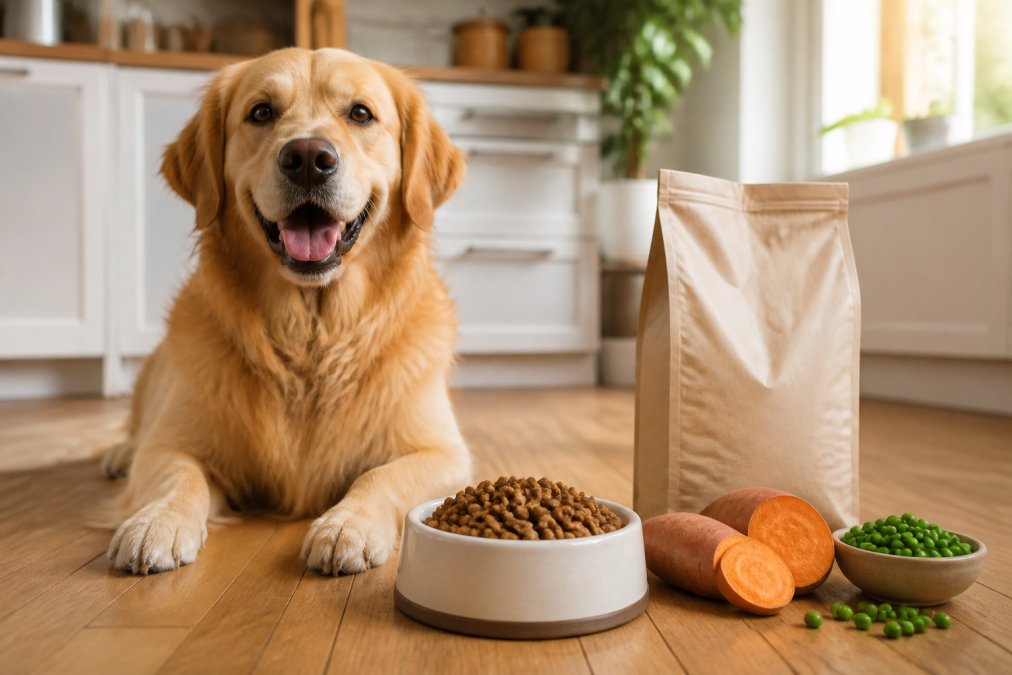
How Grain-Free Diets Ease Digestive Discomfort
Grain-free diets can ease digestive discomfort by removing a common allergen and swapping in carbohydrate sources that some dogs break down more easily. Better protein digestibility means less undigested material fermenting in the gut.
That said, the benefit depends entirely on what replaces the grain. A formula built on a meat-first recipe with quality fibre supports nutrient absorption. One padded with cheap fillers achieves nothing.
Grain-Free vs Grain-Inclusive: A Nutrition Comparison
A grain-free diet is not nutritionally superior by default; the difference lies in the carbohydrate source and how well your dog tolerates it. Both types can meet complete nutritional standards, so the label alone tells you very little about digestibility.
| Factor | Grain-Free | Grain-Inclusive |
|---|---|---|
| Carbohydrate source | Sweet potato, peas, lentils, potato, tapioca | Rice, oats, barley, wheat, maize |
| Common allergens | Grain proteins removed | Grain proteins present |
| Fibre type | Often legume- or tuber-derived | Often cereal-bran derived |
| Fermentability | Varies widely by recipe | Generally more predictable |
| Best for | Suspected grain intolerance | Most dogs without sensitivities |
| Watch out for | Filler-heavy recipes, unnamed "vegetable fibre" | Grain as a top ingredient |
What actually replaces the grain
This is the part most guides skip. When you remove wheat, maize, rice and barley, something has to carry the recipe, and that something changes how the gut behaves.
- Sweet potato and potato supply slowly fermented starch and soluble fibre. They tend to produce a gentler, more gradual fermentation in the colon, which suits dogs with loose stools.
- Peas, lentils and chickpeas are higher in fermentable oligosaccharides. For some dogs these feed beneficial bacteria well; for others they generate gas and bloating. The same legume can help one dog and upset another.
- Tapioca and potato starch are low-residue and easy to digest, but they contribute almost no fibre, so a recipe built mainly on them may leave the gut microbiome underfed.
- Pumpkin, chicory root and beet pulp are added specifically as prebiotic fibres. Named sources like these are a better sign than a vague "vegetable fibre" entry.
Why fibre source matters more than the grain-free label
Fibre is not one substance. Soluble fibre ferments in the colon and feeds the microbiome; insoluble fibre adds bulk and speeds transit. A grain-free recipe can be high in one, the other, or neither.
A common pattern practitioners see: a dog switches to grain-free, digestion improves for a fortnight, then gas returns. The cause is usually a legume-heavy base that ferments too aggressively for that individual dog. Swapping to a tuber-based or lower-legume grain-free formula often settles it without abandoning the approach.
Reading the label properly
Ingredients are listed by weight, so the first three or four entries tell you what the recipe is really built on. A meat-first list followed by a named fibre source is a stronger signal than a formula where peas and potato starch dominate. Look for a named animal protein, a named fibre, and a complete nutritional adequacy statement, not just a grain-free claim on the front of the bag.
Which Dogs Actually Benefit from Grain-Free Food?
Dogs with a confirmed or strongly suspected grain intolerance benefit most from grain-free food. For everyone else, it's a choice rather than a necessity, and often not the right one.
Your dog is a good candidate if digestive upset consistently follows grain-containing meals, or if an elimination diet has already pointed to a grain trigger. If your dog digests their current food well, there's little to gain from switching, and you risk unsettling a gut that was never the problem.
Native Pet Probiotic Powder for Dogs →
Rule out the medical causes first
Before assuming a food intolerance, work through the more common explanations. A surprising number of "sensitive stomach" cases turn out to be something else entirely.
- Parasites, worms and giardia are frequent causes of recurring loose stools, especially in dogs that visit parks, kennels or puppy classes.
- Sudden diet changes or scavenging, a single bin raid can mimic a weeks-long intolerance.
- Infections and inflammation, bacterial overgrowth, colitis and pancreatitis all present with similar signs and need veterinary diagnosis.
- Medication side effects, some antibiotics and pain relief unsettle the gut directly.
- Stress and routine changes, travel, a new home or separation can trigger digestive upset with no dietary cause at all.
A sensible checklist before you change anything: has your vet ruled out parasites and infection? Has the problem been consistent for more than two weeks? Does it track with a specific food? If you can't answer yes to all three, a diet switch is guesswork.
The elimination diet is the real test
A genuine grain intolerance is confirmed by an elimination diet, not by trying a grain-free bag and seeing what happens. The standard approach is a single novel protein or hydrolysed diet fed exclusively for around eight weeks, with no treats, table scraps or flavoured chews, then a controlled reintroduction of the suspected trigger.
Most practitioners find that owners who skip the reintroduction stage never actually identify the trigger, they just land on a food that happens to work and assume grain was the culprit.
When grain-free is the wrong choice
Grain-free is not appropriate for every dog with a sensitive stomach. If the trigger is chicken, beef or dairy, a grain-free recipe built on the same protein will change nothing. If your dog has a diagnosed heart condition or a breed predisposition to dilated cardiomyopathy, discuss diet with your vet before switching, the grain-free and DCM question is covered in more detail below.
How to Transition Dog Food Safely Over 7 Days
Transition dog food gradually over seven days, mixing increasing amounts of the new food into the old. A sudden switch is the fastest way to trigger the very upset stomach you're trying to fix.
- Days 1-2: 25% new food, 75% old
- Days 3-4: 50% new, 50% old
- Days 5-6: 75% new, 25% old
- Day 7: 100% new food
The Grain-Free and DCM Debate: What You Need to Know
The concern around grain-free diets and canine dilated cardiomyopathy (DCM) remains unresolved, and it's worth understanding rather than dismissing. Investigations have examined whether certain grain-free formulas, particularly those high in legumes, play a role.
Fiber, Probiotics and Budget: Making Grain-Free Work
Grain-free food works best when paired with the right fibre and digestive support. Look for named fibre sources like pumpkin or chicory root rather than vague "vegetable fibre."
Frequently Asked Questions
What is the downside of grain-free dog food?
Grain-free diets can be more expensive and may lack certain nutrients if not properly balanced. Some dogs may experience digestive upset when switching. There is also ongoing debate about a potential link to canine dilated cardiomyopathy (DCM), though research is inconclusive. Always consult your vet before making a change, especially if your dog has health issues.
Why do vets not like grain-free dog food?
Many vets are cautious because grains are not inherently bad for dogs, and true grain allergies are rare. They worry that owners may choose grain-free for the wrong reasons or that some grain-free diets use alternative ingredients that could be linked to DCM. A vet can help determine if a grain-free diet is truly necessary for your dog's sensitive stomach.
What are the common signs of a sensitive stomach in dogs?
Signs include vomiting, diarrhea, gas, bloating, frequent stomach noises, and poor stool quality. Your dog may also show reduced appetite, weight loss, or skin irritations like itching and redness. If these symptoms persist, consult your vet to rule out other causes and discuss whether a grain-free diet might help.
How do I transition my dog to a new diet safely?
Transition gradually over 7 to 10 days. Start by mixing 25% new food with 75% old food for a few days, then increase to 50/50, then 75/25, and finally all new food. Watch for digestive upset and slow down if needed. This helps your dog's gut adjust and reduces the risk of diarrhea or vomiting.
Sorting out a sensitive stomach takes patience, and the right food is only part of the picture. At Doggo Shop, we stock premium essentials that support digestion every day, from probiotic powders and multivitamins to slow feeders that stop gulping at the source. Every order also donates 10% to rescue dogs in need worldwide. Get started with Doggo Shop and give your dog the comfortable, settled mealtimes they deserve.


Leave a comment