


Dog Separation Anxiety Training Exercises for Beginners
Table of Contents
- Signs of Separation Anxiety in Dogs
- Why Dogs Struggle When Left Alone
- Dog Separation Anxiety Training Plan: Getting Started
- How to Train a Dog to Be Left Alone: Core Exercises
- Separation Anxiety Training Schedule: Gradual Progression
- Common Mistakes to Avoid
- Tracking Progress and Knowing When to Seek Help
- Frequently Asked Questions
Last Updated: October 10, 2026
Signs of Separation Anxiety in Dogs
Recognising early signs of separation anxiety is the first step toward helping your dog feel secure when alone. However, not every destructive behaviour or accident signals anxiety, misdiagnosis leads to ineffective training, so learning to distinguish anxiety from other causes is essential.
Genuine Separation Anxiety Behaviours
Dogs with separation anxiety display panic-like distress specifically when separated from you, not when bored. Common signs include:
- Excessive vocalisation: Continuous barking, whining, or howling that begins during departure and persists throughout absence.
- Destructive behaviour at exit points: Scratching or chewing at doors, windows, or crate bars in frantic attempts to escape, often causing injury.
- House-soiling despite training: Urination or defecation indoors despite being housetrained, typically within 15-30 minutes of departure.
- Physical distress: Heavy drooling, panting, trembling, or refusal to eat or drink.
- Clinginess before departure: Following you room-to-room, pacing, or showing visible anxiety during preparation to leave.
- Slow recovery: Your dog remains distressed for 10+ minutes after your return instead of settling quickly.
Behaviours That Suggest Other Causes
Understanding what separation anxiety is not helps you avoid wasting time on the wrong training approach:
Boredom or lack of exercise: Dogs without mental or physical stimulation may chew, dig, or bark from understimulation rather than panic. These dogs settle quickly with puzzle toys or are calm when home but inactive. Solution: increase exercise and enrichment.
Incomplete house training: Puppies under 4-5 months or dogs with inconsistent training may have accidents because they cannot hold their bladder for extended periods.
Noise sensitivity: Some dogs panic at thunderstorms, fireworks, or traffic, not your absence. They're distressed even when you're home. Solution: desensitisation to sounds, not separation training.
Medical issues: Excessive panting, trembling, loss of appetite, or sudden house-soiling can indicate pain, cognitive dysfunction, or illness. Solution: veterinary assessment before assuming behavioural causes.
A Practical Diagnostic Framework
Use this checklist to clarify whether your dog has separation anxiety:
- Does the distress occur specifically when you're absent or preparing to leave? (Yes = anxiety; No = likely external trigger or boredom)
- Has your dog been reliably housetrained for at least 3-4 months? (Yes = accidents suggest anxiety; No = incomplete training)
- Does your dog receive 60+ minutes of exercise and 15+ minutes of focused mental stimulation daily? (No = increase these first before attributing behaviour to anxiety)
- Has a vet ruled out medical causes (pain, cognitive decline, medication side-effects)? (No = schedule a check-up)
- Do stress signals appear 5-15 minutes before you leave, not randomly throughout the day? (Yes = anxiety; No = boredom or external cause)
If you answer "yes" to questions 1, 2, 4, and 5, and "yes" to question 3, separation anxiety training is appropriate.
Why Dogs Struggle When Left Alone
Understanding why your dog finds alone time difficult helps you approach training with realistic expectations and genuine compassion for their experience.
Dogs are pack animals by nature. In the wild, separation signals danger. Your dog's brain hasn't evolved past this instinct.
Dogs also lack the cognitive ability to understand you'll return, a 30-minute absence feels indefinite. Trauma, rehoming, or inconsistent care intensifies this anxiety.
Young puppies and senior dogs struggle more.
Dog Separation Anxiety Training Plan: Getting Started
A structured dog separation anxiety training plan requires patience and consistency. Most dogs show measurable improvement within 4-8 weeks, though severe cases take longer. The goal is teaching your dog that alone time is safe, predictable, and manageable through gradual exposure and positive associations.
What You'll Need Before You Begin
Before starting your separation anxiety training exercises, gather high-value treats, interactive toys like puzzle feeders or snuffle mats, a safe space (crate, pen, or room), a consistent schedule, and patience.
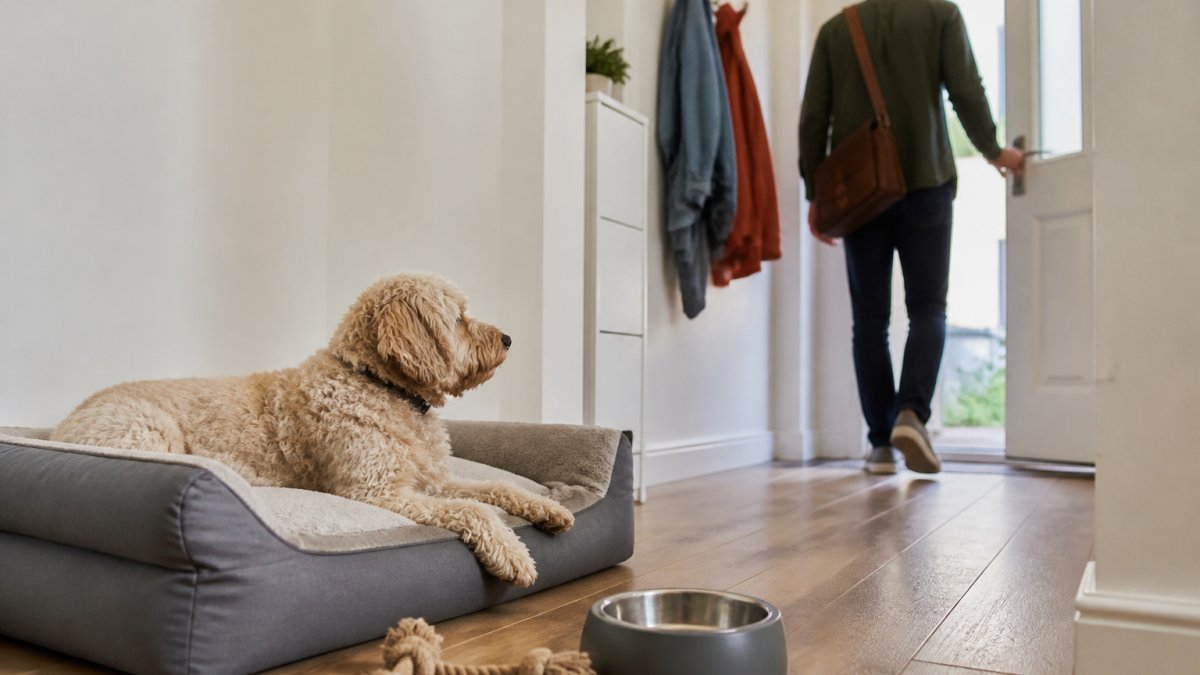
How to Train a Dog to Be Left Alone: Core Exercises
The core of successful dog separation anxiety training exercises involves four interconnected exercises that build on each other. Start with Exercise 1 and progress only when your dog shows consistent calm behaviour.
Exercise 1: Desensitizing Departure Cues
Your dog associates departure cues (keys, shoes, bags) with abandonment. Desensitization breaks these associations. Start by performing your routine without leaving: put on shoes and sit down, grab keys and read, pick up your bag and have tea. Repeat randomly until your dog stops reacting. Next, open the door for 10 seconds and return. Gradually extend to 30 seconds, then one minute, teaching your dog that door-opening doesn't mean extended separation.
Exercise 2: Practising Short Absences
Once your dog remains calm during your departure routine, begin short absences starting with 30 seconds. Progress gradually: Week 1 (30 seconds-2 minutes), Week 2 (2-5 minutes), Week 3 (5-15 minutes), Week 4 (15-30 minutes). Only increase when your dog shows no stress signals. If they panic, return to shorter absences and progress more slowly.
Exercise 3: Teaching Independent Settling
Dogs with separation anxiety struggle to relax without their owner. Teach independent settling using a cue like "settle" or "place." Guide your dog to their bed, reward lying down, and gradually extend duration. Once they settle for 10-15 minutes with you present, practise settling in a different room. Only introduce absences after your dog confidently settles for 20+ minutes independently.
Exercise 4: Using Enrichment and Food Toys
Mental stimulation is your secret weapon, an engaged dog barely notices you've left. Introduce puzzle toys 10-15 minutes before leaving. The Pet Casino Puzzle Toy keeps dogs problem-solving, the Interactive Robot Treat Toy maintains engagement, and the Snuffle Mat mimics foraging. Rotate toys to prevent habituation.
Separation Anxiety Training Schedule: Gradual Progression
Consistency matters more than intensity. Five minutes of daily practice beats one intense 30-minute session weekly.
Snuffle Mat for Dogs – Interactive Sunflower Treat Puzzle →
| Week | Duration Goal | Frequency | Key Focus |
|---|---|---|---|
| 1-2 | 2-5 minutes | Daily (2x) | Departure cue desensitization |
| 3-4 | 5-15 minutes | Daily (1-2x) | Short absences, settling practice |
| 5-6 | 15-30 minutes | 4-5x weekly | Gradual duration increase |
| 7-8 | 30-60 minutes | 3-4x weekly | Building confidence |
Setbacks happen. If your dog regresses, return to the previous week's duration and progress more gradually. Stress, schedule changes, or new environments can trigger temporary anxiety.
Common Mistakes to Avoid
The biggest mistake is progressing too quickly, pushing your dog beyond their anxiety threshold retraumatises them and sets training back weeks. Don't punish anxiety-related behaviours; yelling doesn't address underlying panic, only adds fear. Avoid creating dependency by sitting beside your dog during settling practice. Don't use crates punitively, as this creates another anxiety trigger rather than a safe space.
Tracking Progress and Knowing When to Seek Help
Measurable progress tracking keeps you accountable and helps identify whether your approach is working or professional support is needed. Managing unavoidable absences during training is equally important.
Creating a Simple Progress Log
Keep a basic record of each session: date, duration, stress level (0-10), specific behaviours, recovery time, and environmental changes. Over 2-4 weeks, patterns emerge showing whether your dog needs slower progression or can advance. Look for weekly trends rather than day-to-day fluctuations, as schedule changes and stressors cause temporary setbacks.
Managing Unavoidable Absences During Training
Real life doesn't pause for training. Unavoidable absences don't ruin progress if managed thoughtfully.
Before a necessary absence: Exercise your dog thoroughly (60-90 minutes) 1-2 hours before leaving. Provide high-value enrichment 10-15 minutes before departure to occupy their brain during peak anxiety.
What interim management is NOT:
Enrichment toys and exercise are harm reduction, not treatment. A puzzle toy doesn't teach your dog that alone time is safe; it simply distracts them during an absence that still causes stress.
Clear Criteria for Seeking Professional Help
Consult a veterinary behaviourist or certified professional dog trainer if any of the following apply:
After 8 weeks of consistent daily training, your dog shows:
- No measurable improvement in stress duration or intensity
- Worsening anxiety despite gradual progression (e.g., panic at durations previously tolerated)
- Self-injury during panic (bleeding from scratching, broken nails, damaged teeth from frantic chewing)
Concurrent medical or behavioural concerns:
- Excessive panting, trembling, or drooling that persists even at home
- Sudden loss of appetite or refusal to drink
- New or worsening house-soiling in other contexts (not just during absences)
- Aggression, resource guarding, or other behavioural changes alongside separation anxiety
- Recent trauma, rehoming, or significant life change (these may require specialist assessment)
Practical barriers to training:
- Your work schedule doesn't allow daily practice sessions
- Your living situation (flat, shared housing, noise restrictions) makes it difficult to practice without complaints
- You feel overwhelmed or unsure whether you're progressing correctly
Medication and Veterinary Behaviour Assessment
Separation anxiety exists on a spectrum. Mild cases often resolve with training alone. Moderate to severe cases may benefit from medication alongside training.
A veterinary behaviourist can assess whether anti-anxiety medication (such as fluoxetine or trazodone) might help your dog. Medication doesn't replace training; instead, it reduces your dog's baseline anxiety enough that they can learn from the exercises you're practising.
Common scenarios where medication is considered:
- Your dog's anxiety is so severe they cannot engage with training (e.g., they panic before you've even closed the door)
- Your dog has a history of trauma or has been rehomed multiple times
- Your dog is a senior with cognitive decline contributing to anxiety
- Training has progressed but plateaued, and medication might unlock further progress
Your vet can discuss whether a referral to a veterinary behaviourist (a vet with additional training in behaviour) is appropriate.
Frequently Asked Questions
How do I know if my dog has separation anxiety or just boredom?
Separation anxiety involves distress when you leave, shown through barking, destructive behaviour, or pacing that starts immediately as you depart. Boredom typically develops gradually during long periods alone and may include selective destruction of toys or furniture rather than panic responses. Anxiety often includes physical signs like panting, drooling, or attempts to escape. If your dog settles quickly with enrichment (puzzle toys, snuffle mats) but becomes distressed when you leave, separation anxiety is more likely. A vet or qualified behaviourist can help distinguish between the two.
What's the best way to start a dog separation anxiety training plan?
Begin with desensitization to departure cues: practice picking up your keys, putting on your coat, or touching your door handle without leaving. Reward calm responses with treats or praise. Next, leave for just 30 seconds, return before your dog shows distress, and gradually extend absences. Use high-value food toys like the Pet Casino Puzzle Toy or Smart Duck Feeder to create positive associations with alone time. Keep sessions short and consistent. Progress at your dog's pace, rushing causes setbacks. Track which durations your dog handles calmly and build from there.
How long should I practice separation anxiety training exercises each day?
Practise 3-5 short sessions daily, each lasting 5-15 minutes. Multiple brief sessions are more effective than one long session because they build consistency without overwhelming your dog. Each session should include one or two exercises (e.g., desensitizing departure cues, then a short absence). Space sessions throughout the day if possible. Between formal training, use enrichment tools like the Snuffle Mat for Dogs during your regular daily routine to reinforce calm, independent behaviour. Rest days are fine; consistency matters more than intensity.
What should I do if my dog becomes distressed during separation anxiety training?
Stop the exercise immediately and return to a duration or scenario your dog handled calmly in previous sessions. Distress signals, barking, whining, pacing, or destructive behaviour, mean you've progressed too quickly. Don't comfort or scold your dog; simply end the session neutrally. Next time, use shorter absences or easier cues. If your dog shows extreme distress (refusing food, self-injury, or panic), consult your vet or a qualified behaviourist. Medication or professional guidance may help. Never leave your dog to cry it out; this increases anxiety and erodes trust.


Leave a comment