


Dog Mental Enrichment Toys: 2026 Comparison Guide
Table of Contents
- Why Dog Mental Enrichment Toys Beat Physical Exercise Alone
- Quick Comparison: Dog Mental Enrichment Toys by Price and Purpose
- Interactive Treat Dispensing Toys That Turn Meals Into Brain Games
- Snuffle Mats and Scent Work: Olfactory Enrichment for Calmer Dogs
- Best Chew Toys for Aggressive Chewers: What Survives a Power Chewer
- How to Keep a Dog Mentally Stimulated: A Daily Enrichment Schedule
- DIY Dog Enrichment Ideas That Cost Almost Nothing
- Choosing the Right Dog Mental Enrichment Toy for Your Dog
- Frequently Asked Questions
Last Updated: September 25, 2026
Why Dog Mental Enrichment Toys Beat Physical Exercise Alone
A tired dog is not always a satisfied dog.
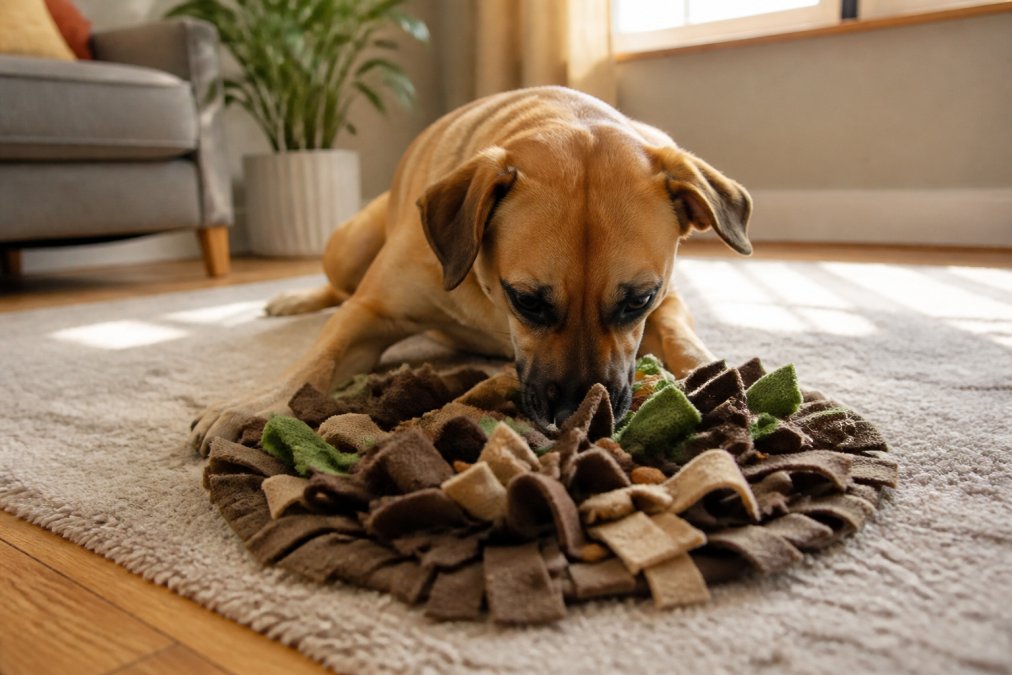
Physical exercise tires the body; mental work tires the brain, and the brain drives most unwanted behaviour. A dog that has sniffed, solved, and searched for its breakfast is calmer by mid-afternoon than one that has simply run in circles.
Quick Comparison: Dog Mental Enrichment Toys by Price and Purpose
Prices below are Doggo Shop's own, so you can match a toy to a behaviour rather than guessing.
| Toy | Price | Best For | Key Feature |
|---|---|---|---|
| Sunflower Snuffle Mat | £19.99 | Calming, scent work | Fabric petals hide treats |
| Pet Casino Puzzle Toy | £29.99 | Problem-solving | Sliding compartments |
| Smart Duck Feeder | £19.99 | Slow eating | Trickle-out design |
| Interactive Robot Treat Toy | £19.99 | Small to medium dogs | Wobble treat release |
| Thick Tire Chew Toy | £19.99 | Power chewers | Natural rubber, 35 × 16 cm |
| Suction Cup Tug Toy | £19.99 | High-energy dogs | Hands-free tug |
Interactive Treat Dispensing Toys That Turn Meals Into Brain Games
Interactive treat dispensing toys replace a bowl that empties in ninety seconds with a puzzle that takes twenty minutes.


Snuffle Mats and Scent Work: Olfactory Enrichment for Calmer Dogs
Olfactory enrichment is the most underused tool in dog ownership. A dog's sense of smell is its primary sense, and working it lowers arousal rather than raising it.
Best Chew Toys for Aggressive Chewers: What Survives a Power Chewer
The best chew toys for aggressive chewers share three traits: dense material, no small detachable parts, and a shape that resists being pinned and torn.
How to Keep a Dog Mentally Stimulated: A Daily Enrichment Schedule
Knowing how to keep a dog mentally stimulated comes down to routine, not willpower. Three short sessions beat one long one, but only if matched to the dog in front of you, a working-line collie and a senior cavalier need very different plans.
The base schedule
- Morning: scatter breakfast in the snuffle mat instead of a bowl, a ten-to-fifteen-minute foraging task replacing a ninety-second meal, and the highest-return change most owners can make.
- Midday: one puzzle feeder while you eat lunch, or a frozen lick bowl if you are out at work, since it lasts longer unattended.
- Afternoon: a frozen lick bowl or stuffed chew. Licking is self-soothing, so this slot doubles as a wind-down.
- Evening: five to ten minutes of reward-based play or tug, the slot to fold in training.
- Before bed: a short scent game. Hide three or four treats around one room and let the dog search.
Rotate toys rather than leaving them all out: one that reappears after a few days feels new again. Two or three in rotation is enough; more than five and none feel special.
Adjusting the schedule by age
- Puppies (under 12 months). Short attention spans mean three-to-five-minute sessions, four or five times a day. Soft snuffle mats and shallow puzzle feeders work; deep-fold mats and complex sliding puzzles frustrate rather than engage. Supervise everything.
- Adult dogs (1-7 years). The base schedule applies, and this is the band where you can push difficulty. Replace or harden a mastered puzzle feeder, a solved puzzle stops enriching and starts frustrating.
- Seniors (roughly 7+ years, earlier for large breeds). Scent work and licking are the lowest-impact options and hold a senior's attention longest. Skip jumping, hard pawing, or sustained chewing if there is dental wear. A shallow-fold snuffle mat and a lick bowl are usually the whole toolkit.
Adjusting the schedule by temperament
- High-drive working breeds. These dogs solve a puzzle in ninety seconds and look for the next one, so enrichment is about difficulty and duration, not novelty. Layer tasks, put the puzzle feeder inside a cardboard box, or scatter the snuffle mat's contents across a room so the dog searches as well as forages.
- Low-energy companion breeds. They need calming enrichment more than challenging enrichment. Scent work, licking, and gentle foraging come first, a hard puzzle can raise arousal in an already anxious dog.
- Reactive or easily aroused dogs. Keep enrichment low-arousal. Sniffing and licking lower arousal; chasing, tugging, and fetch raise it. If your dog struggles to settle after a walk, a lick bowl beats a tug toy in the evening.
Folding enrichment into training
- Crate training. Feed every meal in a puzzle feeder inside the crate, door open at first. The dog learns the crate predicts the best part of its day, far better than closing the door and waiting out the whining.
- Separation anxiety. A frozen lick bowl given as you leave occupies the first ten minutes, usually the hardest part. It is a management tool, not a cure, but standard in most behaviour-modification plans.
- Recall and engagement. Use a snuffle mat or scatter feed as the reward for a recall in the garden. The dog learns that coming back to you leads to something better.
- Settle training. A lick bowl on a mat, given at the same time each evening, becomes a cue that the day is winding down. Over a few weeks, the mat alone starts to do the work.
A note on consistency
The schedule matters less than the pattern. A dog enriched at roughly the same points each day settles faster than one given a random scatter, because predictability itself is calming. If you miss a slot, miss it, do not double up.
DIY Dog Enrichment Ideas That Cost Almost Nothing
DIY dog enrichment ideas work best as gap-fillers between proper toys, not replacements. They are free, use what is already in the kitchen, and break the routine, novelty is the active ingredient, and a toy seen a hundred times becomes furniture.
Kitchen and household builds that actually hold up
- Towel burrito. Scatter kibble along one edge of a flat tea towel, roll it tightly, and knot the ends. The dog must unroll and unpick the knots to reach the food. Use a towel you do not mind losing, most dogs eventually chew through it, so supervise.
- Muffin-tin puzzle. Drop a treat into each cup of a muffin tin, cover every cup with a tennis ball, and let the dog work out that the balls must be lifted. It is a genuine problem-solving task and the closest free equivalent to a sliding-compartment puzzle toy.
- Cardboard foraging box. A shallow box with screwed-up paper balls and scattered kibble. Good for one or two sessions before it is shredded; recycle it after. Avoid glossy printed card, staples, and tape.
- Frozen broth block. Dilute low-sodium, onion- and garlic-free stock, pour into a silicone mould or ice-cube tray, and freeze. Onion and garlic are toxic to dogs, so check ingredients first. A frozen block buys twenty to forty minutes of licking, the same calming mechanism as a lick mat.
- Snuffle towel. Roll kibble into a bath towel rather than a tea towel for a longer, easier search, the low-cost version of a fabric snuffle mat, and good for seniors who find deep folds frustrating.
- Paper cup hunt. Turn three paper cups upside down, hide a treat under one, shuffle them, and let the dog choose. Short, high-reward, and a useful warm-up before training.
What to avoid
- Cooked bones. They splinter and are a well-known choking and internal-injury risk. Raw bones are a separate debate; cooked ones are not.
- Sticks and stones. A surprising number of dental fractures and gut blockages trace back to a dog being allowed to chew a stick.
- Old shoes and socks. Teaching a dog that your footwear is a toy is a training problem you will spend months undoing.
- Anything with string, elastic, or small plastic parts. Linear foreign bodies from swallowed string are one of the more serious surgical presentations vets see.
- Peanut butter without checking the label. Some brands contain xylitol, which is highly toxic to dogs. Check the ingredients every time, because recipes change.
Rotating DIY with shop-bought toys
The strongest routine mixes both: DIY for cheap, messy, one-off sessions, the cardboard box, the muffin tin, and durable toys like the Sunflower Snuffle Mat and the Pet Casino Puzzle Toy for daily slots. Shop-bought toys stay novel longer; DIY builds absorb the mess for free.
Choosing the Right Dog Mental Enrichment Toy for Your Dog
Match the toy to the behaviour, not the breed. That one rule removes most of the guesswork from choosing dog mental enrichment toys.
- Destroys furniture when alone: start with a puzzle feeder and a snuffle mat
- Power chewer: the tire chew toy first, everything else second
- Fast eater: the duck feeder or lick bowl
- High-energy, under-exercised: the suction tug toy or a ball launcher
- Anxious or easily aroused: scent work and licking, not fetch
- Senior dog: snuffle mats and lick bowls, which are low-impact
Frequently Asked Questions
What are the most mentally stimulating dog toys?
The most mentally stimulating options are toys that require your dog to work for a reward. Interactive treat dispensing toys such as the Pet Casino Puzzle Toy (£29.99) make dogs slide compartments to uncover kibble. Snuffle mats engage the foraging instinct through scent work. The Interactive Spinning Windmill Treat Toy (£19.99) adds pawing and problem-solving. Rotate two or three of these across the week so novelty keeps engagement high.
What counts as 15 minutes of mental stimulation for dogs?
Fifteen minutes of focused problem-solving tires a dog in a way that matches roughly an hour of walking. It could be a puzzle feeder holding a meal, a snuffle mat with scattered treats, or a training session working through new cues. For dog mental enrichment, short sessions work better than one long one. Two or three 15-minute slots a day suits most adult dogs, including those in flats.
Are puzzle toys safe for dogs to use unsupervised?
It depends on the toy and the dog. Durable rubber options like the Thick Tire-inspired Chew Toy (£19.99) handle solo chewing well. Fabric snuffle mats are not chew toys, so supervise those and store them away afterwards. Check any toy for cracks, loose parts or chewed edges before each session, and remove anything damaged straight away.
What are the benefits of mental enrichment for anxious dogs?
Licking and sniffing are calming behaviours. The Slow Feeder Dog Lick Bowl (£19.99) encourages exactly that, spreading peanut butter or yogurt across a textured surface to slow eating and settle a stressed dog. Puzzle feeders also redirect nervous energy into problem-solving. Pair these with a predictable routine, and many anxious dogs show less pacing, whining and destructive chewing.
How do I choose the right enrichment toy for my dog's size?
Match the toy to your dog's jaw and weight, not just its breed label. The Smart Duck Feeder suits dogs from 3 to 50kg, while the Interactive Robot Treat Toy works best for cats and small to medium dogs, with treats under 1.2 cm. Large breeds need tougher builds, which is where natural rubber chew toys come in. When in doubt, size up rather than down.
The challenge with dog mental enrichment is not finding toys. It is matching the right toy to the behaviour in front of you, and doing it consistently enough to matter. Doggo Shop stocks the full range, from the Sunflower Snuffle Mat to the Thick Tire Chew Toy, so you can build a rotation that fits your dog's temperament and your daily routine. Every order also sends 10% to rescue dogs in need worldwide. Get started with Doggo Shop and give your dog a calmer, more engaged day.


Leave a comment