


Does Mental Stimulation Tire Out Dogs?
Table of Contents
- Does Mental Stimulation Actually Tire Out Dogs?
- Mental Stimulation vs. Physical Exercise: Which Tires Dogs More?
- Why Dogs Need Mental Stimulation for Dogs
- Signs Your Dog Is Mentally Fatigued or Over-Stimulated
- Best Dog Puzzle Toys and Enrichment Activities
- How to Tire Out a Puppy with Mental Enrichment
- Budget-Friendly DIY vs. Commercial Enrichment Products
- The Importance of Rest and Recovery After Mental Work
Last Updated: August 25, 2026
Does Mental Stimulation Actually Tire Out Dogs?
Yes, mental stimulation genuinely tires out dogs, often more effectively than physical exercise alone. When your dog works their brain to solve a puzzle, find hidden treats, or learn new commands, they expend mental energy that leads to real fatigue. A 30-minute puzzle toy session can leave your dog mentally exhausted in ways that benefit their overall wellbeing. This is particularly valuable for urban dog owners, busy professionals, and anyone whose dog needs stimulation but has limited time for outdoor exercise.

At Doggo Shop, we've designed our interactive toys and enrichment products specifically to provide this kind of mental workout. Whether it's our Pet Casino Puzzle Toy or our Snuffle Mat for Dogs, the goal is the same: engage your dog's natural problem-solving instincts and watch them settle into a calm, satisfied state afterwards.

Mental Stimulation vs. Physical Exercise: Which Tires Dogs More?
Physical exercise burns energy through movement and is essential for cardiovascular health, but it doesn't always lead to lasting calm. A high-energy breed might return from a two-hour hike still ready to play within an hour.
Mental stimulation engages your dog's cognitive systems differently. When your dog must think, problem-solve, and concentrate, they exhaust their mental resources. This fatigue often translates into deeper, more sustained relaxation. Many owners find that a 20-minute puzzle toy session produces calmer behavior than a 45-minute walk.
The ideal approach combines both. A dog receiving only physical exercise may develop behavioral issues from boredom. A dog receiving only mental enrichment might have excess physical energy. The sweet spot is a balanced routine: regular exercise paired with consistent cognitive challenges.
For dogs in apartments or urban environments where outdoor space is limited, mental stimulation becomes even more critical.
Why Dogs Need Mental Stimulation
Your dog's brain is wired to work. Domesticated dogs still carry the cognitive drives of their ancestors: to hunt, to problem-solve, to explore, and to navigate their environment. Without outlets for these instincts, dogs become bored, restless, and prone to destructive behaviors.
Boredom manifests as excessive barking, destructive chewing, digging, jumping on guests, and even aggression. Mental stimulation provides critical benefits:
- Reduces anxiety and stress. A dog engaged in cognitive work has less mental energy available for worry.
- Prevents destructive behaviors. A mentally tired dog is less likely to chew furniture, dig holes, or bark excessively.
- Strengthens the bond between you and your dog. Interactive enrichment activities create positive shared experiences.
- Improves self-regulation. Dogs that practice impulse control develop better behavioral control overall.
- Slows cognitive decline in older dogs. Mental exercise helps maintain brain function as dogs age.
Working breeds like Border Collies, Australian Shepherds, Retrievers, and Spaniels were bred to make independent decisions and solve problems. Without appropriate mental challenges, these breeds often develop behavioral issues. But every dog benefits from mental enrichment.
Signs Your Dog Is Mentally Fatigued or Over-Stimulated
A dog can become mentally exhausted or over-stimulated. Recognizing these signs helps you calibrate your enrichment routine.
Signs of appropriate mental fatigue:
- Relaxed body posture and soft eyes
- Slower movements and reduced restlessness
- Willingness to rest or sleep
- Calm, settled behavior for several hours afterward
Signs of mental exhaustion (too much stimulation):
- Excessive panting or drooling beyond normal levels
- Whining or frustration-based barking during the activity
- Refusal to engage with the enrichment toy
- Hyperactivity that doesn't settle even after rest
- Loss of appetite or reluctance to eat
Signs of over-stimulation:
- Inability to settle or relax even after the activity ends
- Increased reactivity to normal household sounds or movements
- Difficulty focusing on commands
- Sleep disruption or restlessness at night
- Sudden aggression or snapping
Most dogs benefit from 30-60 minutes of combined mental and physical stimulation daily, spread across multiple sessions. Age matters: puppies have shorter attention spans and tire more quickly. Older dogs may have less stamina but still benefit from lower-intensity mental work.
Best Dog Puzzle Toys and Enrichment Activities
The best puzzle toys encourage problem-solving, hold your dog's interest, and are durable enough to withstand repeated use.
Interactive Puzzle Feeders and Treat Dispensers
Puzzle feeders are among the most effective mental stimulation tools. Instead of eating from a bowl, your dog must manipulate the toy to access their food or treats. This mimics natural foraging behavior and engages their problem-solving instincts.
The Pet Casino Puzzle Toy features multiple compartments and sliding pieces that your dog must move to uncover hidden treats. At £29.99, it's a solid investment in mental enrichment.
For a more affordable entry point, the Smart Duck Feeder at £19.99 offers similar benefits. When selecting a puzzle feeder, look for durable construction, difficulty levels that match your dog's skill, easy cleaning, and adjustable challenge.

Start with easier puzzles and gradually introduce more complex ones as your dog's problem-solving skills improve.
Snuffle Mats and Scent Work Games
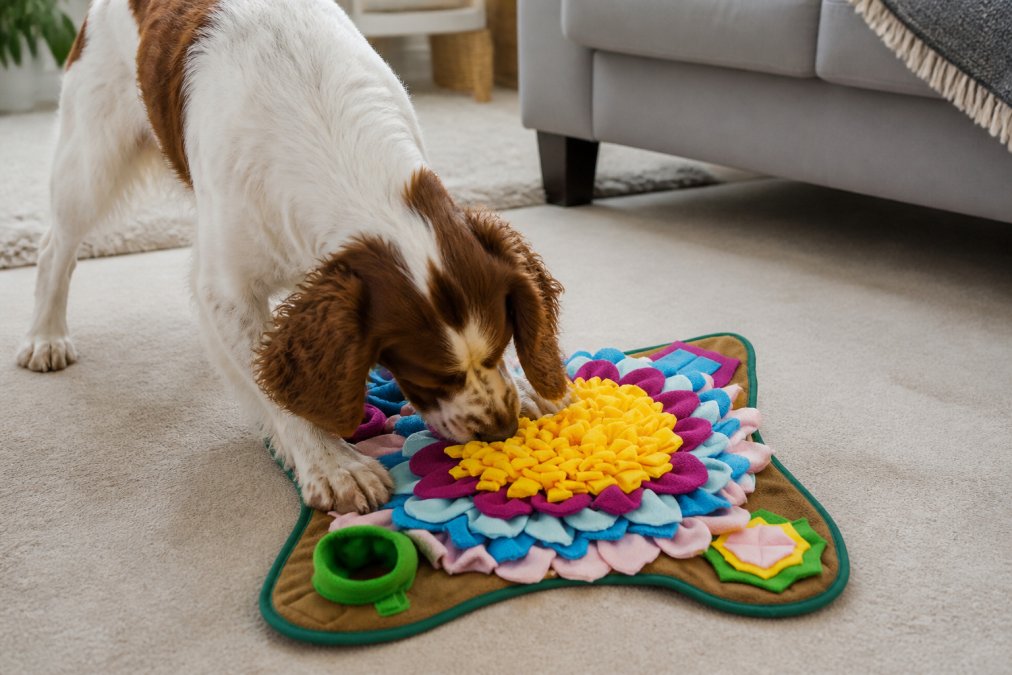
Snuffling, the natural behavior of rooting through grass to find food, is deeply satisfying for dogs. The Snuffle Mat for Dogs - Interactive Sunflower Treat Puzzle at £19.99 uses soft fabric petals to hide treats. Your dog must use their nose to locate hidden rewards.
Snuffle mats are particularly valuable for dogs that eat too quickly, older dogs needing gentler enrichment, dogs with anxiety, and dogs recovering from injury. You can also create DIY scent work games using towels, blankets, or cardboard boxes.
Training Sessions as Mental Exercise
Formal training is one of the most underrated forms of mental stimulation. A 15-minute training session can be as mentally tiring as a 30-minute walk. The key is to keep sessions short, positive, and focused on one skill at a time.
Training also strengthens the bond between you and your dog and develops self-regulation. Vary your training activities: teach new commands weekly, practice impulse control games, work on loose-leash walking, play "find it" games, and practice recall in safe spaces.
How to Tire Out a Puppy with Mental Enrichment
Age-Appropriate Mental Stimulation for Young Dogs
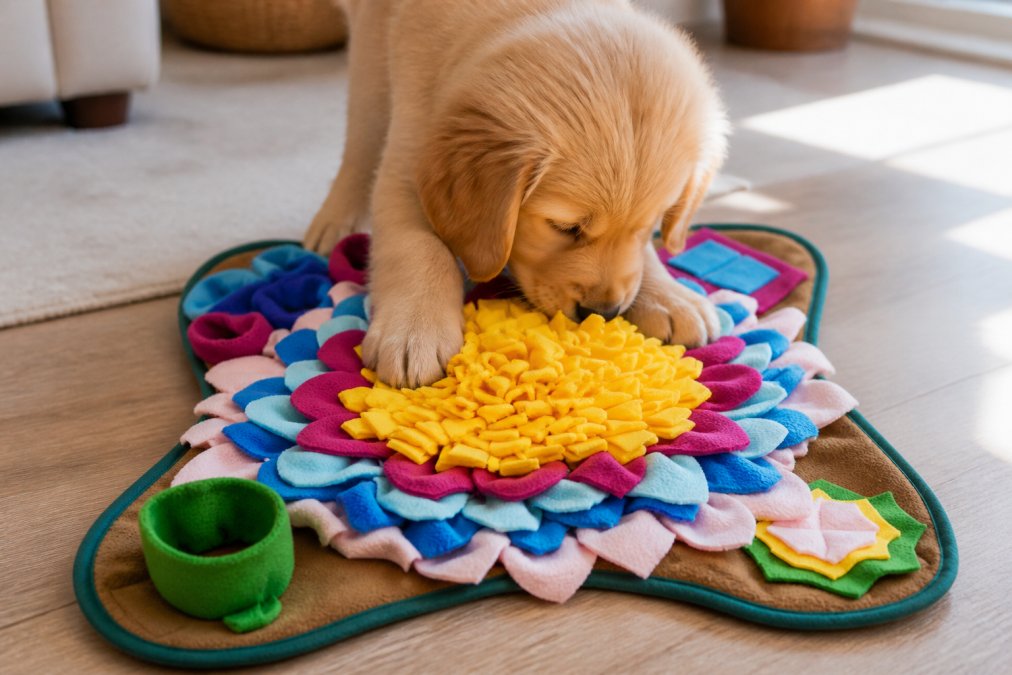
Puppies aged 8-16 weeks can engage with very simple enrichment. Keep sessions brief, 5 to 10 minutes maximum. Start with basic games: hide a treat under a cup, scatter treats in grass, or offer a simple puzzle toy.
As puppies grow (4-6 months), introduce slightly more complex challenges: puzzle feeders with larger compartments, training sessions with simple commands, and scent work games. By 6 months and older, puppies can handle more sophisticated enrichment.
Building Mental Stamina in Growing Puppies
Mental stamina develops over time. A puppy that can focus for 5 minutes at eight weeks might manage 15 minutes at six months. Build stamina gradually by starting with very easy tasks your puppy succeeds at quickly, increasing difficulty incrementally, introducing variety, and always ending on a positive note.
Puppies need 15-20 hours of sleep daily. Don't over-stimulate; a tired puppy is good, but an exhausted or stressed puppy can develop behavioral issues. Short, frequent enrichment sessions with plenty of sleep create the ideal environment for healthy puppy development.
Budget-Friendly DIY vs. Commercial Enrichment Products
Quality enrichment doesn't require expensive products. Many effective activities cost nothing and use items you already have at home.
DIY enrichment ideas:
- Muffin tin puzzle: Place treats in a muffin tin, cover each cup with a tennis ball
- Towel roll: Roll treats inside a towel and let your dog unroll it
- Cardboard box: Fill with crumpled paper and hide treats inside
- Frozen treats: Freeze treats in ice cubes or peanut butter in a Kong toy
- Toilet paper tubes: Stuff with treats and fold the ends closed
These activities are effective and free, though they require your time and effort. Commercial products like Doggo Shop's puzzle toys offer durability, consistent challenge levels, and less cleanup. The Interactive Spinning Windmill Treat Toy at £19.99 is an example of excellent value.
The best approach combines both: use DIY enrichment for daily variety and cost savings, and invest in one or two quality commercial toys for consistent engagement.
The Importance of Rest and Recovery After Mental Work
Mental exertion requires recovery time, just like physical exercise. After a focused enrichment session, your dog should have access to a quiet, comfortable space where they can rest undisturbed.
Rest serves several functions:
- Memory consolidation. Learning is processed during sleep; adequate rest helps your dog retain what they've learned
- Stress recovery. Mental effort can be mildly stressful; rest allows cortisol levels to normalize
- Physical recovery. Even mental work increases heart rate and metabolic demand
- Behavioral regulation. A well-rested dog has better impulse control and is less reactive
Most dogs benefit from a predictable routine: morning exercise, midday enrichment and rest, evening training or play, then a calm evening leading into sleep. Watch for signs that your dog needs more rest: excessive irritability, difficulty focusing, or increased reactivity can indicate insufficient recovery time. Ensure your dog has 8-10 hours of uninterrupted sleep nightly.
Mental stimulation genuinely tires out dogs and provides benefits that physical exercise alone cannot achieve. Whether you're managing a high-energy breed, living in an apartment with limited outdoor space, or simply wanting to deepen your bond with your dog, enrichment activities are essential. Doggo Shop's range of puzzle toys, snuffle mats, and interactive feeders makes it easy to provide consistent mental stimulation. Start with one enrichment activity that matches your dog's age and skill level, observe how they respond, and build from there. The calm, contented dog you see after a focused enrichment session is proof that mental work delivers real, lasting results.
Frequently Asked Questions
Is mental stimulation more tiring for dogs than physical exercise?
Mental stimulation and physical exercise tire dogs in different ways. Mental work engages problem-solving, impulse control, and focus, leading to cognitive fatigue. Physical exercise burns energy through movement. Many dogs find mental stimulation equally or more exhausting because it requires sustained concentration. A 15-minute puzzle toy session can produce the same level of tiredness as a 30-minute walk for some dogs, particularly high-energy breeds that need both types of enrichment.
What are signs my dog is mentally exhausted from enrichment activities?
Mentally fatigued dogs often show calm behaviour, reduced interest in play, increased napping, and slower responses to stimuli. You might notice your dog lying down more frequently or seeking quiet spaces. However, watch for over-stimulation signs too: excessive panting, whining, restlessness, or inability to settle. These indicate your dog needs a break. Mental exhaustion should feel positive and lead to relaxation, not anxiety. If your dog seems distressed, reduce the difficulty or duration of enrichment activities.
Can dog puzzle toys really help prevent destructive chewing and behavioural issues?
Yes. Destructive chewing often stems from boredom and under-stimulation. Interactive puzzle toys, snuffle mats, and treat dispensers engage your dog's natural problem-solving instincts, redirect energy, and provide mental fatigue that promotes calm behaviour. Dogs with adequate cognitive enrichment show fewer behavioural problems. However, puzzle toys work best combined with training sessions, scent work, and physical exercise. They're part of a complete enrichment strategy, not a standalone solution. Consistency and variety in enrichment activities yield the best results.
How much mental stimulation does a puppy need daily?
Puppies need short, frequent mental stimulation sessions rather than long ones. Start with 5-10 minute sessions, two to three times daily, depending on age and breed. Younger puppies (8-12 weeks) have shorter attention spans, so keep activities brief and playful. As puppies grow, gradually increase duration to 15-20 minutes. High-energy breeds may need more frequent sessions. Mental stimulation should be paired with adequate rest, puppies need 18-20 hours of sleep daily. Monitor your puppy for signs of fatigue or frustration, and adjust activities accordingly.
This article was written using GrandRanker


Leave a comment