


Creative Ways to Upcycle Old Pet Cushions
Table of Contents
- Creative Ways to Upcycle Old Pet Cushions
- How to Make a Dog Bed from Old Pillows and Cushion Filling
- How to Reuse Old Cushion Filling for Crafts and Pet Toys
- What to Do with Old Pet Bedding: Beyond the Cushion
- How to Clean a Dog Bed Before You Upcycle It
- When to Recycle, Donate, or Retire an Old Pet Cushion
- Conclusion: Give Every Cushion a Second Life
- Frequently Asked Questions
Last Updated: October 13, 2026
Creative Ways to Upcycle Old Pet Cushions
Most pet beds get thrown out long before they stop being useful, the filling is still springy, the fabric still sturdy. For creative ways to upcycle old pet cushions, start with what is inside: polyester filling, memory foam, and feathers each behave differently, and that decides whether you sew, stuff, or simply re-cover.
This guide from Doggo Shop covers eight practical projects, from a no-sew dog bed to draft stoppers and garden kneeling pads, plus how to wash a dog bed before reuse and when a cushion should be recycled or retired.

How to Make a Dog Bed from Old Pillows and Cushion Filling
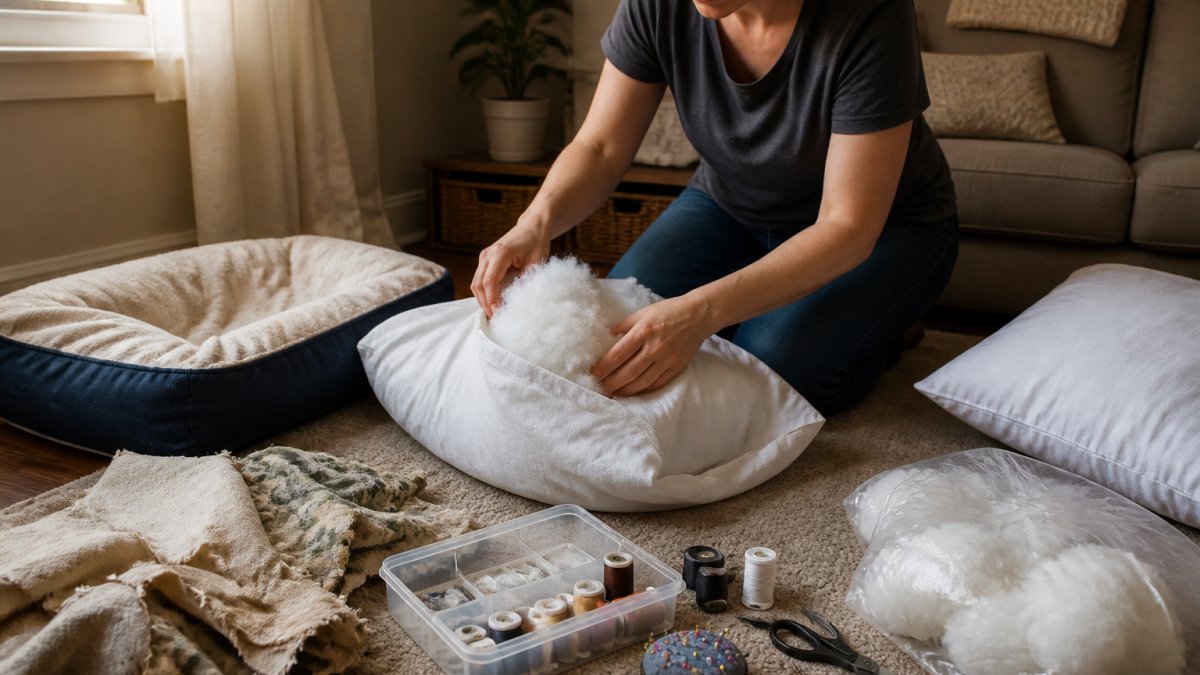
Making a dog bed from old pillows takes about 30 minutes with no sewing, or roughly an hour for a sewn insert. Use only clean filling, and size the bed to your dog's sleeping curl, not their stretched-out length. Empty two or three old pillows into a large bag and break up any clumps by hand, then choose your route below.
No-Sew Option: The Pillowcase Bed
The fastest route for anyone without a machine.
- Wash and dry a pillowcase on a hot cycle, then turn it inside out.
- Fill it two-thirds full with loose polyester filling. Overstuffing makes it lumpy.
- Tuck the open end inward and pin it, then hand-sew a simple running stitch, or use fabric glue and leave it 24 hours to cure.
- Slip the whole thing inside a second, clean pillowcase as a washable cover.
A standard pillowcase suits a small dog or cat; for a medium dog, stitch two cases together along the short edge first. The double-case trick matters: the outer cover takes the dirt while the inner holds the filling, so you wash one and keep the other intact.
Sewn Option: A Durable Cushion Insert
For a dog that digs and circles before settling, a sewn insert lasts far longer. Cut two rectangles of sturdy fabric, roughly 70cm by 50cm for a medium dog, plus 2cm seam allowance.
How to Reuse Old Cushion Filling for Crafts and Pet Toys
Loose filling is the most reusable part of an old cushion and does not need to stay in bed form. Clean polyester stuffing works for stuffed toys, draught excluders, and small cushions, provided it is completely dry and odour-free.
Here is how to put it to work:
- Stuffed toys: Refill a toy that has gone flat, or make simple fabric shapes for a dog to carry. Use tight stitching, since loose filling is a choking risk if a seam opens.
- Pet toys: Braid three strips of old fabric into a tug toy and knot the ends firmly. Skip the filling entirely here, as braided fabric is tougher.
- Draught excluders: Tube a long strip of fabric, fill it with stuffing, and stitch both ends. These sit along the bottom of a door and cut cold air.
- Small cushions: A 40cm square cover filled with reclaimed stuffing makes a decent seat pad for a windowsill or a car boot.
One serious warning: never use filling from a cushion that has been wet, mouldy, or chewed open by a pet, and never use it for a child's toy. If it still smells after washing, bin it.
What to Do with Old Pet Bedding: Beyond the Cushion
Old pet bedding has more second lives than most owners expect, and the fabric is often the more valuable part.
| Project | Fabric needed | Filling type that works | Dimensions | Difficulty |
|---|---|---|---|---|
| Floor cushion | 2 rectangles, 50cm x 50cm | Polyester or shredded foam | 50cm x 50cm x 12cm | Easy |
| Seat pad | 2 rectangles, 40cm x 40cm | Polyester or memory foam offcuts | 40cm x 40cm x 5cm | Easy |
| Garden kneeling pad | 2 rectangles, 40cm x 25cm | Polyester or foam | 40cm x 25cm x 4cm | Easy |
| Draft stopper | 1 strip, 90cm x 15cm | Polyester or rice | 85cm x 12cm | Easy |
| Cat window perch pad | 2 rectangles, 45cm x 30cm | Polyester only | 45cm x 30cm x 4cm | Medium |
| Dog crate mat | 2 rectangles, 60cm x 45cm | Polyester or shredded foam | 60cm x 45cm x 6cm | Medium |
| Cleaning rags | Any worn fabric | None | 30cm squares | None |
Garden kneeling pads. Cut a 40cm by 25cm rectangle and layer two fabric pieces with filling between them.
Draft stoppers. Tube a 90cm strip of fabric, fill it with stuffing, and stitch both ends.
Cleaning rags. Cut fabric too worn to sew into 30cm squares for muddy paw clean-ups.
Pet-specific fit matters more than the project itself. A cat floor cushion should be 45cm x 30cm at most, since cats prefer a snug perch.
The waste pile, anything stained, torn beyond repair, or smelling of mildew, goes to textile recycling rather than general waste where your council offers it. Check your council's waste page before binning anything.
How to Clean a Dog Bed Before You Upcycle It
You cannot skip this step: uncleaned filling carries odour, bacteria, and flea eggs into whatever you make next.
The pre-wash safety check:
Cozy Dog Sofa Bed – Warm Winter Pet Cushion →
- Smell test. Press the cushion close. A musty or sour smell that survives a press means mould or bacteria has reached the filling. Washing the cover will not fix it. Discard the filling.
- Seam check. Run your fingers along every seam. Any split, frayed edge, or exposed filling means the cushion cannot be donated or reused as a pet bed, because a dog can pull the filling out and swallow it.
- Pest check. Look for flea dirt (small dark specks that turn red on a damp tissue), live insects, or tiny holes suggesting moth or carpet beetle damage. If you find any, seal the cushion in a bag and dispose of it, do not put it in your washing machine.
- Filling check. Open a seam and squeeze the filling. Polyester should spring back. Memory foam that crumbles is finished. Feathers that clump and feel damp have likely been wet before and will smell.
Only wash a cushion once it passes all four checks. Here is how to handle each filling type.
| Filling type | Wash method | Dry method | Can it be reused? |
|---|---|---|---|
| Polyester fibrefill | Machine wash, gentle, 30°C, inside a pillowcase | Tumble dry low with 2 tennis balls | Yes, if odour-free |
| Memory foam | Spot-clean only, never submerge | Air in direct sunlight, 24 hours | Yes, if not crumbled |
| Feather | Professional dry-clean only | Professional | Rarely, usually smells |
| Shredded foam | Hand wash in a bucket, squeeze gently | Air dry, fluff daily | Yes, if not crumbled |
| Unknown or mixed | Do not wash | Do not reuse | No |
Polyester fibrefill is the easiest to save.
Memory foam cannot be washed, water breaks down the cell structure and turns it crumbly.
Shredded foam should be hand-washed in a bucket with warm water and a little detergent.
A few practical notes from experience:
- Vacuum the cushion on both sides before washing. Loose hair turns into a paste in the machine and can clog the filter.
- Use a pet-safe detergent with no heavy fragrance, since residual scent can put a dog off the bed entirely.
- Dry thoroughly. Damp filling grows mould within days, and a mouldy bed is a health risk, not a project.
- If the cover has a zip, check it before washing. A broken zip is often the real reason people replace a bed, and it is a five-minute repair.
When to Recycle, Donate, or Retire an Old Pet Cushion
Not every cushion deserves a second life. Recycle or retire it when the filling is flat and cannot be revived, when there is mould or persistent odour, or when the fabric has torn and exposes filling.
Donation suits cushions that are clean, intact, and structurally sound. Animal shelters often welcome washable bedding, but call ahead, many have specific requirements and limited storage. Never donate a bed with exposed filling or a strong smell; it creates work for the charity rather than helping it.
For anything beyond saving, check your local council's textile recycling options before binning it.
If you would rather start fresh than repair, our Cozy Dog Sofa Bed at £29.99 has a machine-washable plush cover and a non-slip base, which makes it far easier to keep clean than a homemade insert. For dogs that chew or have accidents, the Waterproof Dog Bed at £19.99 has a detachable, machine-washable cover and a moisture-proof base.

| Situation | Best Option | Why |
|---|---|---|
| Filling flat but fabric intact | Refill and re-cover | Cheapest fix, keeps the outer shell |
| Cover torn, filling fine | No-sew pillowcase bed | Uses both parts, no machine needed |
| Mould, odour, or exposed filling | Recycle or retire | Health risk, not worth repairing |
| Clean and structurally sound | Donate to a shelter | Call first to confirm they accept bedding |
| Dog chews or has accidents | Waterproof replacement | Washable cover, moisture-proof base |
Conclusion: Give Every Cushion a Second Life
Every old pet cushion is a decision point, and most end in the bin by default rather than by choice. The projects above take an afternoon, cost almost nothing, and keep usable filling and fabric out of landfill.
At Doggo Shop, we donate 10% of every order to rescue dogs in need worldwide, so when a bed really has reached the end, replacing it does something useful too. Browse our washable, non-slip beds and give your dog a fresh spot to curl up in.
SHOP NOW
Frequently Asked Questions
What are some clever ways to repurpose old pet cushions?
You can turn old pet cushions into a range of useful items: a refilled dog bed, draft stoppers for doors, garden kneeling pads, floor or seat cushions, and even pet toys. If the filling is still springy, reuse it in a new cushion insert or stuff a pillowcase for a no-sew bed. The cover fabric can become a washable outer layer, a toy, or cleaning rags.
How can I turn an old pet cushion into a new dog bed?
Wash the cover and let it dry completely, then check the filling for clumps or odours. If it is still springy, tease it apart and use it to stuff a clean pillowcase or a sewn fabric cover. For a no-sew bed, fold the open end of the pillowcase inward and stitch or safety-pin it shut. Add a waterproof liner underneath for extra protection and easier cleaning.
Can old pet cushion filling be reused?
Yes, if it is clean, dry, and still holds its shape. Polyester filling can be teased apart and used to refill a new cushion, stuff a pet toy, or pad a draft stopper. Feather filling needs to be completely dry and free of mites before reuse; if it smells musty or is matted, it is better to compost or dispose of it responsibly.
How do I clean an old pet cushion before upcycling it?
Remove the cover and shake off loose hair and dirt outside. Check the care label; most fabric covers can be machine washed at 30°C on a gentle cycle with a pet-safe detergent. If the filling is not removable, hand wash the whole cushion in lukewarm water, rinse thoroughly, and dry it completely in a well-ventilated area before reuse. Never upcycle a damp cushion.
When should I throw away an old pet cushion instead of reusing it?
Retire a cushion if the filling is matted, mouldy, or smells even after washing, or if the fabric is torn beyond repair. Cushions used by pets with contagious skin conditions or parasites should be disposed of safely rather than reused. If in doubt, replace it with a fresh bed that offers proper support and is easy to keep clean.


Leave a comment