


Compost Dog Waste Bags: Safe Methods & Rules
Table of Contents
- Why Standard Garden Compost Won't Work for Dog Waste
- The Difference Between Compostable and Biodegradable Dog Bags
- How to Dispose of Dog Poo at Home Safely
- Can You Put Dog Poo in Council Garden Waste?
- Risks of Composting Dog Waste Without Proper Standards
- EN 13432 Certification: What It Means for Dog Waste Bags
- Conclusion
Last Updated: August 16, 2026
Why Standard Garden Compost Won't Work for Dog Waste
Standard garden compost heaps don't reach the temperatures needed to neutralise pathogens and parasites in dog waste. Most home composting systems operate between 40-60°C, whereas dog faeces contain harmful organisms like E. coli, salmonella, and roundworm eggs that require sustained heat of 65°C or higher to be safely destroyed.
Garden compost heaps are designed for food scraps and plant matter, not disease-carrying waste. When you add dog waste to a standard heap, pathogens can survive the composting process and contaminate soil for years. Roundworm parasites are particularly resilient and can persist in soil even after standard composting attempts.
Council guidance across the UK is clear: dog waste should never be added to general garden compost or council garden waste collections. The risk of soil contamination, especially near vegetable patches or areas where children play, makes this a genuine public health concern.
The Difference Between Compostable and Biodegradable Dog Bags
This distinction matters far more than most people realise.
Biodegradable bags break down through natural decomposition over time, but there's no strict standard governing how long that takes or under what conditions. A biodegradable bag might take months or years to fully decompose, and in landfills, it may never fully break down at all.
Compostable bags meet specific standards, most importantly EN 13432 in the UK and Europe. These bags break down completely within industrial composting facilities within 180 days, leaving no toxic residue or microplastics. The key word is "industrial." Compostable bags won't break down in your garden heap or in a landfill.
This creates a practical problem: most compostable dog waste bags end up in landfills anyway, where they don't compost. If you're using compostable bags, you need access to an industrial composting facility that actually accepts pet waste, and many don't.
Doggo Shop's Eco-Friendly Dog Poop Bags - Leak-Proof & Extra Thick are designed with this reality in mind. They're biodegradable and significantly thicker than standard bags, reducing environmental impact during disposal. For most UK dog owners, a durable biodegradable bag paired with proper disposal through a pet waste digester or council waste is more practical than hunting for industrial composting facilities.

:::pro Check your local council's waste management page before buying compostable bags. Many councils don't have industrial composting infrastructure that accepts pet waste, making compostable bags pointless unless you have verified access to the right facility. :::
How to Dispose of Dog Poo at Home Safely
There are two primary methods for safely disposing of dog waste at home: pet waste digesters and anaerobic digestion systems.
Pet Waste Digesters: Step-by-Step Setup
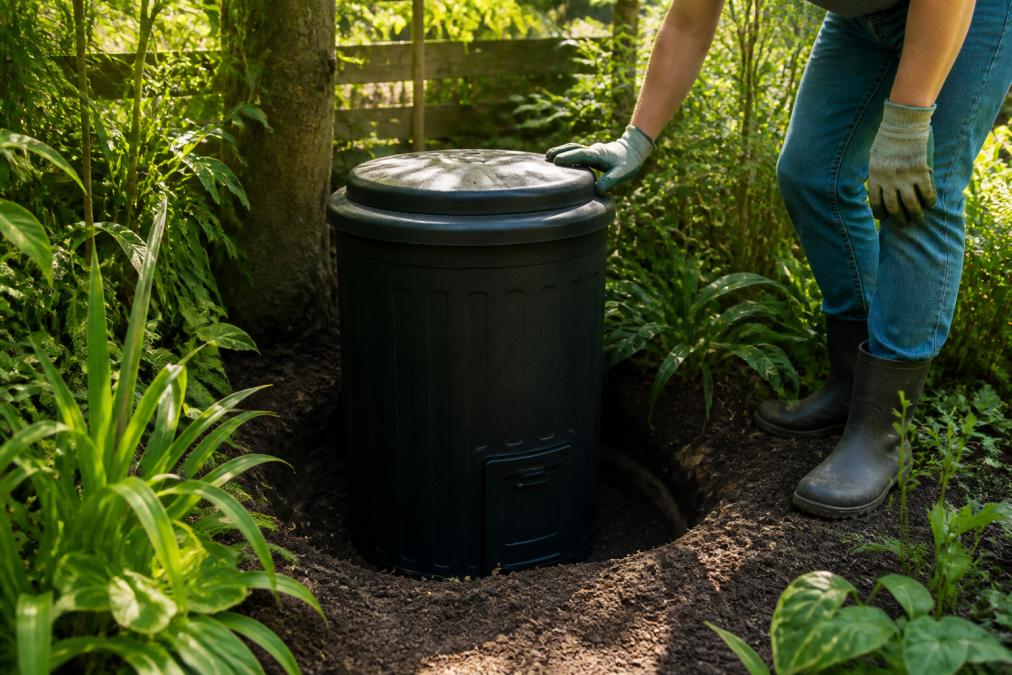
A pet waste digester is a simple, self-contained system that accelerates decomposition without requiring the intense heat of industrial composting. It's the most accessible option for most UK dog owners.
What you'll need:
- A pet waste digester
- A spade or shovel
- Garden location with decent drainage
- Hose or watering can
- Enzyme starter (usually included)
Step 1: Choose Your Location [Time: 10 minutes] Select a spot in your garden away from vegetable patches, fruit trees, and areas where children play. The digester should be at least 1 metre away from any water sources (ponds, streams, or drains). Avoid low-lying areas where water pools.
Step 2: Prepare the Ground [Time: 20-30 minutes] Dig a hole slightly larger than the digester's diameter, deep enough to bury roughly two-thirds of the chamber. Remove any large stones or compacted soil that might prevent proper drainage. If your garden has heavy clay soil, consider adding a thin layer of gravel or sand to the bottom of the hole.
Step 3: Install the Digester [Time: 15 minutes] Place the digester in the hole and backfill with removed soil. The top should sit slightly above ground level for easy access. Ensure the removable lid fits securely to prevent pests.
Step 4: Activate the System [Time: 5 minutes] Fill the digester with water and add the enzyme starter. These enzymes accelerate the breakdown of organic matter.
Step 5: Add Waste Regularly [Ongoing] Add dog waste daily using a small shovel or scoop. Don't use plastic bags, even biodegradable ones, as they'll interfere with decomposition. After adding waste, sprinkle enzyme powder and water.
Step 6: Maintain the System [Weekly] Check the digester weekly. If waterlogged, reduce watering or improve drainage. If decomposition slows, add more enzyme starter. Most digesters require enzyme top-ups every few months.
Expected Result: Within 6-12 months, waste breaks down into nutrient-rich sludge. This material should not be used on food crops, but it can safely amend ornamental gardens, lawns, or landscaping areas.
Anaerobic Digestion Systems
Anaerobic digestion breaks down organic matter in oxygen-free conditions, producing biogas as a byproduct. These systems are less common in domestic settings but offer advantages for larger households or those with multiple dogs.
Unlike pet waste digesters, anaerobic systems require more complex setup and maintenance. They work by creating sealed, oxygen-free chambers where bacteria break down waste more rapidly. The process typically takes 2-4 weeks rather than several months.
The main advantage is speed and efficiency. The main disadvantage is cost, domestic anaerobic systems typically range from £200-500+ and require more technical knowledge. They're most practical for households with three or more dogs.
For most UK dog owners, a standard pet waste digester remains the most practical home-based solution.
Can You Put Dog Poo in Council Garden Waste?
No. Council garden waste collections are explicitly designed for plant material only: grass clippings, leaves, and plant trimmings. Dog waste should never be placed in council garden waste bins, even in compostable bags.
Council composting facilities operate under specific protocols designed for plant matter. While they may achieve high temperatures, they're not equipped to handle the pathogen load in pet waste or ensure complete neutralisation of parasites like roundworm eggs.
Check your local council's waste management website, most clearly state that pet waste is not accepted in garden waste collections. If your council doesn't provide pet waste collection, your options are:
- Pet waste digester (the most common home solution)
- Flushing dog waste down the toilet (where local sewage infrastructure permits)
- Using a dedicated pet waste bin service (available in some areas)
- Disposing of waste in general household refuse (less environmentally ideal but acceptable)
Never assume your council accepts pet waste in garden bins; contact them directly to confirm your local policy.
Risks of Composting Dog Waste Without Proper Standards
Composting dog waste without meeting proper standards creates genuine health and environmental risks.
Dog faeces contain bacteria like E. coli and salmonella, viruses, and parasites including roundworm, hookworm, and giardia. If composting doesn't reach sufficient temperatures for sufficient duration, these pathogens survive and persist in finished compost.
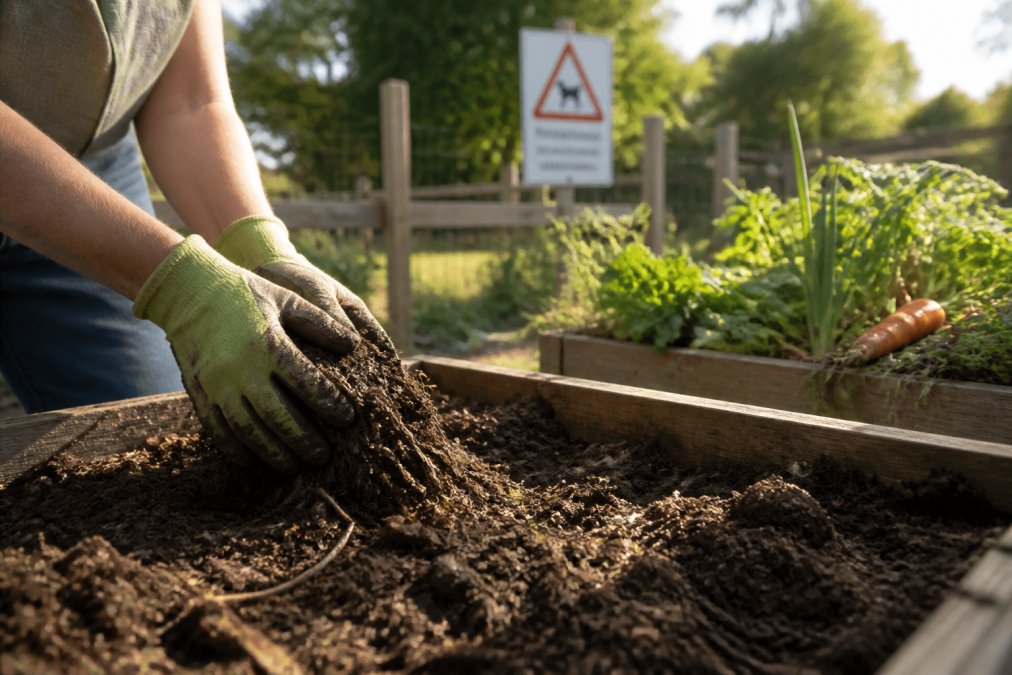
When contaminated compost is used on vegetable patches or fruit crops, pathogens can be ingested directly or contaminate soil for years. Roundworm eggs are particularly problematic, they're extremely resilient and can survive in soil for extended periods, creating ongoing infection risk.
Children are especially vulnerable. A child playing in soil contaminated with roundworm eggs or other parasites can ingest them accidentally, leading to serious health complications. This is a documented public health concern that environmental agencies actively work to prevent.
Improper composting also creates environmental problems. If dog waste doesn't reach high enough temperatures, harmful bacteria can multiply rather than die. This contaminated material can leach pathogens into groundwater or persist in surface soil indefinitely.
EN 13432 Certification: What It Means for Dog Waste Bags
EN 13432 is a European standard that defines what "compostable" actually means. For a bag to earn EN 13432 certification, it must:
- Biodegrade completely within 180 days in industrial composting conditions (55-60°C)
- Break down into CO₂, water, and biomass, nothing else
- Leave no microplastics or toxic residues
- Not inhibit the composting process or harm finished compost
This standard is crucial because "compostable" is otherwise unregulated. Without EN 13432, a manufacturer can label a bag "compostable" even if it takes years to break down or leaves microplastics behind.
However, EN 13432 certification only guarantees breakdown in industrial composting facilities. It does not mean the bag will compost in your garden heap, in a landfill, or in a standard council composting facility. The bag requires the specific high-heat, controlled environment of a facility designed for certified compostable materials.
Even if you purchase EN 13432-certified compostable dog waste bags, you need access to an industrial composting facility that actually accepts pet waste. Many don't. The bags often end up in landfills where they don't decompose.
For this reason, many environmentally conscious dog owners find that a durable biodegradable bag, like Doggo Shop's Dog Poop Bag - Degradable Garbage Bag with cute paw designs, paired with a pet waste digester or proper council disposal offers a more practical environmental solution.

Composting dog waste safely requires understanding the specific conditions needed to neutralise pathogens and parasites. At Doggo Shop, we recognise that most UK dog owners want to dispose of waste responsibly. Whether you're using a pet waste digester at home or choosing durable biodegradable bags for council waste collection, the key is using a method that actually works in your situation. Our Hanging Waist Portable Dog Poop Bag Holder and waste bag range make responsible disposal convenient, so you can focus on what matters: keeping your dog happy and your community safe. Every purchase supports rescue dogs in need worldwide, making responsible pet waste disposal part of something bigger.

Frequently Asked Questions
Can you put dog poop bags in compost?
Standard garden compost heaps cannot safely process dog waste bags because they don't reach the temperatures needed to kill pathogens like E. coli and salmonella. Only bags certified to EN 13432 can break down in industrial composting facilities. Home compost systems cannot achieve the sustained 58°C heat required. For home disposal, use a dedicated pet waste digester or incineration instead. Never add uncertified bags or raw dog waste to your garden compost heap.
What is the difference between biodegradable and compostable dog bags?
Biodegradable bags break down eventually in any environment, but may leave microplastics behind and take years to decompose. Compostable bags are certified to EN 13432 standards and break down completely into organic matter within 180 days in industrial composting facilities, leaving no harmful residue. Compostable bags are the better environmental choice because they're designed to break down fully without toxins. However, neither type should go into your home garden compost, compostable bags require industrial heat treatment, and biodegradable bags still leave traces.
Is it safe to use dog waste compost on fruit and vegetable crops?
No. Even if dog waste reaches high temperatures, it should never be used on food crops because parasitic eggs and pathogens can survive and contaminate your harvest. The Food Standards Agency advises against applying any untreated pet waste to edible plants. Dog waste compost is only safe for ornamental plants, shrubs, and trees. If you want to compost dog waste at home, use the finished material only on non-food gardens and keep it away from areas where children play.
Can I put dog waste bags in my council green waste bin?
Most councils do not accept dog waste bags in green waste bins because standard collection methods don't heat-treat the material to safe temperatures. Some councils have specific policies prohibiting pet waste entirely due to contamination risks. Check your local council's waste management guidance before placing any dog waste bags in garden waste collection. If your council does accept them, bags must be certified compostable (EN 13432). For most households, a home pet waste digester or incineration is the safer, approved option.
This article was written using GrandRanker


Leave a comment