


Calm an Overstimulated Biting Puppy: Step-by-Step Guide
Table of Contents
- Why Puppies Bite When Overstimulated
- Signs of Puppy Overstimulation: What to Look For
- How to Redirect Puppy Biting in the Moment
- The Enforced Nap Protocol for Puppy Energy Management
- De-escalation Techniques When Biting Escalates
- Tools and Products to Support Calm Behaviour
- Common Mistakes to Avoid When Training Bite Inhibition
- Frequently Asked Questions
Last Updated: October 2, 2026
Why Puppies Bite When Overstimulated
An overstimulated biting puppy usually signals an overloaded nervous system, not aggression. Understanding this is the first step to stopping it.
Puppies can't regulate their energy yet.
The core issue is impulse control. Puppies' brains are still developing the ability to pause before acting.
The solution isn't punishment. It's managing your puppy's environment and energy so they don't reach that overwhelmed state in the first place.
Signs of Puppy Overstimulation: What to Look For
Overstimulated puppies send clear signals before escalating. Reading these body language cues lets you catch the problem early.
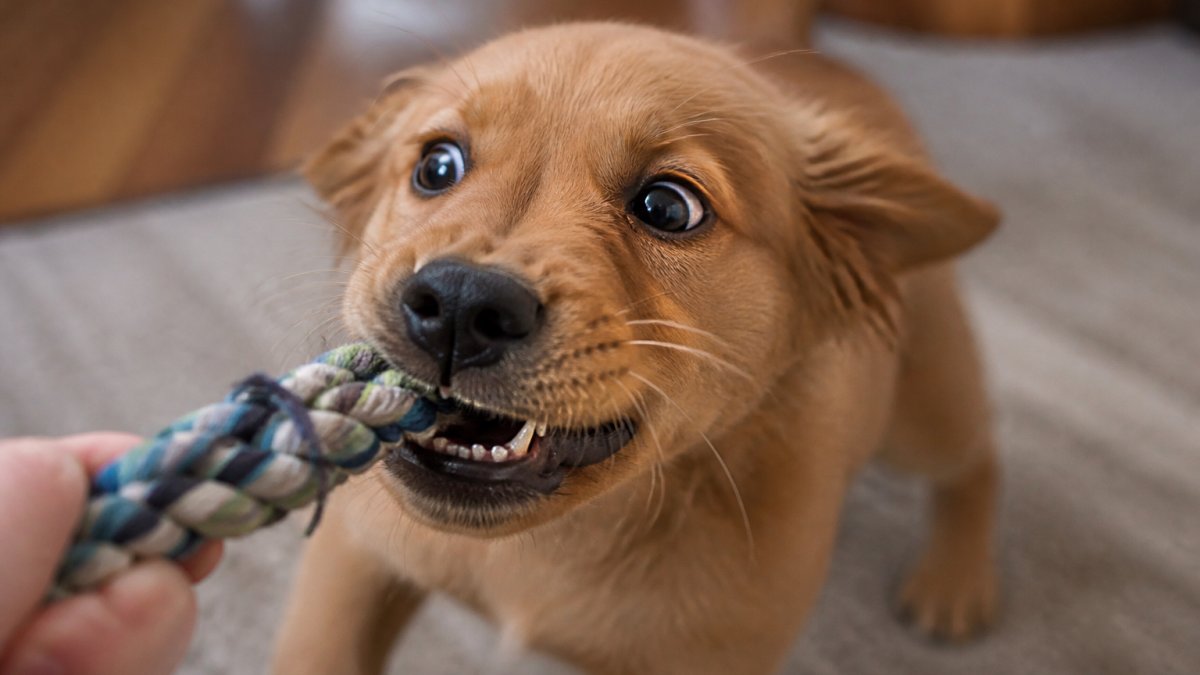
Physical Signs of Overstimulation
Watch for these physical signs:
- Dilated pupils - their eyes are wide and dark
- Pinned-back ears - ears pulled tight against their head
- Stiff or tense body - muscles look rigid, not loose
- Rapid panting - breathing gets faster and heavier
- Raised hackles - the fur along their spine stands up
- Intense staring - fixed focus without blinking
- Nipping that gets harder - play biting escalates in intensity
- Whining or high-pitched vocalisation - sounds shift from playful to stressed
- Loss of coordination - stumbling, bumping into objects, or uncontrolled jumping
Escalation typically follows this pattern: calm play → building excitement → increasing nips → harder bites → complete loss of focus. Once your puppy reaches full sensory overload, stopping becomes much harder.
Environmental Triggers: The Hidden Drivers of Overstimulation
Understanding environmental triggers lets you prevent overstimulation before it starts.
Most puppies can handle 10-15 minutes of active play before their nervous system overloads.
Noise and chaos trigger overstimulation: loud appliances, doorbells, traffic, multiple voices, sudden lighting changes.
Insufficient sleep is the most underestimated trigger. Puppies need 15-20 hours daily.
Hunger or thirst amplifies overstimulation. Ensure consistent water access and feeding schedules.
Creating a Trigger Log
Track biting patterns over 1-2 weeks: time of day, activity, people present, noise level, play duration, food/water intake, and sleep. Patterns will reveal your puppy's specific triggers, allowing you to restructure your day to prevent escalation.
How to Redirect Puppy Biting in the Moment
When your puppy starts biting, you have a narrow window to act. The goal isn't to punish.
Stop play immediately. Don't yell or chase, simply stand still or step away.
Immediately offer a chew toy. Keep toys nearby for instant redirection.
Stay calm with a quiet voice. When your puppy engages with the toy, praise gently and reward with a treat.
The Enforced Nap Protocol for Puppy Energy Management
Enforced naps prevent overstimulation before it starts. Puppies need 15-20 hours of sleep daily. A well-rested puppy has better impulse control; a sleep-deprived puppy is dysregulated and unpredictable.
Creating a structured puppy schedule gives your puppy predictability and prevents the energy spiral:
- Morning: play session (15-20 minutes) + potty break
- Mid-morning: enforced nap (1-2 hours in a crate or pen)
- Midday: play session + training + potty break
- Afternoon: enforced nap (1-2 hours)
- Late afternoon: play session + potty break
- Evening: calm time, training, or interactive toys
- Before bed: final potty break + enforced sleep (overnight)
The crate or pen should be a safe, comfortable space, not a punishment. Use it consistently so your puppy learns rest time is normal.
De-escalation Techniques When Biting Escalates
When your puppy reaches full escalation despite your efforts, use a calm de-escalation strategy that resets both their nervous system and your own emotional state.
Handling Growling and Nipping Without Punishment
Punishment creates fear, which can actually increase aggression over time. Instead, use these techniques:
Noise Reduction Dog Hoodie – Calming Ear Wrap for Dogs →
Walk away without eye contact, talking, or gestures. This removes all reward for the behaviour and is often the fastest de-escalation tool.
Place your puppy in a safe space for 2-3 minutes with no talking or eye contact. Use a neutral tone and body language. When they're calm, let them out.
If your puppy won't stop biting, gently hold them still by supporting their chest and hindquarters for 10-20 seconds until their body relaxes. Then place them in a time-out. Use this only if your puppy is small enough to handle safely.
Post-Bite Decompression and Recovery Protocol
After escalation, your puppy is in a heightened neurological state with elevated heart rate and spiked stress hormones. Resuming play immediately restarts the cycle.
The immediate 5-minute window is critical. After a biting episode:
- Remove your puppy from the stimulating environment. Move them to a quiet room or pen away from other people, pets, or noise.
- Offer water. Arousal and stress increase thirst. A drink of cool water helps calm their nervous system.
- Sit quietly nearby without engaging. Don't talk, don't make eye contact, don't pet them. Your presence is calming, but interaction is stimulating. Sit on the floor nearby and read or look at your phone. This signals safety without adding excitement.
- Observe their body language. Watch for the signs that your puppy is genuinely decompressing.
Measurable Signs Your Puppy Has Recovered
Don't guess when your puppy is ready to resume interaction. Look for these specific, observable signs:
- Slower, deeper breathing - their chest rises and falls at a normal rate, not rapid panting
- Relaxed body posture - muscles are loose, not tense; they may lie down or sit calmly
- Soft eye contact - they look at you with a normal gaze, not intense staring
- Yawning or stretching - these are genuine signs of nervous system reset
- Return to normal play signals - they may bring you a toy or gently nudge your hand (not nip)
- Ability to take treats gently - if you offer a treat, they take it without snapping or grabbing
- Seeking comfort - they may lean against you or rest their head on your lap
These signs typically appear 5-15 minutes after an escalation episode, depending on how intense the biting was and your puppy's individual temperament.
The Owner's Decompression: Your Emotional Reset
This is rarely discussed, but it's essential. After your puppy has bitten you hard, you're likely frustrated, possibly in pain, and emotionally activated. If you immediately resume interaction while you're upset, your puppy senses your frustration and becomes more aroused.
Take your own 2-3 minute break. After you've placed your puppy in a time-out or quiet space:
- Step away from your puppy. Go to another room if possible.
- Take five slow, deep breaths. Breathe in for a count of 4, hold for 4, exhale for 4. This lowers your own cortisol and adrenaline.
- Remind yourself this is normal puppy development. Your puppy isn't being malicious. They're learning impulse control.
- Return to your puppy with a calm, neutral demeanor. If you're still frustrated, wait longer.
Your emotional state directly affects your puppy's behaviour. A calm owner produces a calm puppy. An upset owner produces an aroused puppy.
Resuming Interaction After Recovery
Once both you and your puppy show the signs of recovery listed above, you can resume interaction, but not play. Instead:
- Offer calm, structured activity. A training session with treats, a slow-paced walk, or quiet toy play (not fetch or wrestling).
- Keep the session short. 5-10 minutes maximum. Your puppy's impulse control is still rebuilding.
- Watch for early escalation signs. If you see dilated pupils, stiff body posture, or nipping that's getting harder, stop immediately and repeat the decompression protocol.
- End on a calm note. Don't play until your puppy is exhausted. Stop while they're still relaxed and engaged.
When to Seek Professional Help
If your puppy is biting so hard that they're breaking skin, or if escalation episodes are happening multiple times daily despite consistent de-escalation, consult a certified professional dog trainer or veterinary behaviourist. Some puppies have lower impulse control due to genetics, early socialisation gaps, or underlying anxiety. A professional can assess whether your puppy needs additional support beyond standard redirection and rest protocols.
Tools and Products to Support Calm Behaviour
The right tools make managing overstimulation easier. These aren't magic fixes, but they support the training you're doing.
Interactive toys for mental stimulation tire your puppy's brain, which is often more effective than physical exercise alone.
The Interactive Robot Treat Toy works differently. Your puppy must nudge and push it to release treats.
Calming accessories for sensory overload help when your puppy is genuinely stressed.
Common Mistakes to Avoid When Training Bite Inhibition
Most owners make predictable mistakes that accidentally reinforce overstimulation and biting.
Don't chase (it's play), yell (it energises them), play rough (it blurs boundaries), or punish after the fact (they won't connect it to the behaviour). Don't skip enforced naps, an overtired puppy is impossible to train. Bite inhibition takes weeks; consistency matters more than perfection.
Managing an overstimulated biting puppy requires patience and consistency, but the effort pays off. The tools and techniques in this guide work best when combined with a structured routine that prioritises rest and calm engagement. At Doggo Shop, we've designed our interactive toys and calming accessories to support exactly this kind of training.
Frequently Asked Questions
What are the main signs that my puppy is overstimulated?
An overstimulated puppy often shows rapid escalation in biting intensity, growling, nipping at clothing, and frantic jumping. Body language cues include pinned-back ears, dilated pupils, a tucked or raised tail, and stiff posture. Many owners notice their puppy becomes almost 'manic', unable to settle or respond to commands. If your puppy displays these signs, it's time to pause play and enforce a calm period or enforced nap to reset their nervous system.
How do I redirect puppy biting without using punishment?
Stop play immediately and move away from your puppy to break the excitement cycle. Offer a designated chew toy or treat-dispensing toy instead. Use a calm, quiet voice and reward your puppy when they redirect their biting to the toy. Avoid yelping or dramatic reactions, as these can excite your puppy further. Consistency is key, every time your puppy bites, redirect to an appropriate toy and praise the correct behaviour. This teaches bite inhibition through positive reinforcement rather than fear.
What is the enforced nap protocol and why does it work?
The enforced nap protocol involves scheduling mandatory rest periods, typically 1-2 hours, throughout your puppy's day, especially after play or training. Young puppies lack the ability to self-regulate their energy, so overstimulation builds quickly. Enforced naps reset their nervous system, prevent emotional dysregulation, and reduce the likelihood of frantic biting. A quiet crate, pen, or bedroom works well. This structured approach mimics how mother dogs naturally manage litter energy and significantly reduces problem behaviours.
When should I ignore biting behaviour instead of redirecting?
Ignore mild, playful nipping during appropriate play sessions, your puppy is learning normal interaction. However, once biting becomes intense, frequent, or accompanied by growling or clothing ragging, intervention is necessary. Never ignore escalating biting, as it reinforces the behaviour. The key is timing: redirect early, before overstimulation takes hold. If your puppy has already crossed into frantic biting, ignoring it won't help; instead, stop play, create distance, and enforce a calm period to interrupt the cycle.


Leave a comment