


Best Smart Feeders for Busy Owners: 2026 Guide
Table of Contents
- Why Smart Feeders Matter for Busy Pet Parents
- How to Choose an Automatic Pet Feeder: Key Selection Criteria
- Quick Comparison Table: Smart Feeders at a Glance
-
Best Smart Feeders for Busy Owners: Detailed Reviews
- PETLIBRO Granary: Premium monitoring with built-in camera
- SureFeed Microchip Connect: Precision control for multi-pet homes
- PetSafe Smart Feed: Flexible scheduling with slow-feed mode
- PETLIBRO Air: Compact and portable for small spaces
- Cat Mate C500: Budget-friendly timer feeder for wet food
- Oneisall Automatic Feeder: Entry-level smart feeding
- MOLLY & CODY 14L: Large-capacity for big dogs and multi-pet households
- HoneyGuardian Dual Side: Equal feeding for multiple cats
- Catit PIXI Smart: Sleek design with optional camera upgrade
- Best Automatic Dog Feeder for Portion Control: What Works Best
- Automatic Cat Feeder with Camera: Remote Monitoring Features Explained
- Common Smart Feeder Problems and Troubleshooting
- Dietary Considerations: Choosing the Right Feeder for Your Pet
Best Smart Feeders for Busy Owners: 2026 Guide
Last Updated: August 4, 2026
Why Smart Feeders Matter for Busy Pet Parents
Smart feeders solve a genuine problem for busy professionals: maintaining consistent feeding routines despite unpredictable schedules. Pets thrive on routine, but working full-time often makes fixed mealtimes impossible. A smart feeder bridges that gap by automating portion control and scheduling, ensuring your dog or cat eats on time regardless of where you are. Beyond convenience, automatic feeders help prevent overeating, reduce food waste, and, when equipped with cameras, let you monitor your pet's health remotely.
How to Choose an Automatic Pet Feeder: Key Selection Criteria
Choosing the right automatic pet feeder requires matching the feeder's capabilities to your specific situation: your pet's size, your home setup, and how much remote control you actually need. Start by assessing your primary pain point. Are you away for long stretches and need a large-capacity hopper? Do you have multiple pets competing for food? Your answer determines which features matter most.
Wi-Fi connectivity and app control
Wi-Fi reliability is where many smart feeders disappoint users. Quality app control should let you adjust feeding times and portions remotely, receive low-food notifications, and maintain a feeding history log. Some feeders require a separate hub device to connect to your Wi-Fi, which adds cost but sometimes improves stability.
Hopper capacity and refill frequency
Hopper size determines refill frequency. For a single cat or small dog, a 2-litre capacity requires refilling every 5-7 days. For larger dogs or multi-pet households, a 10-14 litre hopper extends intervals to 2-3 weeks. Stainless steel hoppers resist dents better than plastic and are easier to clean. Many feeders include desiccant bags or sealed designs to keep kibble fresh longer.
Portion control and weight management features
Portion control is where smart feeders genuinely improve pet health. The ability to dispense precise amounts, often down to 1/8 cup increments, helps prevent overfeeding, which affects roughly 56% of pets. Some feeders include built-in scales that track eating habits over time and alert you to appetite changes signalling illness. Others offer slow-feed modes that dispense meals gradually, preventing bloating in dogs prone to gulping.
Battery backup and power reliability
Power outages happen. Battery backup ensures your pet still eats on schedule even if the power goes out. Most quality smart feeders include 4-8 hours of battery backup, though real-world tests often show backup lasts 30-40% less than advertised.
Quick Comparison Table: Smart Feeders at a Glance
| Feeder Model | Starting Price | Hopper Size | Key Feature | Best For |
|---|---|---|---|---|
| PETLIBRO Granary | £150 | 4L | Built-in HD camera + night vision | Remote monitoring enthusiasts |
| SureFeed Microchip Connect | £130-£195 | 1.5L | Microchip activation for multi-pet homes | Households with food-stealing pets |
| PetSafe Smart Feed | £169.99 | 5L | Slow-feed mode + Alexa integration | Dogs that eat too quickly |
| PETLIBRO Air | £59-£79 | 2L | Compact + portable design | Small spaces and travellers |
| Cat Mate C500 | £39-£54 | 1.65L (5 compartments) | Five separate meals + ice packs | Wet food and cats prone to vomiting |
| Oneisall Automatic Feeder | £35-£48 | 4L | Budget-friendly + quiet motor | First-time smart feeder users |
| MOLLY & CODY 14L | £100-£150 | 14L | Large capacity + anti-jam system | Big dogs and multi-pet households |
| HoneyGuardian Dual Side | £59.99 | 3.5L-5L | Dual-side equal feeding for two cats | Multi-cat households with food competition |
| Catit PIXI Smart | £89 | 3L | Sleek design + optional camera | Style-conscious cat owners |
Best Smart Feeders for Busy Owners: Detailed Reviews
PETLIBRO Granary: Premium monitoring with built-in camera
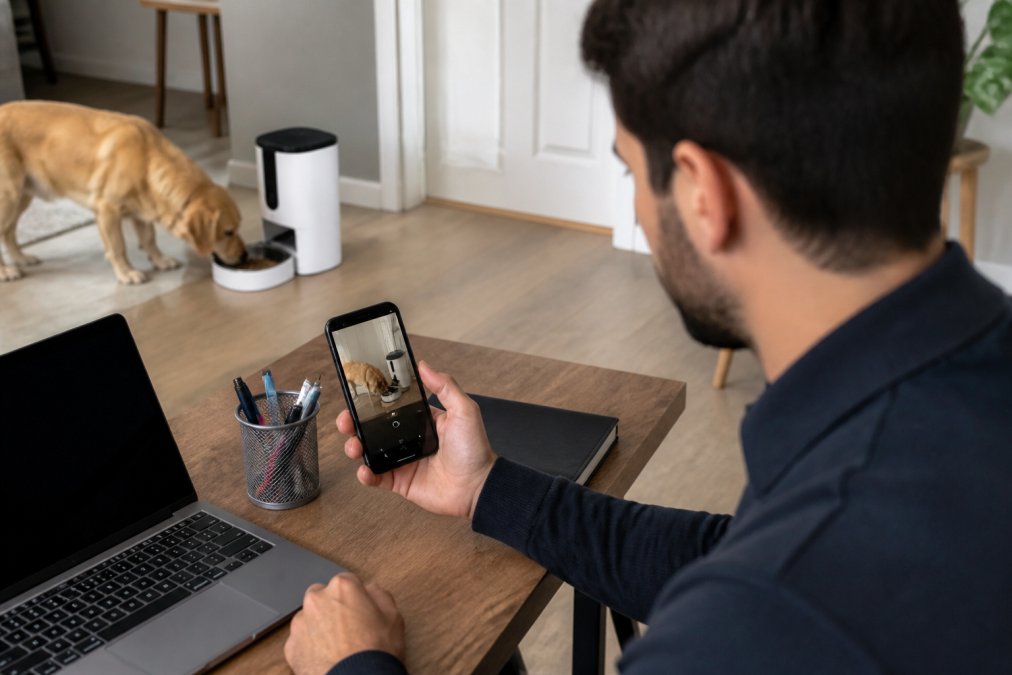
The PETLIBRO Granary at £150 stands out as the most feature-rich option for owners wanting comprehensive visibility into their pet's feeding behaviour. The built-in HD camera with night vision lets you watch your pet eat in real time and spot eating difficulties or appetite changes. Two-way audio lets you talk to your pet, providing comfort during stressful situations. The app supports up to 12 meals daily with adjustable portions. The sealed food tank and desiccant compartment keep kibble fresh for extended periods.
Pros: Exceptional camera quality with night vision, sealed tank design, reliable battery backup, comprehensive app with feeding history tracking
Cons: Cloud storage for video may require subscription, occasional app freezing on older phones, accuracy issues with very small kibble
Best for: Pet owners prioritising remote monitoring and detailed eating habit tracking.
SureFeed Microchip Connect: Precision control for multi-pet homes
The SureFeed Microchip Connect at £130-£195 uses microchip or RFID collar tag recognition to allow only the intended pet to access food. This solves food stealing in multi-pet households where one pet needs a prescription diet while others eat regular food. Integrated scales track portion sizes and eating patterns. The Sure Petcare app shows exactly when each pet ate and how much, invaluable for veterinary consultations.
Pros: Ensures each pet eats only their designated food, integrated scales provide precise tracking, prevents food stealing completely
Cons: Requires separate Hub for app connectivity (£65 additional), higher initial cost, setup requires programming each pet's microchip ID
Best for: Multi-pet households where pets have different dietary needs or where food competition is significant.
PetSafe Smart Feed: Flexible scheduling with slow-feed mode
The PetSafe Smart Feed at £169.99 excels for owners whose main concern is preventing dogs from eating too quickly. The slow-feed mode dispenses meals gradually over 15 minutes, significantly reducing bloating and indigestion. The app supports up to 12 meals daily. Alexa integration means voice-activated feeding. All major components are dishwasher-safe.
Pros: Slow-feed mode genuinely helps fast eaters, Alexa voice control, comprehensive app scheduling, dishwasher-safe components
Cons: Higher price point, occasional app troubleshooting needed, slow-feed mode reduces portion flexibility
Best for: Dog owners dealing with fast-eating behaviours or wanting voice-activated convenience.
PETLIBRO Air: Compact and portable for small spaces
The PETLIBRO Air at £59-£79 is ideal for flat dwellers, frequent travellers, or anyone with limited counter space. The 2-litre hopper provides several days' food for small to medium dogs. App scheduling supports up to 6 daily meals. Portability makes it practical for extended trips.
Pros: Genuinely compact and portable, reliable app control, good food freshness features, affordable entry point
Cons: Small capacity requires refilling every 3-4 days for larger pets, no built-in camera, no slow-feed functionality
Best for: Apartment dwellers, frequent travellers, and owners of small to medium dogs needing portability.
Cat Mate C500: Budget-friendly timer feeder for wet food
The Cat Mate C500 at £39-£54 is the best option for wet food feeding. Five separate compartments rotate on a digital timer, revealing one meal at a time. Included ice packs keep wet food fresh for hours, perfect for cats prone to vomiting after eating too quickly. Battery operation requires no power cord.
Pros: Only practical option for wet food, keeps food fresh with ice packs, genuinely affordable, easy to program
Cons: No app control or remote access, limited to five meals per cycle, no portion adjustment
Best for: Cat owners feeding wet food or anyone wanting simple, reliable automation without Wi-Fi.
Oneisall Automatic Feeder: Entry-level smart feeding
The Oneisall at £35-£48 is the most budget-friendly smart feeder, ideal for first-time users testing whether automatic feeding improves their routine. The 4-litre hopper provides several days of food for small to medium pets. The quiet motor operation matters for anxious pets.
Pros: Most affordable option, quiet motor operation, simple intuitive app, good entry point for testing
Cons: No advanced features like cameras or slow-feed, smaller hopper than competitors, not ideal for multi-pet households
Best for: Budget-conscious buyers, first-time users, and owners with single pets and predictable routines.
MOLLY & CODY 14L: Large-capacity for big dogs and multi-pet households
The MOLLY & CODY 14L at £100-£150 prioritises capacity. The massive hopper holds enough food for a large dog for 2-3 weeks, drastically reducing refill frequency. The anti-jam dispensing system prevents kibble jamming, a common problem with cheaper feeders. Battery backup ensures feeding continues during power outages.
Pros: Exceptionally large capacity, anti-jam system prevents failures, reliable battery backup, strong build quality
Cons: No app control or remote monitoring, very large physical footprint, overkill for small pets
Best for: Owners of large dogs, multi-dog households, or anyone away for extended periods.
HoneyGuardian Dual Side: Equal feeding for multiple cats
The HoneyGuardian Dual Side at £59.99 prevents food competition between two cats. The dual-side design dispenses equal portions simultaneously, ensuring both cats get their fair share. The multi-seal freshness system uses rubber seal and desiccant bag to keep kibble fresh. Dual power supply (USB adapter plus battery backup) ensures feeding continues during outages.
Pros: Effectively manages feeding for two cats, multiple sealing mechanisms, voice recording feature, dual power options
Cons: Requires 2.4GHz Wi-Fi for app, batteries for backup not included, limited to two-pet feeding
Best for: Multi-cat households where food competition is an issue.
Catit PIXI Smart: Sleek design with optional camera upgrade
The Catit PIXI Smart at £89 prioritises aesthetics alongside functionality. The sleek, modern design fits contemporary kitchens without looking industrial. The large food reservoir minimises refill frequency while maintaining a compact footprint. App-controlled scheduling and portion adjustment provide standard smart feeder functionality.
Pros: Modern attractive design, easy setup via app, helps maintain regular schedules, optional camera upgrade available
Cons: Primarily designed for dry food only, PIXI Vision often unavailable, no built-in slow-feed mode
Best for: Cat owners prioritising style and simplicity.
Best Automatic Dog Feeder for Portion Control: What Works Best
Portion control is where automatic feeders genuinely improve dog health. The best feeders offer adjustable increments down to 1/8 cup rather than preset amounts, allowing exact portions prescribed by your vet. Some feeders include built-in scales tracking eating patterns over time, revealing appetite changes that signal illness. The SureFeed Microchip Connect and PETLIBRO Granary excel here. The PetSafe Smart Feed's slow-feed mode is particularly effective for preventing the "scarf and barf" cycle.
Automatic Cat Feeder with Camera: Remote Monitoring Features Explained
Cat owners using feeders with built-in cameras report significant peace of mind. The ability to watch your cat eat remotely addresses real anxiety about whether they actually ate and whether something is wrong with their appetite. The PETLIBRO Granary's HD camera with night vision is the gold standard. Video quality is clear enough to spot eating difficulties, and night vision monitors late-night or early-morning eating patterns. Two-way audio lets you communicate with your cat.
The real value emerges when your cat's behaviour changes. Appetite loss, difficulty chewing, or eating more than usual can indicate health issues. Video documentation lets you show your vet exactly what you observed, accelerating diagnosis.
Common Smart Feeder Problems and Troubleshooting
Wi-Fi disconnection and app reliability issues
Wi-Fi disconnection is the most frequent complaint. First, verify your Wi-Fi signal strength near the feeder location. Most smart feeders need at least -70 dBm signal strength. If weaker, relocate the feeder, move your router, or add a Wi-Fi extender. Second, check for interference from microwaves, cordless phones, and baby monitors operating on the same 2.4GHz frequency. Third, force-close the app and restart your phone. Unplug the feeder for 30 seconds and plug it back in to reset the connection.
Jamming and dispensing failures
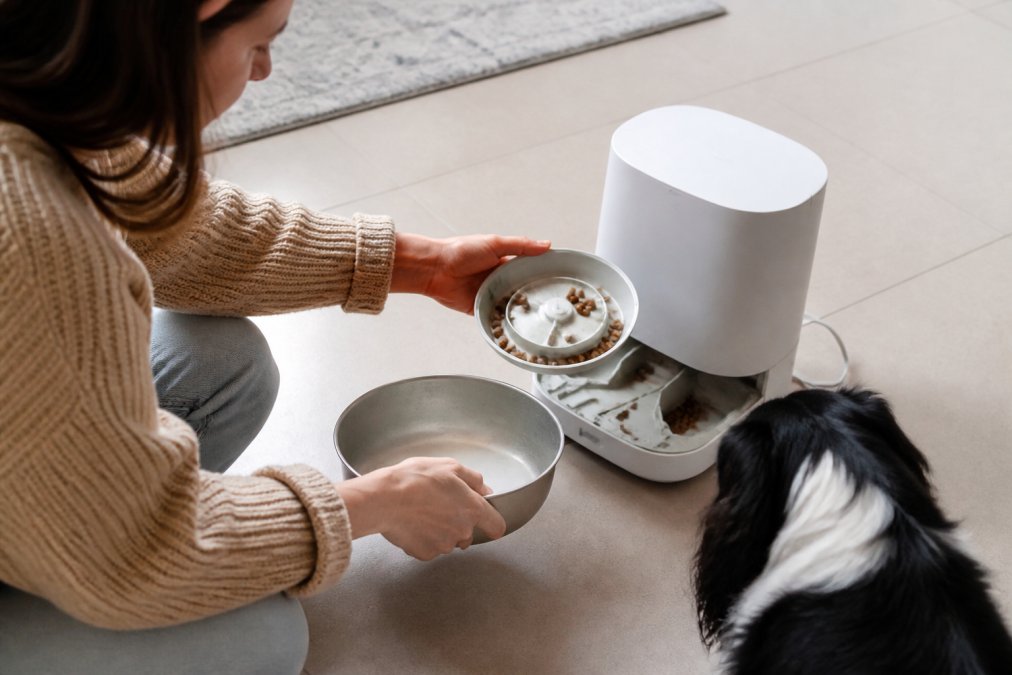
Kibble jamming usually results from kibble size incompatibility, moisture-damaged food, or design defects. First, verify your feeder is compatible with your kibble size. Second, moisture-damaged kibble is a common culprit. Store kibble in airtight containers and ensure your feeder's tank has proper ventilation or desiccant bags. The MOLLY & CODY 14L specifically advertises anti-jam technology.
Food freshness and moisture problems
Kibble degrades when exposed to moisture or air. The best feeders use sealed tanks, rubber gaskets, and desiccant bags. The PETLIBRO Granary and SureFeed Microchip Connect excel here. If your feeder lacks these features, supplement with external measures: store kibble in airtight containers between refills or add a desiccant packet inside the hopper.
Dietary Considerations: Choosing the Right Feeder for Your Pet
Kibble size compatibility and anti-jam technology
Different kibble sizes require different feeder designs. Small kibble can jam in feeders designed for larger pieces. Before purchasing, verify your specific kibble size matches the feeder's compatibility range. Anti-jam technology matters when using kibble at size extremes.
Wet food versus dry food feeders
Most smart feeders are designed exclusively for dry kibble. Wet food spoils quickly and can jam mechanisms. The Cat Mate C500 is the only practical option for wet food in this guide. If your pet eats both wet and dry food, use an automatic dry feeder for kibble and hand-feed or use a timed compartment feeder for wet meals.
Medical diet and prescription food requirements
Prescription diets require precise portion control and sometimes specific feeding schedules. Prioritise feeders with adjustable portions down to 1/8 cup increments, accurate dispensing (within 2-3% of target), multiple daily meals, and detailed feeding logs. The SureFeed Microchip Connect with integrated scales is excellent for prescription diets. The PETLIBRO Granary also works well.
Practical Implementation: Getting Started with Smart Feeders
Transitioning to automatic feeding requires planning. Most pets adjust within 3-5 days. Place the feeder in its permanent location 2-3 days before activating it. Let your pet investigate and become comfortable with the new appliance. Set the initial feeding schedule to match your pet's current routine exactly. Monitor the first week closely for eating difficulties, appetite changes, or jamming issues. For anxious pets, hand-feed the first few meals next to the feeder, then gradually reduce your involvement.
Choosing Between Premium and Budget Options
Budget feeders (£35-£60) work reliably for straightforward use cases: single pets with normal appetites and predictable routines. Mid-range feeders (£80-£130) add valuable features: better app reliability, larger capacity, slow-feed modes, or microchip activation. Most busy owners find the mid-range offers the best value. Premium feeders (£150+) justify their cost through cameras, comprehensive analytics, and exceptional build quality. The real question is "which features do I actually need?"
Smart feeders solve a genuine problem: maintaining consistent feeding routines despite unpredictable schedules. They're practical tools that improve pet health by ensuring reliable portion control and consistent meal timing. The best smart feeders combine reliability, ease of use, and features matching your specific needs.
Busy professionals often worry that automatic feeders represent a step back from personal care. The reality is the opposite: smart feeders enable better care by removing scheduling constraints. You can focus on quality time with your pet rather than rigid feeding windows. At Doggo Shop, we believe pet care should work with your life, not against it. Explore our full range of feeding solutions, including the Slow Feeder Dog Bowl at £14.99 and interactive feeding toys that pair beautifully with automatic feeders to create a complete feeding system. Whether you choose a high-tech smart feeder or combine simpler tools strategically, the goal is the same: keeping your pup happy, healthy, and properly nourished while you manage your busy schedule.


Frequently Asked Questions
Can I leave my dog alone for 2 days with a smart feeder?
Yes, if your feeder has sufficient hopper capacity and battery backup. The MOLLY & CODY 14L holds enough for multiple days for large dogs, whilst smaller feeders like the PETLIBRO Air (2-litre) suit shorter absences. Battery backup is critical: if Wi-Fi drops, your feeder should still dispense scheduled meals. Always test your setup before leaving, and consider a pet sitter for longer trips. Smart feeders are best for regular busy schedules, not extended holidays.
Are smart feeders worth the investment for busy professionals?
Smart feeders save time and provide peace of mind if you work long hours. Key benefits include remote scheduling, portion control to prevent overfeeding, and app notifications when food runs low. Models like the PetSafe Smart Feed (£169.99) and PETLIBRO Granary (£150) offer reliable app control and monitoring. However, budget options like the Oneisall (£35.99-£48.99) work well for predictable routines. The investment pays off if you struggle with consistent feeding times or need to monitor portion intake.
What are the common downsides of automatic pet feeders?
The main issues are Wi-Fi disconnection (leaving your pet without meals if your router fails), jamming with certain kibble sizes, and food moisture buildup if the hopper seal fails. Some feeders lack backup power, so a power cut stops feeding entirely. Camera-equipped models require cloud storage subscriptions. Cleaning can be tedious with complex designs. Always check that your feeder has battery backup, sealed food storage, and anti-jam technology to avoid these problems.
How do smart feeders connect to UK home Wi-Fi networks?
Most smart feeders require a 2.4GHz Wi-Fi network (not 5GHz). You download the brand's app, connect the feeder to your router during setup, and the app communicates with the feeder remotely. Some models like the SureFeed Microchip Connect require a separate Hub device to bridge the connection. Check your router settings: if you only broadcast 5GHz, split it to include 2.4GHz. Reliability varies by brand; PETLIBRO and PetSafe generally have stable connections in UK homes.
Which automatic feeder is best for portion control and weight management?
The SureFeed Microchip Connect (£130.19-£195.19) has built-in scales for precise portion tracking and app logging. The PetSafe Smart Feed (£169.99) allows portion adjustment per meal and tracks feeding history. For budget options, the Oneisall (£35.99-£48.99) offers basic portion control via app. If your dog needs strict dietary management, SureFeed's weight tracking is most reliable. Pair any feeder with regular vet check-ins to monitor your dog's progress toward a healthy weight.
This article was written using GrandRanker


Leave a comment