


Best Slow Feeder Bowls for Dogs: 2026 Guide
Table of Contents
- Why Slow Feeder Bowls Matter for Your Dog's Health
- Benefits of Slow Feeder Dog Bowls
- Ceramic vs Plastic Slow Feeder Bowls: Material Comparison
- How to Stop a Dog from Eating Too Fast
- Top Slow Feeder Bowls: Our Picks
- Choosing the Right Slow Feeder for Your Dog
- Conclusion
Last Updated: August 15, 2026
Why Slow Feeder Bowls Matter for Your Dog's Health
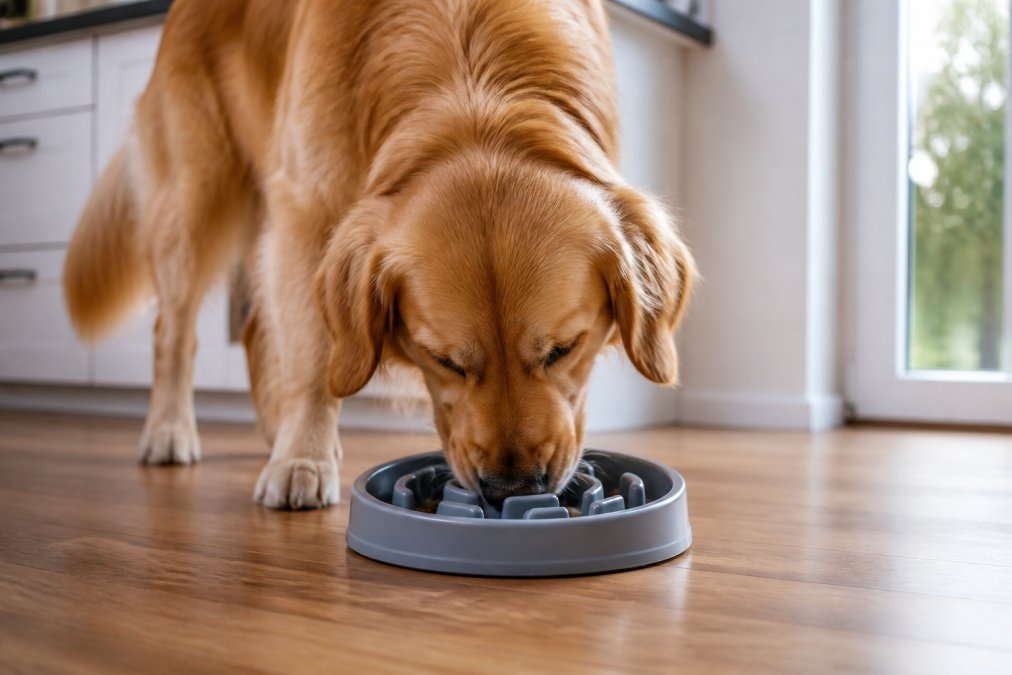
Dogs evolved to eat quickly in competitive pack environments, but modern domestic life doesn't require that survival instinct. When a dog eats too fast, food bypasses proper digestion, increasing the risk of gastric issues and behavioural problems. A slow feeder bowl interrupts this natural rush, forcing your dog to eat at a pace that allows their body to process food properly.

The design is simple: raised ridges, maze patterns, or compartments create physical barriers that slow food consumption. Your dog must work around these obstacles, turning a mindless gulp-fest into an engaged eating experience. Beyond safety, this engagement provides mental stimulation during feeding, something many busy professionals overlook when their dogs spend hours alone.
Benefits of Slow Feeder Dog Bowls
Preventing Bloat and Gastric Dilatation-Volvulus (GDV)
Bloat, medically known as gastric dilatation-volvulus, is one of the most dangerous conditions affecting dogs. It occurs when the stomach fills with gas and twists, cutting off blood supply. Large and deep-chested breeds face higher risk, but any dog can develop it. Slow feeder bowls reduce this risk significantly by preventing rapid food intake and excessive air swallowing during meals.

When dogs eat too quickly, they swallow larger pieces and more air. A slow feeder forces smaller bites and deliberate chewing, reducing both the volume of food entering the stomach at once and air consumed. The maze design means your dog must pause between bites, allowing their digestive system to register fullness signals before overeating occurs.
Reducing Choking and Vomiting
Fast eaters often vomit shortly after meals, regurgitating food that hasn't been properly chewed. Choking hazards are real too, especially for dogs who swallow kibble whole. A slow feeder bowl addresses both problems by forcing smaller bites and longer eating duration, ensuring food is broken down adequately before swallowing.
Supporting Better Digestion and Mental Enrichment
Digestion begins in the mouth. When dogs chew properly, they release saliva containing enzymes crucial for breaking down food. Fast eaters skip this entirely, placing the entire digestive burden on the stomach and intestines. Over time, this contributes to digestive upset and nutrient absorption issues.
Slow feeder bowls provide unexpected mental enrichment. Eating becomes a puzzle to solve rather than a race to finish. This engages your dog's problem-solving instincts and provides mental stimulation that prevents boredom-related behaviours like destructive chewing or excessive barking.
Ceramic vs Plastic Slow Feeder Bowls: Material Comparison
Plastic Slow Feeders: Durability and Safety
Plastic slow feeder bowls offer genuine advantages: they're lightweight, affordable, and virtually indestructible for most dogs. High-quality food-grade plastics are non-toxic and safe for daily use. The Slow Feeder Dog Bowl - Anti-Gulping, Anti-Choking Pet Dish from Doggo Shop exemplifies this category, crafted from eco-friendly PP material at £14.99.
The tradeoff: plastic can harbour bacteria in small cracks over time and may retain food odours. For budget-conscious owners or those with destructive chewers, plastic remains the practical choice.
Ceramic Slow Feeders: Aesthetics and Longevity
Ceramic bowls offer superior aesthetics and durability when treated carefully. They're heavier, providing stability during meals, and resist bacterial colonisation better than plastic. However, ceramic is breakable, and broken edges pose injury risks. For owners with calm, older dogs prioritising longevity, ceramic is worthwhile.
Stainless Steel Options for Maximum Durability
Stainless steel represents a premium choice. It's virtually indestructible, naturally antibacterial, and completely non-toxic. It doesn't absorb odours, stains, or bacteria, and is fully dishwasher safe. The tradeoff is higher cost and weight. For owners willing to invest more upfront, stainless steel delivers reliable use.
How to Stop a Dog from Eating Too Fast
Maze Design and Raised Ridge Patterns
The most effective slow feeders use maze layouts or raised ridge patterns. Maze designs create a path through the bowl that forces dogs to navigate around barriers. Raised ridges simply create obstacles that prevent large mouthfuls. Both work, but they suit different eating styles. The Slow Feeder Dog Lick Bowl - Anti-Choking Non-Slip at £19.99 uses a textured surface approach, perfect for spreading wet treats whilst slowing consumption.
Interactive Puzzle Feeders vs Standard Maze Bowls
Interactive puzzle feeders combine slow feeding with active problem-solving. Your dog manipulates compartments, slides, or rotating sections to access food. These engage higher-level thinking and provide significantly more enrichment than passive maze bowls. Standard maze bowls are simpler and require no learning curve. For anxious or high-energy dogs, puzzle feeders prevent boredom. For older dogs, standard maze bowls provide benefits without frustration.
The Smart Duck Feeder - Interactive Treat Dispenser Toy at £19.99 bridges this gap with its trickle-out design. The Pet Casino Puzzle Toy - Interactive Dog Treasure Feeder at £29.99 demands more active participation, hiding treats under compartments that dogs must discover through trial and error.

Behavioural Transition Strategies
Switching from a regular bowl to a slow feeder requires patience. Start by placing the slow feeder alongside the regular bowl for a few meals. Next, put a small amount of food in the slow feeder while maintaining the regular bowl. Gradually increase the proportion over 7-10 days. If your dog refuses to eat, try a different design or mix high-value treats into the slow feeder. Never force the transition or show frustration.
| Transition Phase | Duration | Action | Expected Outcome |
|---|---|---|---|
| Introduction | Days 1-2 | Place slow feeder near regular bowl; no food | Dog investigates without pressure |
| Partial use | Days 3-5 | 25% food in slow feeder, 75% in regular bowl | Dog begins eating from slow feeder |
| Increased ratio | Days 6-8 | 75% food in slow feeder, 25% in regular bowl | Dog prefers slow feeder |
| Full transition | Days 9-10 | 100% food in slow feeder only | Dog eats normally from slow feeder |
Top Slow Feeder Bowls: Our Picks
1. Slow Feeder Dog Bowl - Anti-Gulping, Anti-Choking Pet Dish
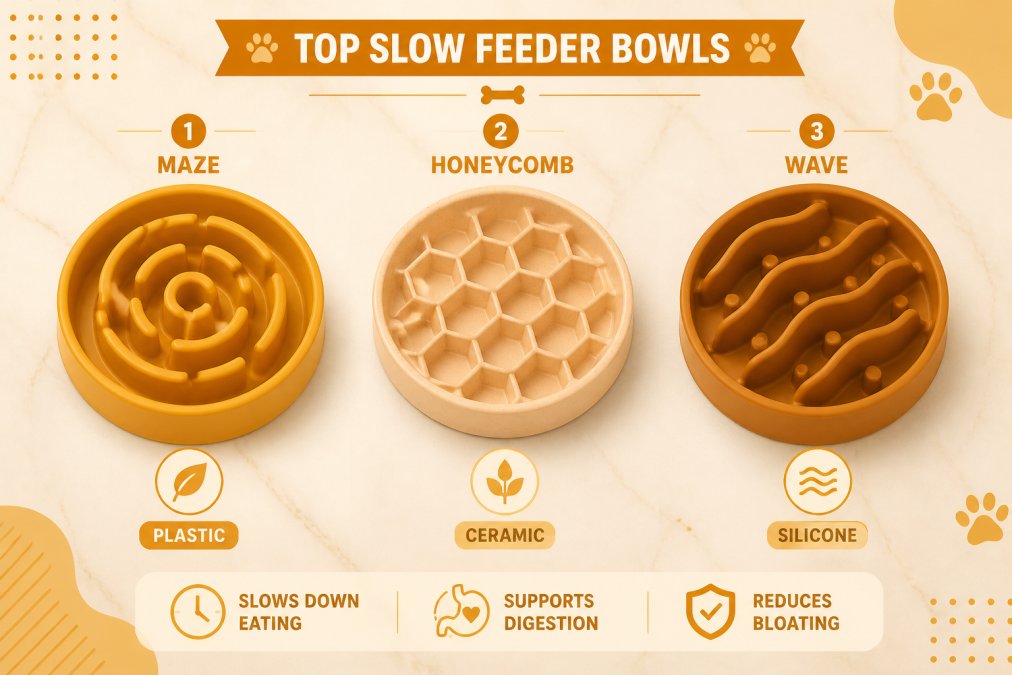
This is our top recommendation for most dog owners. The maze-like design slows eating, making it an effective passive slow feeder. At £14.99, it's affordable enough for households with multiple dogs.
The bowl is crafted from eco-friendly PP plastic with high-temperature resistance. It's available in three cheerful colours: green, pink, and orange. The non-toxic, bite-resistant material suits many chewers.
Best for: Budget-conscious owners, households with multiple dogs, dogs new to slow feeding, chewers who destroy ceramic bowls.
2. Slow Feeder Dog Lick Bowl - Anti-Choking Non-Slip
This textured bowl is designed specifically for wet foods, treats, and enrichment rather than kibble. At £19.99, the non-slip base keeps it steady whilst your dog licks, and the textured surface encourages slower consumption of spreadable treats like peanut butter, yogurt, or bone broth.
The bowl doubles as a calming enrichment toy, particularly useful for anxious dogs during stressful periods. Available in blue and black, it's aesthetically understated.
Best for: Owners seeking enrichment beyond standard meals, anxious dogs needing calming activities, dogs with sensitive digestion, those using treats for training or medical purposes.
3. Smart Duck Feeder - Interactive Treat Dispenser Toy
This playful puzzle feeder transforms mealtime into an engaging game. The trickle-out mechanism releases food gradually as your dog plays. At £19.99, it offers excellent value for the mental stimulation it provides.
Suitable for dogs weighing 3-50kg, it's one of the few slow feeders that genuinely fits all sizes. The eco-friendly plastic construction requires no batteries, and the anti-slip base prevents skittering across kitchen floors.
Best for: Dogs who need mental stimulation during meals, owners seeking battery-free interactive toys, households with multiple dogs of varying sizes, dogs prone to boredom-related behaviours.
4. Pet Casino Puzzle Toy - Interactive Dog Treasure Feeder
This is the puzzle feeder for serious problem-solvers. The compartmented design hides treats under sliding sections and hinged covers, forcing your dog to engage in genuine problem-solving. At £29.99, the enrichment value justifies the investment for the right dog.
Made from durable non-toxic plastic with a non-slip base, it's designed for both dogs and cats. The treasure hunt approach stimulates natural foraging instincts and provides hours of engagement.
Best for: High-energy or intelligent dogs needing serious mental challenges, owners with time to train their dogs on new toys, dogs prone to destructive behaviour from boredom, households seeking enrichment beyond standard feeding.
5. Interactive Robot Treat Toy - Slow Feeder for Cats & Dogs
This wobble-design feeder stands upright no matter how your dog nudges it, creating an interactive challenge without traditional compartments. At £19.99, the balance-tumbler mechanism engages problem-solving instincts. The ABS material is durable and pet-safe, requiring no batteries or charging.
Best for: Dogs who enjoy interactive play, owners seeking battery-free enrichment toys, households with multiple pets, dogs needing cognitive stimulation during extended alone time.
Choosing the Right Slow Feeder for Your Dog
Size and Breed Considerations
Slow feeder effectiveness depends on matching bowl size to your dog's mouth and eating style. A bowl too small forces awkward positioning; one too large defeats the purpose. Most slow feeders come in standard sizes suitable for small to large dogs, but some, like the Smart Duck Feeder, explicitly accommodate weight ranges.
Breed matters too. Flat-faced breeds like Bulldogs and Pugs have anatomical challenges with traditional maze designs. For brachycephalic dogs, lick bowls or shallow puzzle feeders work better than tall maze bowls. Large-breed dogs benefit from elevated slow feeders that reduce neck strain during meals, the Zero-Splash Elevated option at £49.99 addresses this with adjustable height.
Deep-chested breeds prone to bloat benefit most from slow feeders paired with elevated feeding and smaller, more frequent meals.
Food Type Compatibility: Wet, Dry, and Raw Diets
Not all slow feeders suit all food types. Dry kibble works with any maze or ridge design, but wet food can clog maze crevices. Lick bowls like the Slow Feeder Dog Lick Bowl at £19.99 work beautifully with wet food, pâté, or spreadable treats.
Raw food diets require consideration too. Large raw chunks won't fit through puzzle toy openings. For raw feeders, standard maze bowls or elevated feeders work best. Clean-up becomes critical, as raw food spoils faster than kibble.
Cleaning, Maintenance, and Dishwasher Safety
A slow feeder that's difficult to clean becomes a bacterial breeding ground within weeks. Plastic maze bowls require hand-washing with a brush to reach crevices. Ceramic and stainless steel options are generally dishwasher safe, though ceramic requires careful handling.
Establish a cleaning routine immediately. Don't let bowls sit with food residue. Bacteria grows rapidly in the warm, moist environment of food-filled crevices. For busy owners, dishwasher-safe options justify their higher cost through time savings and hygiene assurance.
Choosing the right slow feeder transforms mealtime from a mindless gulp-fest into a safer, healthier, and more engaging experience. Whether you prioritise budget with the Slow Feeder Dog Bowl at £14.99, enrichment with the Pet Casino Puzzle Toy at £29.99, or convenience with the Zero-Splash Elevated option at £49.99, Doggo Shop offers solutions that keep your pup happy whilst supporting rescue dogs in need with every purchase. Start with a slow feeder today, your dog's digestion and long-term health will thank you. SHOP NOW
Frequently Asked Questions
Can slow feeder bowls help prevent bloat in dogs?
Yes. Slow feeder bowls significantly reduce the risk of bloat, medically known as gastric dilatation-volvulus (GDV). By slowing eating speed by up to 10 times, these bowls allow your dog's digestive system to process food gradually, reducing the likelihood of gas accumulation and the dangerous stomach expansion that characterises bloat. This is particularly important for deep-chested breeds predisposed to the condition.
What material is best for a slow feeder dog bowl?
Food-grade plastic, ceramic, and stainless steel are all safe options. Eco-friendly plastic bowls like those made from PP material offer durability and bite resistance, making them ideal for power chewers. Ceramic provides aesthetic appeal but requires careful handling. Stainless steel, found in elevated feeders, offers maximum longevity and is easy to sanitise. Choose based on your dog's chewing habits and your maintenance preferences.
How do I choose the right size slow feeder for my dog?
Match the bowl size to your dog's weight and meal portions. Small breeds (under 10 kg) typically need bowls holding 200-400 ml, while large breeds (over 30 kg) require 600-1000 ml capacity. Consider your dog's eating style too, fast eaters benefit from maze designs with more ridges, whilst anxious eaters may prefer lick bowls. Always supervise your dog during initial use to ensure the bowl suits their feeding habits.
Do vets recommend slow feeder bowls?
Yes, veterinarians commonly recommend slow feeder bowls for dogs prone to bloating, vomiting, or indigestion. They support better digestion, reduce choking hazards, and provide mental enrichment during mealtime. Slow feeders are especially recommended for brachycephalic (flat-faced) breeds, fast eaters, and dogs with sensitive stomachs. Discuss your dog's specific needs with your vet to determine if a slow feeder is right for them.
Are slow feeder bowls suitable for wet food and raw diets?
Many slow feeder bowls work with wet food, particularly lick bowls designed for spreading treats like peanut butter or bone broth. Maze-patterned bowls can accommodate raw food but require thorough cleaning after each meal to prevent bacterial growth. For raw diets, stainless steel or food-grade plastic options are preferable due to their non-porous surfaces and dishwasher compatibility, ensuring proper hygiene.
This article was written using GrandRanker


Leave a comment