


Best Leash for Strong Pulling Dogs: 2026 Guide
Table of Contents
- Why Choosing the Right Leash Matters for Strong Pullers
- Anti-Pull Dog Harness UK: Front-Clip vs Back-Clip Design
- Heavy Duty Dog Leash UK: Materials and Durability Standards
- Dog Training Leash for Pulling UK: Length and Control Options
- Head Collar for Dogs UK: Alternative Control Methods
- Top Leash Recommendations for Strong Pulling Dogs
- Training Techniques to Complement Your Leash Equipment
- Leash Selection for Different Dog Sizes and Owner Physical Limitations
Last Updated: August 1, 2026
Finding the best leash for strong pulling dogs transforms daily walks from frustration into enjoyment. At Doggo Shop, we understand that not all leashes suit powerful canines determined to lead. Proper equipment protects your dog's neck, gives genuine control, and sets the foundation for better training outcomes.
Why Choosing the Right Leash Matters for Strong Pullers
Using the wrong equipment carries serious consequences. A standard leash on a strong pulling dog creates constant neck tension, leading to lasting health damage.
Neck strain and tracheal collapse risks are primary concerns. Repeated pulling pressure on the trachea can cause tracheal collapse, where cartilage rings weaken and the airway narrows. This condition often develops gradually, with owners noticing a persistent dry cough before recognising severity. Research from American Veterinary Medical Association guidance on canine respiratory health emphasises that prevention through proper equipment is far more effective than treating established damage. Once collapsed, the trachea cannot be fully repaired.
Owner safety and control matter equally. A strong dog pulling unexpectedly can cause shoulder injuries, wrist strain, or falls, particularly concerning for older owners or those managing multiple dogs. The right leash distributes pulling force across larger muscle groups rather than concentrating it in your hands and arms.
Anti-Pull Dog Harness UK: Front-Clip vs Back-Clip Design
The mechanism you choose determines how your dog's pulling force is redirected and whether you'll maintain genuine control.
How front-clip attachment redirects pulling is the key advantage. When your dog pulls forward, a front-clip harness turns their body sideways toward you rather than allowing straight lunging. The attachment point sits on the dog's chest, so forward pulling creates a gentle turning motion that brings the dog's shoulder back toward you. This works with your dog's instincts rather than against them. Many owners find that after 2-3 weeks of consistent use, dogs reduce pulling naturally as they learn it doesn't achieve their goal.
When back-clip harnesses work best is an important distinction. Back-clip attachment points allow more forward movement and suit dogs who've already learned loose-leash walking or calm dogs on routine walks. However, if your dog is a strong puller, back-clip essentially gives them mechanical advantage and encourages forward pulling rather than discouraging it.
Strong pullers need front-clip; well-trained dogs can use either, though front-clip remains safer if you have any doubt.
Heavy Duty Dog Leash UK: Materials and Durability Standards
Physical construction determines whether your leash survives your dog's pulling or fails at a critical moment.
Durable webbing, padded handles, and hardware strength form the foundation of reliable equipment. Quality leashes use reinforced nylon or polyester webbing rated for at least 200kg breaking strength, roughly 6-8 times the pulling force of a large dog. Padded handles protect your hands during unexpected lunges and distribute pressure across a wider area, reducing hand fatigue.
Hardware should be heavy-duty stainless steel or reinforced plastic rated for continuous stress. Cheap metal rusts within months in UK weather, and plastic clips snap under sudden pulling. Look for double-stitched seams and reinforced stress points where the handle meets the leash body.
The Doggo Shop [Heavy Duty Dog Leash with Double Bungee(https://doggoshop.co/products/heavy-duty-dog-leash-with-double-bungee) | doggoshop.co/products/heavy-duty-dog-leash-with-double-bungee] at £19.99 exemplifies this standard, featuring premium climbing-grade webbing with shock-absorbing bungee technology.

Shock-absorbing technology for impact reduction has become increasingly important. Double-bungee leashes contain elastic sections that absorb sudden pulling or lunging, reducing jarring impacts on both your arm and your dog's neck. This is particularly valuable during training transitions when your dog may still pull unpredictably. The bungee absorbs force gradually rather than creating an abrupt stop, making corrections gentler and more effective.
Dog Training Leash for Pulling UK: Length and Control Options
Leash length directly affects your training effectiveness and ability to manage your dog in different environments.
Standard vs extended leash lengths require different approaches. A standard 1.2-1.5 metre leash provides maximum control and is ideal for dogs in active training. This length keeps your dog close enough to immediately reward good behaviour and prevent unwanted pulling before it starts. As your dog improves, a 1.8-2.1 metre leash allows slightly more freedom while maintaining control. Anything longer significantly reduces your ability to prevent pulling or manage unexpected situations.
Retractable leashes are problematic for strong pullers, they actively encourage pulling by rewarding it with more freedom. Avoid them entirely during training.
Lunge rein and training lead specifications are specialist tools for specific situations. These longer, lighter leads allow you to work with your dog at distance while maintaining control, typically used in open spaces for groundwork training, not street walks. For everyday management, stick with standard fixed-length leashes.
Head Collar for Dogs UK: Alternative Control Methods
Head collars represent a different approach to managing pulling, requiring careful introduction and not suitable for every dog.
How head collars reduce pulling force works through a simple principle: controlling the head controls the body. A properly fitted head collar sits around the dog's muzzle and behind the ears, allowing you to gently guide the dog's head downward or sideways when pulling occurs. This redirects the entire body without harsh neck pressure.
Head collars are effective for extremely strong pullers and large breeds where harnesses alone haven't solved the problem. However, many dogs find them uncomfortable and resist wearing them. Some panic when their head is controlled, triggering anxiety. Additionally, head collars don't teach loose-leash walking; they simply prevent pulling through external control. Once removed, pulling often returns unless paired with systematic training.
Breed-specific pulling behaviour and equipment matching reveals that certain breeds have deeply ingrained pulling drives. Sled dog breeds, terriers, and hunting breeds often have genetic predispositions toward pulling that equipment alone cannot fully resolve. For these breeds, combining proper equipment with consistent positive reinforcement training is essential.
Top Leash Recommendations for Strong Pulling Dogs
1. No Pull Reflective Dog Harness - Breathable Pet Vest
The Doggo Shop No Pull Reflective Dog Harness - Breathable Pet Vest at £19.99 is our top recommendation for owners seeking an affordable, effective front-clip harness.

This harness uses breathable polyester construction, important for dogs who overheat easily. The front-clip design redirects pulling force naturally, and adjustable fit accommodates growing puppies or dogs with varied body shapes. Reflective stitching provides visibility during early morning or evening walks. The padded chest panel distributes pressure evenly, preventing concentrated strain.
What works best: Dogs transitioning from collar-based walking to harness training. The comfortable fit and intuitive front-clip redirection make it ideal for dogs of various sizes and temperaments.
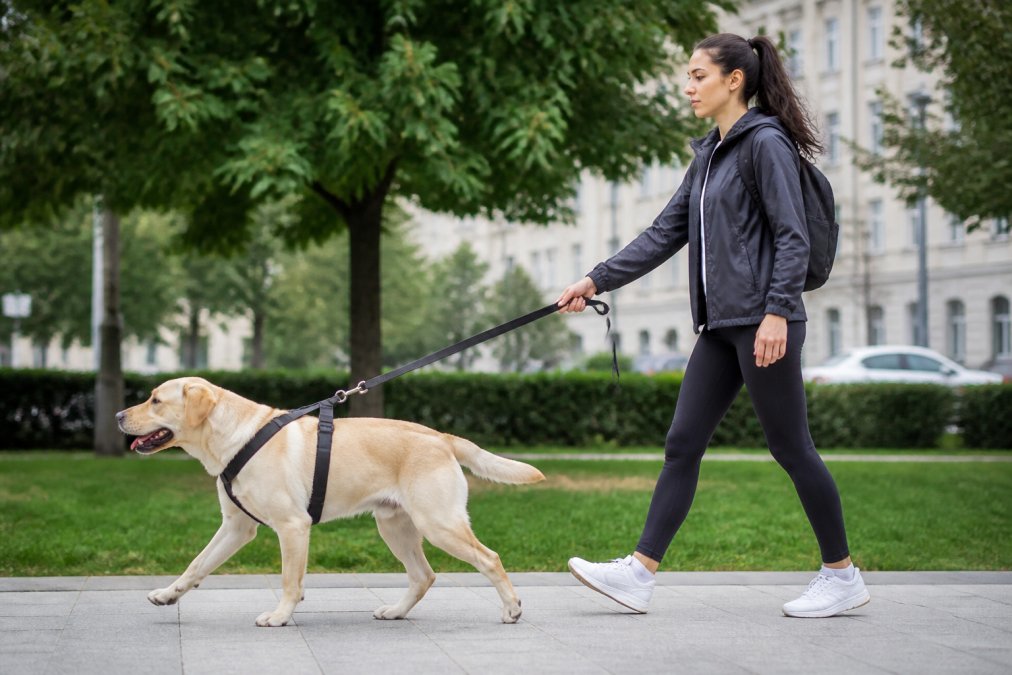
2. Tactical Dog Harness Set - K9 Training 5-in-1 Gear
For owners seeking comprehensive training solutions, the Doggo Shop Tactical Dog Harness Set - K9 Training 5-in-1 Gear at £59.99 bundles harness, leash, and training accessories into a single investment.

This tactical harness is engineered for serious training work and high-energy dogs. The 5-in-1 configuration includes multiple attachment points, allowing you to adjust how the harness functions based on your training stage. Heavy-duty construction uses reinforced stitching and military-grade webbing rated for sustained pulling forces. The included leash features shock-absorbing technology.
What works best: Owners of large or extremely strong breeds, professional trainers, and those committed to systematic training. The multiple attachment points allow customisation as your dog progresses.
3. Heavy Duty Dog Leash with Double Bungee
The Doggo Shop Heavy Duty Dog Leash with Double Bungee at £19.99 provides shock absorption that transforms how pulling feels during walks.
The double-bungee design contains two elastic sections that absorb sudden pulling force. When your dog lunges at a trigger, the bungee absorbs the initial force, preventing jarring impact that can damage shoulders, wrists, and your dog's neck. The leash uses climbing-grade webbing that won't fray or tear under sustained pulling. The padded handle distributes force across your palm rather than concentrating it in your hand.
What works best: Paired with any front-clip harness, this leash elevates the entire walking experience. The shock absorption is particularly valuable during early training when pulling is still frequent and unpredictable.
| Harness/Leash | Price | Best For | Key Feature |
|---|---|---|---|
| No Pull Reflective Harness | £19.99 | Budget-conscious owners, first-time harness users | Breathable design, front-clip redirection |
| Tactical 5-in-1 Set | £59.99 | Serious trainers, large/powerful dogs | Multiple attachment points, heavy-duty construction |
| Heavy Duty Bungee Leash | £19.99 | Shock absorption, impact protection | Double-bungee, climbing-grade webbing |
Training Techniques to Complement Your Leash Equipment
Equipment alone doesn't solve pulling behaviour; it creates conditions where training can succeed.
Positive reinforcement and behavioural modification strategies work by rewarding the behaviour you want to see. When your dog walks with a loose leash, immediately reward with praise, treats, or play. This teaches your dog that loose-leash walking produces positive outcomes, while pulling produces nothing. Most dogs show improvement within 2-3 weeks of consistent application.
Common mistakes undermine this approach. Many owners inadvertently reward pulling by continuing forward as the dog pulls, or by allowing the dog to reach a desired destination immediately after pulling. These patterns reinforce pulling rather than extinguish it.
Long-term behavioural impact of proper equipment extends far beyond walks. Dogs trained with front-clip harnesses develop better impulse control generally. They learn that pulling doesn't work, reducing frustration-based pulling in other contexts. The confidence that comes from reliable leash control also reduces anxiety-based pulling in some dogs.
Leash Selection for Different Dog Sizes and Owner Physical Limitations
One-size-fits-all recommendations ignore real constraints many owners face.
Matching leash weight and handle ergonomics to owner capability is often overlooked. A 2kg leash is fine for handlers with strong grip strength, but genuinely difficult for someone with arthritis or reduced hand strength. Padded handles distribute force across a wider area, reducing grip strength required. Shock-absorbing leashes reduce sudden jerking force that strains wrists and shoulders.
For owners with physical limitations, a front-clip harness becomes even more critical, it reduces the force you need to apply by 60-70% compared to traditional collars. Paired with a shock-absorbing leash and padded handle, even owners with significant strength limitations can safely manage large, strong dogs.
High-energy breeds and tactical gear considerations reveal that some dogs have pulling behaviours rooted in genetics. Sled dog breeds, working terriers, and hunting breeds were selected for pulling or intense forward drive. For these dogs, equipment that works with their nature produces better results. Tactical harnesses with multiple attachment points allow you to adjust how the equipment functions based on your dog's specific needs.
Choosing the right equipment for a strong pulling dog requires balancing your dog's specific needs, your own physical capabilities, and your training goals. The Doggo Shop range addresses each factor with options at different price points. Whether you start with the affordable No Pull Reflective Harness or invest in the comprehensive Tactical 5-in-1 Set, the key is selecting equipment that enables consistent, humane training. Every purchase supports rescue dogs in need worldwide, so you're building a better relationship with your own dog while helping others find homes.
Frequently Asked Questions
What type of leash is best for a dog that pulls?
The best leash for strong pulling dogs combines a no-pull harness with a shock-absorbing lead. Front-clip harnesses redirect pulling force toward the side, reducing neck strain. Pair this with a heavy-duty dog leash featuring padded handles and durable webbing. For severe pullers, a training leash or lunge rein provides better control during behavioural work. Consider your dog's size, breed-specific pulling behaviour, and your own physical capabilities when selecting equipment.
Are anti-pull harnesses better for pulling than regular collars?
Yes, anti-pull harnesses are significantly better than regular collars for strong pullers. Standard collars concentrate leash pressure on the neck, risking tracheal collapse and injury. An anti-pull dog harness UK distributes tension across the chest and shoulders, reducing neck strain. Front-clip harnesses are particularly effective because they redirect pulling force sideways, naturally discouraging the pulling behaviour. This design works with your dog's instincts rather than against them, making training easier.
What is the best lead to stop a dog pulling?
A heavy duty dog leash UK paired with a front-clip harness is the most effective combination to stop pulling. Look for leads with shock-absorbing technology, padded handles, and heavy-duty hardware that can withstand sustained tension. A training leash with adjustable length (typically 2-3 metres) gives you better control during behavioural modification. Combined with positive reinforcement training and consistent walk management, this setup significantly reduces pulling within weeks for most dogs.
How do I choose the right leash for my dog's size and my physical limitations?
Match leash weight and handle ergonomics to your capability. Smaller owners or those with limited grip strength should prioritise padded, ergonomic handles and lighter-weight materials. For large, strong dogs, a tactical dog harness set provides multi-point attachment options that distribute force more effectively. Consider adjustable harnesses that allow fine-tuning of fit, and shock-absorbing leashes that reduce sudden jerks. A dog training leash for pulling UK designed for your breed size ensures safe, comfortable walks for both you and your dog.
Do anti-pull harnesses work for all dog breeds?
Anti-pull harnesses work well for most breeds, but breed-specific pulling behaviour affects their effectiveness. High-energy breeds like Border Collies and Huskies benefit from front-clip harnesses combined with lunge reins for training. Brachycephalic breeds (flat-faced dogs) require breathable mesh harnesses to prevent overheating. Larger breeds often need tactical gear with reinforced attachment points. A head collar for dogs UK may be necessary for extremely strong pullers. Assess your individual dog's pulling style, size, and temperament to select the most appropriate equipment.
This article was written using GrandRanker


Leave a comment