


Best Dog Enrichment Toys for Rainy Days: 10 Picks
Table of Contents
- Quick Comparison: Best Dog Enrichment Toys for Rainy Days
- Interactive Dog Toys for Mental Stimulation: Electronic and Motion-Activated Picks
- Dog Puzzle Toys: Feeders That Turn Mealtime Into Problem-Solving
- Snuffle Mats for Dogs: Scent Work and Foraging Indoors
- Lick Mats, Frozen Treats and Food-Stuffed Toys for Longer Sessions
- Indoor Enrichment Activities for Dogs: DIY Games With Household Items
- How to Match an Enrichment Toy to Your Dog: Size, Age, Chewing Strength and Experience
- Safety, Supervision and Food-Allergy Considerations
- Frequently Asked Questions
Last Updated: October 20, 2026
Quick Comparison: Best Dog Enrichment Toys for Rainy Days
Wet weather doesn't have to mean a bored, destructive dog. The best dog enrichment toys for rainy days turn a washout afternoon into sniffing, problem-solving and foraging that tires your dog out without a single step outside.
Below, we rank ten picks by engagement time, cost and which dogs they suit. Every toy is £14.99 to £29.99, so you can build a rainy-day rotation on a budget.
| Rank | Toy | Price | Best For | Typical Engagement |
|---|---|---|---|---|
| 1 | Snuffle Mat (Sunflower) | £19.99 | Scent work, all breeds | 10-20 minutes |
| 2 | Pet Casino Puzzle Toy | £29.99 | Confident problem-solvers | 15-25 minutes |
| 3 | Interactive Robot Treat Toy | £19.99 | Small to medium dogs | 10-15 minutes |
| 4 | Smart Duck Feeder | £19.99 | Dogs 3-50kg, fast eaters | 10-15 minutes |
| 5 | Spinning Windmill Treat Toy | £19.99 | Paw-and-nudge players | 10-20 minutes |
| 6 | Slow Feeder Lick Bowl | £19.99 | Calming, anxious eaters | 15-30 minutes |
| 7 | Thick Tire Chew Toy | £19.99 | Power chewers | 30+ minutes |
| 8 | Suction Cup Tug Toy | £19.99 | High-energy solo play | 15-20 minutes |
| 9 | Smart Rolling Ball | £14.99 | Chasers, small spaces | 10-15 minutes |
| 10 | Crawling Crab Toy | £19.99 | Puppies, cautious dogs | 5-10 minutes |
Interactive Dog Toys for Mental Stimulation: Electronic and Motion-Activated Picks
Electronic toys win rainy days because they move on their own, giving your dog a chase without you throwing anything. The trade-off is battery life and noise.

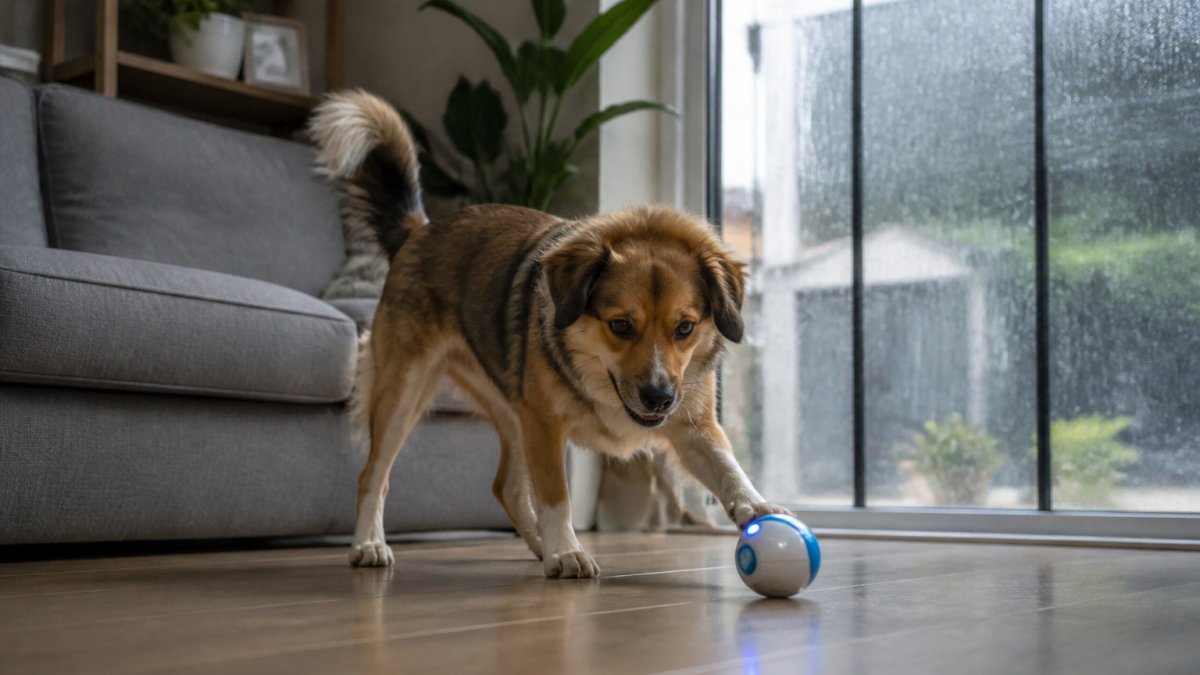
Our pick is the Smart Rolling Interactive Ball at £14.99.
The Crawling Crab (£19.99) scuttles sideways with lights and sound and reverses when it hits something. It's brilliant for puppies and cautious dogs.
Dog Puzzle Toys: Feeders That Turn Mealtime Into Problem-Solving
Puzzle feeders replace a two-minute bowl of kibble with ten minutes of pawing, sliding and sniffing, the easiest swap on a wet afternoon, and it slows fast eaters too.
The Pet Casino Puzzle Toy (£29.99) is the most demanding of our dog puzzle toys: hide treats under the compartments and your dog slides pieces to reach them.

The Smart Duck Feeder (£19.99) is the gentler entry point: fill the duck and the trickle-out design releases kibble as your dog nuzzles it.
Snuffle Mats for Dogs: Scent Work and Foraging Indoors
Sniffing tires a dog faster than walking. A snuffle mat is a fabric mat with folds and pockets you scatter kibble into.
Our Interactive Sunflower Snuffle Mat (£19.99) has soft fabric petals you sprinkle treats between.
One honest limitation: it is not a chew toy. If your dog shreds soft toys, skip this and go for the tire chew below.
Lick Mats, Frozen Treats and Food-Stuffed Toys for Longer Sessions
Freezing stretches enrichment from ten minutes to thirty. Spread something soft onto a textured surface, freeze it, and licking becomes a slow, calming job.
The Slow Feeder Dog Lick Bowl (£19.99) is our pick: a textured, non-slip bowl for peanut butter, yogurt or bone broth.
For stuffing, the Thick Tire Chew Toy (£19.99) is the durable option: natural rubber, 35 × 16cm, with a rope for tug and a cavity for treats.
Indoor Enrichment Activities for Dogs: DIY Games With Household Items
You don't need to buy anything to tire a dog out indoors.
| Game | Setup Time | Typical Engagement | Difficulty | Cleanup |
|---|---|---|---|---|
| Rolled towel forage | 1-2 minutes | 5-10 minutes | Easy | Shake out, wash towel |
| Muffin-tin hunt | 2 minutes | 5-10 minutes | Easy to moderate | Rinse tin, retrieve balls |
| Hallway scent trail | 1 minute | 3-5 minutes per trail | Easy | Wipe floor |
| Cardboard box dig | 3-5 minutes | 10-15 minutes | Moderate | Sweep paper, bin cardboard |
| Hide-and-seek | Under a minute | 2-5 minutes per round | Moderate | None |
| Towel-and-cup shell game | 2-3 minutes | 5-10 minutes | Hard | Minimal |
Rolled towel forage. Scatter kibble across a bath towel, roll it tight lengthways, and let your dog unravel it.
Cardboard box dig. Put treats in a box with crumpled paper and let your dog dig them out.
Hide-and-seek. Hide a person or a favourite toy and release your dog to search.
Supervise every DIY game that involves fabric, cardboard, paper or small covers. Swallowed material can cause a blockage, and the vet bill dwarfs the cost of any toy on this list. Put the props away when the game ends.
A rainy-day DIY session works best as a sequence: start with an easy foraging game to warm up, move to a harder problem-solving game while your dog is fresh, then finish with a scent trail or a lickable to settle. That is roughly twenty to thirty minutes of enrichment from items you already own.
Snuffle Mat for Dogs – Interactive Sunflower Treat Puzzle →
How to Match an Enrichment Toy to Your Dog: Size, Age, Chewing Strength and Experience
The right toy depends on four things: size, age, chewing strength and experience. Get the match wrong and the toy is either destroyed in an hour or ignored for good.
| Dog Profile | Avoid | Choose Instead |
|---|---|---|
| Power chewer (medium-large) | Fabric snuffle mats, thin plastic | Thick Tire Chew Toy, Suction Cup Tug |
| Puppy under 12 months | Small parts, hard plastic | Crawling Crab, Smart Duck Feeder |
| Small or toy breed | Large feeders, heavy chew toys | Robot Treat Toy, Smart Rolling Ball |
| Senior or low-energy | High-speed electronic toys | Snuffle Mat, Lick Bowl |
| Anxious or fast eater | Open bowls | Lick Bowl, Pet Casino Puzzle |
| First-time puzzle dog | Multi-step puzzle feeders | Smart Duck Feeder, then Pet Casino |
Size is the most common mistake. The Robot Treat Toy suits small to medium dogs; a German Shepherd will simply pick it up.

Experience matters too. A dog that has never used a puzzle feeder will give up on the Pet Casino and walk away.
Engagement time and difficulty at a glance
Vague claims that a toy "keeps dogs busy" don't help when you're planning an afternoon. The estimates below are typical ranges for a dog new to the toy; a confident dog will finish faster.
| Toy | Setup Time | Typical Engagement | Difficulty | Cleanup |
|---|---|---|---|---|
| Snuffle Mat | Under a minute | 10-20 minutes | Easy | Shake out, wash occasionally |
| Lick Bowl | 2-3 minutes (plus freezing) | 15-30 minutes | Easy | Rinse or dishwasher |
| Smart Duck Feeder | Under a minute | 10-15 minutes | Easy | Rinse |
| Smart Rolling Ball | Charge only | 10-15 minutes | Easy to moderate | Wipe |
| Crawling Crab | Charge only | 5-10 minutes | Easy | Wipe |
| Spinning Windmill | 1-2 minutes | 10-20 minutes | Moderate | Rinse |
| Pet Casino Puzzle | 2-3 minutes | 15-25 minutes | Hard | Rinse compartments |
| Thick Tire Chew | 1 minute to stuff | 30+ minutes | Moderate | Rinse cavity |
| Suction Cup Tug | Under a minute | 15-20 minutes | Moderate | Wipe |
Durability and budget: DIY versus reusable
The cheapest enrichment is your freezer and recycling bin: a rolled towel, a muffin tin and a frozen lick bowl cost nothing extra and cover most of a wet afternoon.
Reusable toys cost more up front but survive repeated use. The Thick Tire Chew Toy stands out for power chewers because natural rubber and a rope core take sustained chewing; fabric snuffle mats and thin plastic shells do not.
A sample rainy-day routine
A single toy rarely fills an afternoon. Alternate mental and physical activity in short blocks, because a mentally satisfied dog settles far more easily than one that has simply been walked.
- Morning: a snuffle mat or scatter feed for breakfast, then a short training session in the hallway using sits, waits and recalls between rooms.
- Midday: a frozen lick bowl or stuffed tire while you work, followed by a five-minute game of hide-and-seek or a hallway scent trail.
- Afternoon: a puzzle feeder at peak energy, then a suction-cup tug or a rolling ball session for movement.
That sequence gives roughly an hour of enrichment across the day, in blocks short enough to fit around work and weather. Adjust to your dog: a puppy needs shorter, easier blocks, while a confident adult can take the harder puzzle and longer chew.
If your dog loses interest in a toy after a few minutes, the problem is usually difficulty rather than boredom. Drop back a level, make the food easier to reach, and rebuild confidence before moving up again.
If your dog has a history of swallowing toys or fabric, skip small balls, rope tugs and fabric mats entirely. Foreign-body surgery is a serious, expensive operation, and no toy is worth that risk.
Safety, Supervision and Food-Allergy Considerations
Supervision is non-negotiable with every toy on this list. No enrichment toy is indestructible, and the risk rises with fabric, rope and small moving parts.
Three rules cover most problems:
- Supervise fabric and rope. Snuffle mats and rope tug toys can be chewed apart. Inspect after each session and bin anything frayed.
- Match treats to the toy. The Robot Treat Toy needs treats under about 1.2cm; larger ones jam the opening.
- Check the food, not just the toy. If your dog has a diagnosed allergy or intolerance, check every treat and spread you use. Novel proteins and peanut butter are common triggers, so confirm with your vet before introducing anything new.
Electronic toys need one extra check: remove them once your dog loses interest, because a determined chewer will get into the battery compartment. Charge them away from your dog, and retire any toy with a cracked shell.
If your dog has a history of swallowing toys, skip small balls and fabric mats entirely. Foreign-body surgery is a serious, expensive operation, and no toy is worth that risk.
A rainy day exposes the gap between a dog that's physically tired and one that's mentally satisfied. Doggo Shop stocks all ten picks above, from the £14.99 Smart Rolling Ball to the £29.99 Pet Casino Puzzle, and every order supports rescue dogs and cats in need.
Frequently Asked Questions
How do I keep my dog entertained on rainy days?
Build a short routine that mixes mental and physical work. Start with a snuffle mat or scatter feed, follow with a puzzle feeder at mealtime, then run a hallway fetch or tug session. Finish with a frozen lick bowl to wind down. Rotate the toys every couple of days so novelty lasts. Two or three 10-15 minute sessions usually do more for a dog than one long play period, and most of these dog enrichment toys can be set up in under a minute.
How long should a dog use a puzzle toy?
Most dogs work a puzzle feeder for 10 to 20 minutes before losing interest or emptying it. Harder puzzle toys like the Pet Casino Treasure Feeder sit at the longer end; simpler dispensers such as the Smart Duck Feeder run closer to 10 minutes. Stop the session when your dog walks away rather than pushing for a longer run. Two short sessions a day beat one long one, and always supervise the first few uses so you can judge the right difficulty level.
Which enrichment toys are best for indoor play?
Snuffle mats, lick bowls, puzzle feeders and suction cup tug toys suit indoor play best because they work in a small space and do not need a garden. The Snuffle Mat for Dogs and Slow Feeder Dog Lick Bowl are the quietest options, while the Interactive Suction Cup Tug Toy gives a higher-energy dog a hands-free outlet on a smooth floor. Electronic toys like the Smart Rolling Interactive Ball add movement, but check the floor surface first to avoid scuffs.
Can I make rainy-day enrichment toys at home?
Yes. A rolled towel with kibble tucked inside works like a simple snuffle mat, and a muffin tin with treats under tennis balls makes a basic dog puzzle toy. Plastic bottles with the cap and ring removed can hold kibble for a dog to roll around, and cardboard boxes can be filled with paper and treats for a scent game. Check every item for sharp edges, remove small parts, and supervise throughout. Homemade options work well alongside shop-bought dog enrichment toys, not as a full replacement.
How do I choose a safe enrichment toy for my dog?
Match the toy to your dog's size and chewing strength first. A power chewer needs natural rubber such as the Thick Tire-inspired Durable Dog Chew Toy, while a puppy or senior does better with softer puzzle feeders. Check the listing for weight or size guidance, avoid toys with small removable parts, and supervise fabric items like snuffle mats since they are not chew toys. Wash food toys after each use and check for cracks before every session.


Leave a comment