


Benefits of Natural Rubber Dog Toys
Table of Contents
- Why Natural Rubber Dog Toys Stand Out
- Dental Health and Plaque Removal
- Durability and Chew Resistance for Aggressive Chewers
- Natural Rubber vs TPR Dog Toys: Which Material Wins
- Mental Stimulation and Anxiety Relief
- How to Clean Natural Rubber Dog Toys
- Durable Chew Toys for Aggressive Chewers
- Allergy Considerations and Safety Features
- Frequently Asked Questions
Last Updated: September 1, 2026
Why Natural Rubber Dog Toys Stand Out
Natural rubber dog toys offer durability without compromising safety. Unlike synthetic alternatives, natural rubber combines flexibility, resilience, and non-toxic composition that appeals to both active dogs and conscientious owners. These toys address real concerns: keeping pets engaged safely, supporting dental health, and avoiding harmful chemicals.
What sets natural rubber apart is its inherent springiness and durability. When a dog bites down, the material compresses and rebounds, providing rewarding tactile feedback that encourages extended play. A toy that feels good to bite is a toy your dog will actually use.
Dental Health and Plaque Removal
The textured surface of natural rubber dog toys actively supports oral health during play. As your dog chews, grooves and ridges massage the gums and help break down plaque and tartar buildup on tooth surfaces. This mechanical cleaning happens naturally during the chewing process.
Plaque accumulation starts early, and without intervention, tartar hardens and can lead to gum disease and bad breath. Natural rubber toys provide preventative care alongside regular brushing. The Thick Tire-inspired Durable Dog Chew Toy for Aggressive Chewers from Doggo Shop combines textured design with treat-dispensing, so your dog gets oral care and mental stimulation simultaneously.
A toy with varied surface patterns, bumps, ridges, and grooves works better than a smooth one. These textured areas catch plaque particles and create friction against tooth surfaces.
Durability and Chew Resistance for Aggressive Chewers
Aggressive chewers need toys built to withstand serious jaw pressure without splintering, cracking, or breaking into swallowable pieces. Natural rubber excels here. Its molecular structure allows it to flex under stress rather than snap, handling sustained, forceful chewing from large breeds like German Shepherds, Labradors, and Huskies.

Natural rubber has a distinct advantage over synthetic alternatives like TPR: it doesn't degrade as quickly under intense chewing. A natural rubber toy that's been through months of heavy use still maintains structural integrity, whereas cheaper synthetic options often develop cracks or lose their shape after weeks.
The thickness of the toy matters as much as the material. The Thick Tire-inspired design used in Doggo Shop's chew toys isn't just aesthetic; thicker walls distribute bite force more evenly and resist puncture better than thin-walled designs.
Heavier toys are harder to destroy because bite force is distributed across a larger mass. Natural rubber's density contributes to this; it weighs more than many foam or plastic alternatives, making it feel substantial in a dog's mouth.
Natural Rubber vs TPR Dog Toys: Which Material Wins
Both natural rubber and TPR (thermoplastic rubber) are durable chewing materials, but they're not interchangeable. Understanding the differences helps you choose the right toy for your dog's needs.
Safety and Non-Toxic Composition
Natural rubber is derived from the latex of rubber trees, making it a plant-based material without synthetic additives, plasticisers, or chemical binders. For dogs with sensitivities or owners concerned about chemical ingestion, natural rubber offers peace of mind.
TPR is a synthetic blend of rubber and plastic polymers. While generally considered safe, TPR can contain trace chemical additives depending on manufacturing. Both are designed to be non-toxic when manufactured to proper standards. Natural rubber appeals to owners who prefer plant-based materials and want to minimise synthetic chemical exposure.
Natural rubber also biodegrades over time, whereas TPR persists in landfills. For environmentally conscious owners, this is meaningful.
Environmental Impact
Natural rubber's environmental story is nuanced. Rubber tree plantations can be sustainable when managed responsibly, but some involve deforestation or monoculture practices. High-quality natural rubber toys often come from certified sustainable sources, worth checking at purchase.
TPR relies on petroleum-based inputs and energy-intensive manufacturing. However, TPR toys often last longer than lower-quality natural rubber alternatives, offsetting their environmental cost through reduced replacement frequency. The most environmentally responsible choice is a durable toy, natural rubber or TPR, that your dog will use for years rather than months.
Mental Stimulation and Anxiety Relief
Dogs need mental engagement as much as physical exercise. A toy offering varied textures, treat rewards, and interactive play reduces boredom-related destructive behaviour and eases anxiety when dogs are left alone.
Natural rubber toys work well because their texture invites exploration. A dog will investigate grooves, work treats out of a treat-dispensing toy, or enjoy the sensory feedback of chewing. This extended engagement keeps the brain active and provides a healthy outlet for the chewing instinct.
The Interactive Suction Cup Tug Toy from Doggo Shop exemplifies this principle. The toy's design allows solo play; your dog can tug against the suction cup without your involvement, crucial for dogs left alone during the workday. A dog with an engaging toy is less likely to develop anxiety-related behaviours or resort to destructive chewing.

Chewing itself is calming for dogs; it releases endorphins and provides a sense of control. Treat-dispensing toys create puzzle-solving challenges, occupying the mind and diverting attention from anxiety sources.
How to Clean Natural Rubber Dog Toys
Proper maintenance extends a toy's lifespan and keeps it hygienic. Natural rubber toys are straightforward to clean and don't require special treatments.
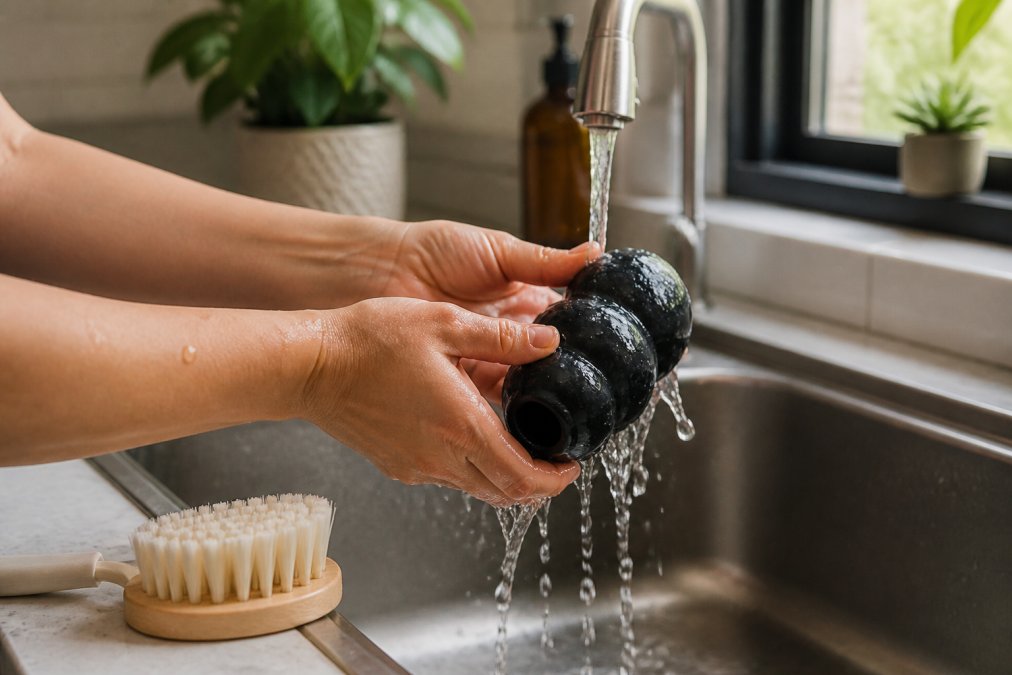
Rinse the toy under running water with mild soap, using your fingers or a soft brush to work soap into grooves where dirt and saliva accumulate. Avoid harsh scrubbing, which wears down texture over time. A soft-bristled toothbrush is ideal for textured areas.
For stubborn debris, soak toys in warm soapy water for 10-15 minutes before brushing. Rinse thoroughly to remove all soap residue, which can irritate a dog's mouth.
Maintenance Tips for Long-Lasting Play
Inspect toys regularly for cracks or soft spots, early warning signs of degradation. Retire toys soon after noticing these signs to prevent shedding pieces.
Store toys in cool, dry places. Heat and direct sunlight degrade natural rubber over time, causing brittleness or stickiness. Rotate toys regularly to keep each fresher and prevent boredom. Clean toys weekly for heavy use, or every two weeks for lighter use.
Life-Stage Specific Recommendations
Puppies (8-16 weeks) are teething and need softer toys that won't damage emerging teeth. As puppies grow and adult teeth come in (around 6-7 months), they can transition to standard-durability natural rubber toys (avma.org).
Adult dogs (1-7 years) benefit most from standard natural rubber chew toys. Active, energetic breeds need toys matching their intensity.
Senior dogs (7+ years) may have dental sensitivity or worn teeth. A slightly softer natural rubber toy provides satisfaction without requiring excessive jaw force. Monitor seniors closely for broken teeth or dental pain.
Durable Chew Toys for Aggressive Chewers
Aggressive chewers need toys engineered specifically for their chewing style. Standard toys are destroyed within days, wasting money and creating safety risks. A proper durable chew toy must withstand sustained, high-force chewing without cracking, splintering, or shedding pieces.
The Thick Tire-inspired Durable Dog Chew Toy for Aggressive Chewers is designed for this challenge. Thick rubber walls and reinforced structure distribute bite force evenly, preventing localised stress that causes cracks. The tire-inspired shape means no thin section is easier to break; the entire toy is uniformly tough.
Treat-dispensing features keep aggressive chewers engaged longer. A dog focused on extracting a treat is less likely to exert maximum bite force in one location, distributing chewing effort and reducing damage risk.
Size matters for aggressive chewers. A toy should be at least 10-15cm across so it can't fit entirely in the mouth (aaha.org). For large breeds, this prevents choking hazards and ensures satisfaction.
Allergy Considerations and Safety Features
Some dogs have sensitivities to certain materials. Natural rubber is generally hypoallergenic, but individual dogs can react to latex. If your dog has a known latex allergy, natural rubber toys are unsuitable; TPR or other synthetic alternatives are safer.
Signs of allergic reaction include excessive drooling, facial swelling, itching around the mouth, or gastrointestinal upset after chewing (peer-reviewed research). Remove the toy immediately and consult your veterinarian.
Natural rubber toys should be free from sharp edges, seams, or protrusions that could cut gums. Quality toys are manufactured to smooth, rounded specifications. Inspect new toys before giving them to your dog.
For dogs with a history of gastrointestinal blockages or those prone to swallowing non-food items, supervise chew toy use. Interactive toys you can control may be safer than unsupervised chew toys.
Chemical-free composition is a key advantage of natural rubber. Unlike some synthetic toys that may contain BPA, phthalates, or other industrial chemicals, natural rubber is inherently free from these additives.
Choosing the right chew toy is an investment in your dog's health, happiness, and safety. Natural rubber dog toys deliver on durability, dental care, and non-toxic peace of mind. At Doggo Shop, we've curated a selection of premium natural rubber toys designed to match your dog's chewing style and your values. Our Thick Tire-inspired Durable Dog Chew Toy for Aggressive Chewers and Interactive Suction Cup Tug Toy both combine natural rubber's proven benefits with features that keep dogs engaged and satisfied. Every purchase supports rescue dogs in need worldwide. Shop now and give your dog the toy they deserve while making a real difference.
Frequently Asked Questions
Q: Are natural rubber dog toys safe for dogs to chew?
A: Yes, natural rubber dog toys are safe when made from high-quality, non-toxic materials. Natural rubber contains no harmful chemicals or toxic additives that could damage your dog's health. The material is flexible and splinter-resistant, reducing the risk of injury to gums or teeth. Always check that the toy meets safety standards and shows no signs of wear or damage before giving it to your dog.
Q: What is the difference between natural rubber vs TPR dog toys?
A: Natural rubber offers superior durability and environmental benefits, breaking down naturally over time. TPR (thermoplastic rubber) is synthetic and more affordable but may contain chemical additives. Natural rubber provides a springy texture that many dogs prefer and is better for heavy chewers. TPR toys are easier to manufacture but don't offer the same level of biting resistance or gum health benefits that natural rubber delivers.
Q: How do I clean natural rubber dog toys properly?
A: Rinse your natural rubber toy under warm running water weekly to remove saliva and debris. Use a soft brush to gently scrub textured surfaces. For deeper cleaning, soak in warm soapy water for 10 minutes, then rinse thoroughly and air dry. Avoid harsh chemicals or bleach. Check regularly for signs of wear, splits, or splintering, and replace the toy if damage appears. Proper maintenance extends the toy's life and keeps your dog safe.
Q: Are natural rubber toys better for aggressive chewers?
A: Natural rubber is excellent for aggressive chewers because of its superior biting resistance and durability. The material withstands powerful jaws without splintering or breaking apart easily. Unlike softer materials, natural rubber maintains its shape and texture even with intense chewing, providing long-lasting play value. Toys like the thick tire-inspired design are specifically engineered for medium to large breeds and heavy chewers who need toys that can handle sustained pressure.
Q: Can natural rubber dog toys help with dental hygiene?
A: Yes, natural rubber toys actively support dental health. The textured surface massages gums and helps remove plaque and tartar buildup as your dog chews. This action reduces bad breath and promotes better periodontal health. Many natural rubber toys feature grooves and ridges designed specifically for cleaning teeth. For extra benefit, you can apply pet-safe toothpaste to the toy before giving it to your dog, turning playtime into an effective oral care routine.
This article was written using GrandRanker


Leave a comment