


Bark and Beyond Alternative for Rescue: Ethical Pet Brands UK
Table of Contents
- Why Dog Owners Are Looking for a Bark and Beyond Alternative for Rescue
- What Makes Ethical Pet Brands UK Different From Standard Retailers
- How to Support Animal Rescue Through Everyday Buying Decisions
- Best Dog Products That Donate to Charity: A Practical Comparison
- Essential Gear for Rescue Dog Owners: What Actually Holds Up
- Common Mistakes When Switching to a Rescue-Focused Retailer
- Choosing a Bark and Beyond Alternative for Rescue That Works
- Frequently Asked Questions
Last Updated: September 19, 2026
Why Dog Owners Are Looking for a Bark and Beyond Alternative for Rescue
If you have spent years buying from a retailer that claims to support rescue dogs, you have probably started asking where that money actually goes. That instinct is right: a growing number of dog owners want ethical pet brands that can prove their giving, not just advertise it.
What Makes Ethical Pet Brands UK Different From Standard Retailers
Ethical pet brands build charitable giving into their pricing and operations rather than treating it as seasonal promotion. The difference shows up in transparency, not slogans.
How to Verify a Brand's Rescue Claims
Verification comes down to three checks: who receives the money, how often it is sent, and whether you can see evidence.
- Ask which rescue organisations receive funds, by name
- Check whether the donation is a fixed percentage or a vague "portion of profits"
- Look for a published giving policy or impact page
- Confirm the rescue partner is a registered charity you can look up
- See whether giving happens per order or only during campaigns
How to Support Animal Rescue Through Everyday Buying Decisions
Everyday buying is the most practical form of support for most owners. You already purchase food, leads, collars and waste bags, so redirecting that spend to a retailer with a giving commitment costs nothing extra.
Three habits make the biggest difference:
- Consolidate your orders with one ethical retailer instead of spreading spend across several
- Buy durable gear so you replace items less often and your money stretches further
- Choose a retailer with a stated percentage, so the impact scales with what you spend
Best Dog Products That Donate to Charity: A Practical Comparison
The best dog products that donate to charity are the ones you would buy anyway, from a retailer with a clear giving structure. Durability and daily usefulness matter more than novelty.
| Product | Price | Best For | Why It Lasts |
|---|---|---|---|
| AirTag Dog Collar | £24.99 | Dogs that slip leads or bolt | Durable nylon, adjustable S-L |
| Light Up Dog Collar | £19.99 | Dark morning and evening walks | Rechargeable, 7 colours, 3 modes |
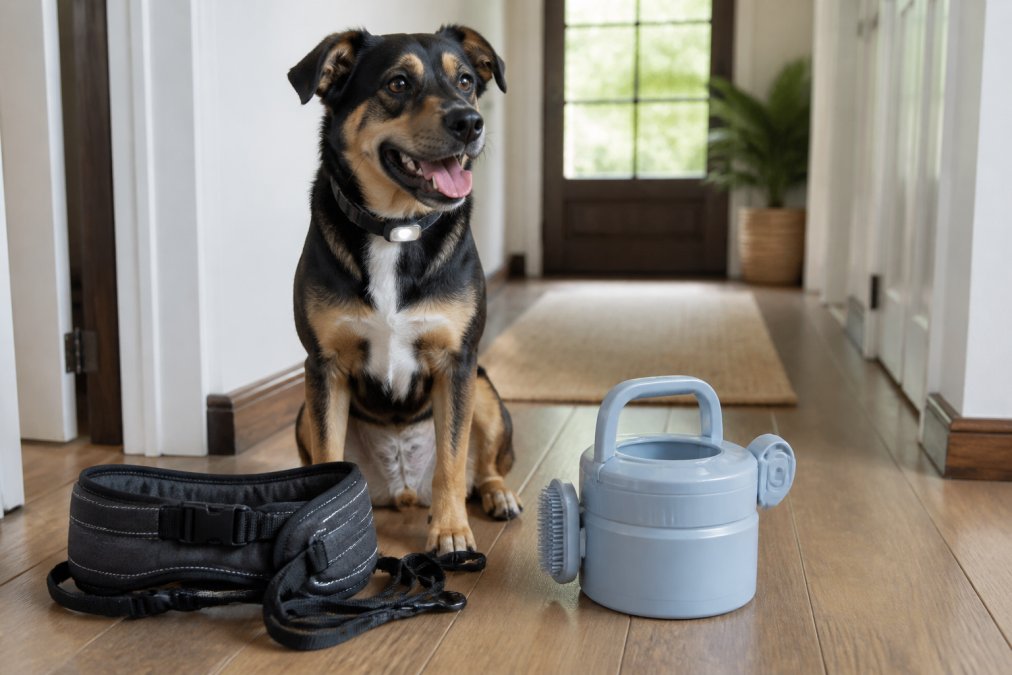
| Hands-Free Dog Leash | £24.99 | Running and hiking with strong dogs | Shock-absorbing bungee, up to 180 lbs |
| Dog Paw Washer | £19.99 | Muddy autumn and winter walks | Pet-safe silicone bristles |
| Eco-Friendly Poop Bags | £16.99 | Daily walks and travel | Extra thick, leak-proof, odour-locking |
Price and Impact Breakdown
A rescue dog often needs more gear than an established pet: new owners face a collar, lead, waste bags and cleaning tools in the first month.

Essential Gear for Rescue Dog Owners: What Actually Holds Up
Rescue dogs test gear harder than most. Many arrive with no lead manners, high prey drive or anxiety around traffic. Equipment has to survive that adjustment period.
Common Mistakes When Switching to a Rescue-Focused Retailer
Forgetting the legal side of transfer. In England, Wales and Scotland, a dog must be microchipped and the keeper's details kept up to date; in England the dog must also wear a collar with an ID tag in public. When a dog changes hands, the microchip record must be transferred to the new keeper, and the original keeper should keep proof of transfer. Rescues usually handle this; if you rehome privately, it is your responsibility, and the step most often missed.
Choosing a Bark and Beyond Alternative for Rescue That Works
Choosing an alternative comes down to two decisions most owners conflate: how you want to support rescue, and where you buy the gear your dog needs. Getting both right makes the switch stick.
Step 1: Decide what kind of support you want to give
There are three routes, and they are not interchangeable.
- Charitable giving, donating directly to a registered rescue. The money goes to welfare, but you get nothing back.
- Everyday spending, buying from a retailer with a fixed giving structure. The donation is built into a purchase you were making anyway.
- Hands-on support, fostering or volunteering. The highest impact per hour, but it requires time and a suitable home.
Most owners can do the second without changing their routine, which makes it the most sustainable; the first and third are worth adding if you have capacity.
Step 2: Vet the retailer the way you would vet a rescue
The same checks that apply to a rescue organisation apply to a retailer claiming to fund one.
- Is the recipient a named, registered charity you can look up on the Charity Commission register?
- Is the donation a fixed percentage of every order, or a vague "portion of profits"?
- Is there a published giving policy or impact page, updated regularly?
- Does giving happen per order, or only during campaigns?
- Can the retailer show evidence of transfers, not just intent?
Step 3: Match the gear to the dog in front of you
A rescue dog is not a generic dog. The first six months are the test period, and the gear that survives it is worth buying.
- A secure collar with a fitted ID tag and, ideally, an AirTag holder, because a dog that bolts in low light is the most common early failure.
- A shock-absorbing lead rated above your dog's weight, not at it. A rescue with a strong pull will find the weak point in cheap hardware.
- A paw cleaner and thick waste bags for the daily reality of wet walks and muddy paws.
Step 4: Keep the welfare decision separate from the shopping decision
This is the point most guides miss. Buying from a rescue-focused retailer is good, but it is not a substitute for the harder questions. If you are rehoming a dog, the priority order is: behaviour support first, financial support second, safe and legal placement third, and only then where you buy your leads and waste bags.
Frequently Asked Questions
How can I support UK animal rescue charities through my shopping?
Choose retailers that publish a clear donation policy and name the organisations they fund. Doggo Shop donates 10% of every order to rescue dogs in need worldwide. You can also set up recurring donations directly to registered charities, or use platforms that let you select a rescue to receive a percentage of your spend. The key is checking that the brand states exactly what percentage goes to rescue and can show evidence of past donations.
What are the best ethical pet supply brands in the UK?
Look for brands that combine quality products with transparent charitable giving. Doggo Shop offers premium dog essentials from £9.99, including a Retractable Dual Dog Leash at £29.99 and an AirTag Dog Collar at £24.99, while donating 10% of every order to rescue animals. When comparing ethical pet brands UK shoppers can trust, check three things: whether the donation percentage is published, whether the charity partners are named, and whether product quality justifies the price. Avoid brands that make vague 'supports rescue' claims without specifics.
Are there pet shops that donate 100% of profits to rescue?
Some retailers commit to donating all profits, but you need to read the fine print. 'Profits' is not the same as 'revenue', a shop donating 100% of profits may still cover operating costs, staff wages and marketing before any money reaches a rescue. Doggo Shop donates 10% of every order to rescue dogs in need worldwide. Always check whether the brand publishes an annual giving summary or names the specific rescue organisations it supports.
How do I verify if a pet brand supports animal welfare?
Start by checking the brand's website for a dedicated giving or impact page that names the charities it funds and states the donation percentage. Look for evidence such as donation receipts, partner logos with links, or annual reports. You can also contact the rescue organisation directly and ask whether they have received funds from that brand. If a company claims to support animal welfare but provides no names, no percentages and no proof, treat the claim with caution.
What should I look for in dog products that donate to charity?
Prioritise products you would buy anyway based on quality, then check the giving model. A hands-free leash at £24.99 with reflective stitching and a shock-absorbing bungee is useful whether or not it supports rescue; the donation is a bonus. Look for items that solve real problems for rescue dogs specifically, such as noise-reduction hoodies for anxious dogs (£19.99) or durable LED collars for night walks. The best dog products that donate to charity combine practical durability with a verifiable giving commitment.
Switching retailers feels like a hassle when you already know where everything is. The real question is whether your current spend does anything beyond filling a warehouse. Doggo Shop donates 10% of every order to rescue dogs, stocks durable essentials like the AirTag Dog Collar and Hands-Free Dog Leash, and gives you a single place to buy everything your dog needs. Get started with Doggo Shop and turn your everyday orders into support for rescue dogs in need.


Leave a comment