


Are Recycled Dog Toys Safe for Puppies?
Table of Contents
- What Are Recycled Dog Toys and How Are They Made?
- Common Toxic Chemicals in Conventional Dog Toys
- Non-Toxic Puppy Toys: Materials That Are Actually Safe
- Puppy Teething Toy Safety: What You Need to Know
- How to Identify Safe Recycled Materials and Third-Party Certifications
- How to Clean Recycled Dog Toys Properly
- Recycled vs. Natural Materials: Durability and Safety Comparison
- Frequently Asked Questions
Last Updated: September 4, 2026
What Are Recycled Dog Toys and How Are They Made?
Recycled dog toys are chew toys, fetch balls, and tug ropes manufactured from reclaimed materials such as recycled plastic bottles, natural rubber, and repurposed fabric fibres. The manufacturing process typically involves collecting post-consumer waste, cleaning and shredding it, then melting or compressing the material into a new toy shape. This approach diverts waste from landfills while producing functional products for your pup.
At Doggo Shop, we regularly assess toy safety standards because the answer to whether recycled dog toys are safe for puppies depends almost entirely on the source materials and manufacturing standards used. The short answer is yes, many are perfectly safe. The longer answer requires understanding what goes into the toy and how it is processed, which is what we will explore below.
The key distinction lies between mechanical recycling, where plastic is melted and reformed, and chemical processing that may introduce additives. Toys made from recycled plastic bottles can be excellent, provided the recycling process removes contaminants effectively.
Common Toxic Chemicals in Conventional Dog Toys
Conventional dog toys often contain chemicals that pose risks to young puppies. Polyvinyl chloride, commonly called PVC, frequently contains phthalates added to increase flexibility. Phthalates are linked to hormonal disruption and are a particular concern for teething puppies who chew constantly.
Other problematic substances include BPA, found in some hard plastics, and synthetic dyes that may contain heavy metals. Many mass-produced toys also rely on chemical flame retardants that have no place in a puppy's mouth. A puppy's smaller body mass means toxic residues that might not affect an adult dog can have a more significant impact during development.
The UK Government guidance on chemical safety in consumer products outlines regulatory expectations for substances used in goods sold to pet owners. Choosing toys labelled BPA-free and phthalate-free reduces ingestion risk considerably, but labels alone should not be your only checkpoint.
Non-Toxic Puppy Toys: Materials That Are Actually Safe
Non-toxic puppy toys come in several reliable material categories. Natural rubber, harvested from rubber trees, is durable, non-porous, and free from synthetic additives when properly processed. It provides excellent chew resistance for teething puppies while remaining gentle on emerging adult teeth.
Recycled natural rubber performs similarly to virgin rubber, making it a strong choice for eco-conscious owners. Hemp fibres and organic cotton offer softer options for gentler play, though they lack the durability needed for heavy chewers. Food-grade silicone, often recycled in premium lines, is hypoallergenic and easy to sanitise.
When comparing materials, consider what your puppy actually does with toys:
| Material | Chew Resistance | Safety Profile | Best For |
|---|---|---|---|
| Natural rubber | High | Non-toxic, BPA-free | Heavy chewers and teething |
| Recycled plastic bottles | Medium | Safe if properly processed | Fetch and light play |
| Organic cotton | Low | Chemical-free | Gentle play and comfort |
| Hemp fibres | Medium | Non-toxic, sustainable | Tug games with supervision |
Puppy Teething Toy Safety: What You Need to Know
Puppy teething toy safety centres on size, durability, and supervision. A toy too small presents a choking hazard; one too soft may break apart and create an ingestion risk. Teething puppies explore with their mouths constantly, so every toy should be sized so it cannot fit entirely inside the mouth.
Supervision is non-negotiable during the teething phase. Puppies can destroy toys faster than manufacturers anticipate, and small fragments of any material, recycled or not, can cause intestinal blockages. Inspect toys regularly for wear and replace them at the first sign of cracking or tearing.
Age-specific safety matters more than most guides acknowledge. A 10-week-old puppy has different jaw strength and chewing patterns than a 6-month-old adolescent. Match the toy's chew resistance to your puppy's current stage rather than buying the toughest option available.
The UK's Veterinary Poisons Information Service resources on pet safety offers guidance on what to do if you suspect your puppy has swallowed a foreign object. Prompt action makes a significant difference in outcomes.
How to Identify Safe Recycled Materials and Third-Party Certifications
Identifying safe recycled materials requires moving beyond marketing language to verify actual third-party certification. The most reliable indicator is a certification that audits both the recycled content percentage and the absence of harmful chemicals throughout the supply chain.
Key certifications to look for:
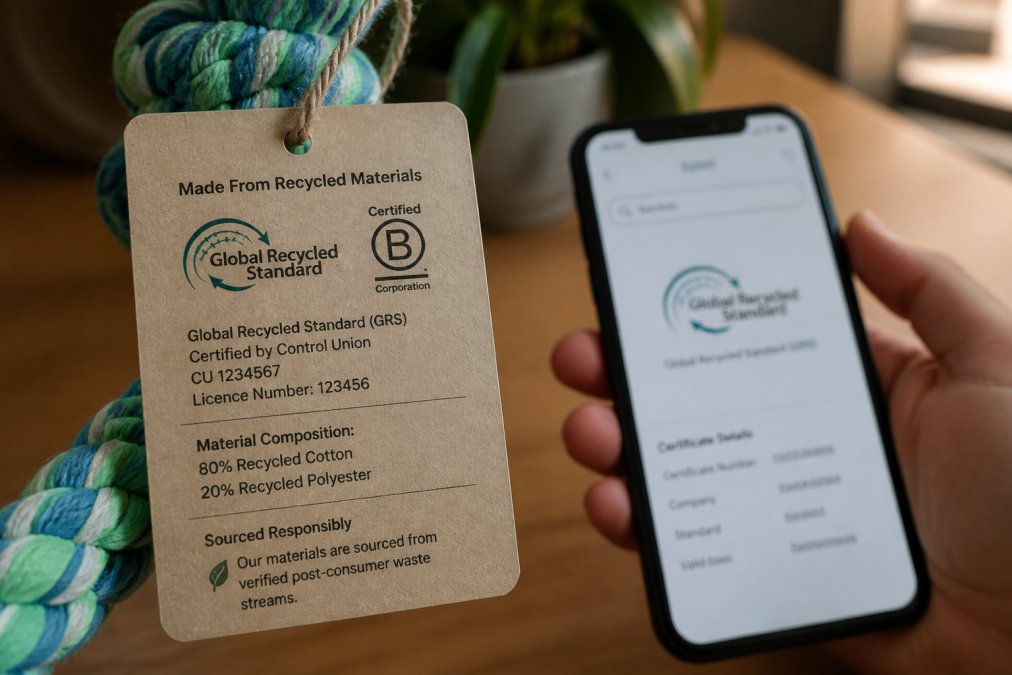
Global Recycled Standard (GRS) certifies that a product contains a minimum percentage of recycled material (typically 50% or higher) and verifies the chain of custody from collection through manufacturing. Look for a GRS label on the toy's packaging or product description; legitimate certifications include a unique certificate number that can be cross-referenced on the GRS database.
OEKO-TEX Standard 100 tests finished products for over 300 harmful substances, including heavy metals, formaldehyde, and azo dyes. This certification is particularly valuable for puppies because it confirms the toy has been tested for substances that could be ingested during chewing. The label should display a certificate number and the testing institute name (e.g., "OEKO-TEX® Standard 100 certified by [Institute Name]").
BPA-free and phthalate-free claims are common but unverified without third-party testing. A manufacturer can claim these without submitting to independent testing. Always cross-reference these claims with a certification number or statement that testing was conducted by an accredited laboratory.
How to verify certifications on product labels:
When you see a certification logo, check the manufacturer's website for the certificate number. Legitimate certifiers (GRS, OEKO-TEX, Cradle to Cradle) maintain searchable databases where you can enter the certificate number and confirm the product's scope, expiry date, and specific restrictions. If a certificate number is not provided, the claim is unverifiable.
Beware of vague language such as "eco-friendly tested" or "safety certified" without naming the certifying body. These phrases have no regulatory meaning and may indicate the toy has undergone no independent testing whatsoever. Reputable manufacturers name their certifiers explicitly and provide certificate numbers on packaging or in product descriptions.
Check whether the certification covers the finished toy or only the raw material. A toy made from GRS-certified recycled plastic is safer than one made from uncertified recycled plastic, even if the manufacturer claims the finished product is "tested." The certification should state what was tested: the recycled material, the finished toy, or both.
Material sourcing transparency:
Ask the manufacturer to specify which recycled materials they use. "Recycled materials" without qualification could include industrial offcuts, post-industrial waste, or mixed-source plastics of unknown origin. Transparent labelling that names recycled natural rubber, recycled PET (polyethylene terephthalate) bottles, or recycled rubber from tyres demonstrates higher manufacturing standards and allows you to research the safety profile of that specific material stream.
Manufacturers that publish their material sourcing and testing procedures openly, typically on their website or in downloadable safety data sheets, are signalling confidence in their product. If a company cannot or will not provide this information, that is a red flag.
How to Clean Recycled Dog Toys Properly
How to clean recycled dog toys properly depends on the material, since incorrect cleaning can degrade safety. Natural rubber toys tolerate warm soapy water and can be wiped with a diluted pet-safe disinfectant. Avoid boiling or dishwasher cycles, which can break down the rubber structure and create cracks where bacteria hide.
Recycled plastic toys are more resilient and generally dishwasher-safe on the top rack, provided no heat is used in the drying cycle. Fabric toys made from organic cotton or hemp should be machine-washed on a gentle cycle and air-dried thoroughly to prevent mould growth inside the filling.
Clean toys weekly during heavy teething periods, as saliva and food debris accumulate quickly. A simple routine of warm water, mild dish soap, and a thorough rinse removes most bacteria without harsh chemicals. Ensure toys are completely dry before returning them to your puppy, as trapped moisture encourages bacterial growth.
Recycled vs. Natural Materials: Durability and Safety Comparison
The recycled versus natural materials debate often presents a false choice, since recycled natural rubber combines both benefits. The real comparison is between recycled plastic and natural rubber, and here the differences matter significantly for your puppy's safety and long-term health.
Durability and chew resistance:
Recycled plastic toys offer excellent durability and are often more affordable than natural rubber alternatives. They resist puncturing and can withstand aggressive chewing from determined puppies. However, they can be harder on developing teeth, and the manufacturing process may leave surface irregularities that accelerate wear during intense chewing.
Natural rubber provides more give, making it gentler for teething whilst still offering substantial chew resistance for puppies at all developmental stages. Recycled natural rubber performs similarly to virgin rubber, making it a strong choice for eco-conscious owners without compromising safety. The elasticity of rubber also means it is less likely to splinter or break into sharp fragments.
Microplastic shedding risk:
A critical safety concern that most toy guides overlook is microplastic shedding from recycled plastic toys during the chewing process. When a puppy chews a recycled plastic toy, friction and saliva can break down the plastic surface into microscopic particles (microplastics smaller than 5 millimetres). These particles are then ingested along with saliva and can accumulate in the puppy's digestive system.
Whilst the long-term health effects of microplastic ingestion in dogs are not yet fully documented, research in humans and wildlife suggests that microplastics can cross the intestinal barrier and enter the bloodstream, potentially causing inflammation or carrying absorbed toxins (peer-reviewed research). For puppies, whose organs are still developing, the risk is theoretically higher than for adult dogs.
Recycled plastic toys are more prone to microplastic shedding than virgin plastic because the recycling process can weaken the polymer structure. Lower-quality recycled plastics, which may use mixed-source waste or minimal processing, shed more readily than high-quality recycled plastics made from sorted, single-stream material. Natural rubber toys do not shed microplastics because rubber degrades into larger fragments that are more likely to be expelled naturally or detected during inspection.
If you choose a recycled plastic toy, inspect it weekly for surface degradation, discolouration, or a grainy texture, all signs that microplastic shedding is occurring. Replace the toy immediately if you notice these signs. Rotate plastic toys frequently so your puppy does not spend extended periods chewing the same toy, which reduces cumulative microplastic exposure.
Biodegradable options and end-of-life safety:
Biodegradable options deserve scrutiny because a toy that biodegrades quickly may break down too fast in a puppy's mouth, creating an ingestion risk. Some manufacturers market "compostable" toys as safer, but compostability requires specific industrial composting conditions (typically 58°C for 90 days) that do not occur in a puppy's digestive system. A toy marketed as compostable may still fragment during chewing and cause blockages.
Consider the end-of-life cycle when choosing: recyclable toys that can be reprocessed again extend the environmental benefit, whilst biodegradable toys that fragment during use compromise safety. A toy that breaks into large, identifiable pieces during normal chewing is safer than one that sheds microplastics or one that biodegrades unpredictably.
Recommended approach for puppy safety:
For most puppies, a rotation of recycled natural rubber for chewing and recycled plastic for fetch provides both safety and variety. This approach ensures your puppy gets appropriate textures whilst supporting sustainable manufacturing. Reserve plastic toys for supervised play sessions, and prioritise natural rubber for unsupervised chewing. Inspect all toys weekly regardless of material, and replace them at the first sign of wear.
Frequently Asked Questions
Are recycled dog toys safe for puppies to chew on?
Recycled dog toys can be safe for puppies if they're made from food-grade or non-toxic recycled materials and free from BPA, phthalates, and synthetic dyes. The key is verifying third-party certifications and checking that the toy is appropriate for your puppy's age and chewing strength. Always supervise play to prevent ingestion of small pieces, as puppies are more vulnerable to choking hazards than adult dogs.
What non-toxic puppy toys should I look for instead of conventional options?
Non-toxic puppy toys include those made from natural rubber, organic cotton, hemp fibres, and responsibly sourced recycled plastic. Look for toys explicitly labelled as BPA-free, phthalate-free, and free from synthetic dyes. Natural rubber toys are particularly good for teething puppies because they're soft yet durable. Check for certifications from recognised safety standards to confirm the toy meets safety requirements and contains no toxic residues.
How do I know if a recycled dog toy is BPA-free and safe?
Check the product label for clear statements about BPA-free and phthalate-free materials. Look for third-party certifications from recognised testing organisations that verify material safety. Reputable manufacturers provide documentation about their sourcing and manufacturing standards. If certifications aren't visible, contact the retailer directly. Avoid toys with strong chemical odours, which may indicate toxic residues.
What should I do if my puppy swallows a piece of a recycled toy?
Monitor your puppy closely for signs of distress such as vomiting, loss of appetite, lethargy, or difficulty defecating. Most small plastic pieces pass through the digestive system without issue, but larger pieces can cause blockages. Contact your veterinarian immediately if your puppy shows any of these symptoms or if you're concerned about the size of the ingested piece. Your vet may recommend observation or imaging to ensure no blockage has occurred. Prevention through supervision and choosing age-appropriate toys is the best approach.
This article was written using GrandRanker


Leave a comment